

Optimizely
Optimizely is an AI-powered digital experience platform that helps content creators plan, create, test, personalize, and analyze content to drive measurable audience impact.
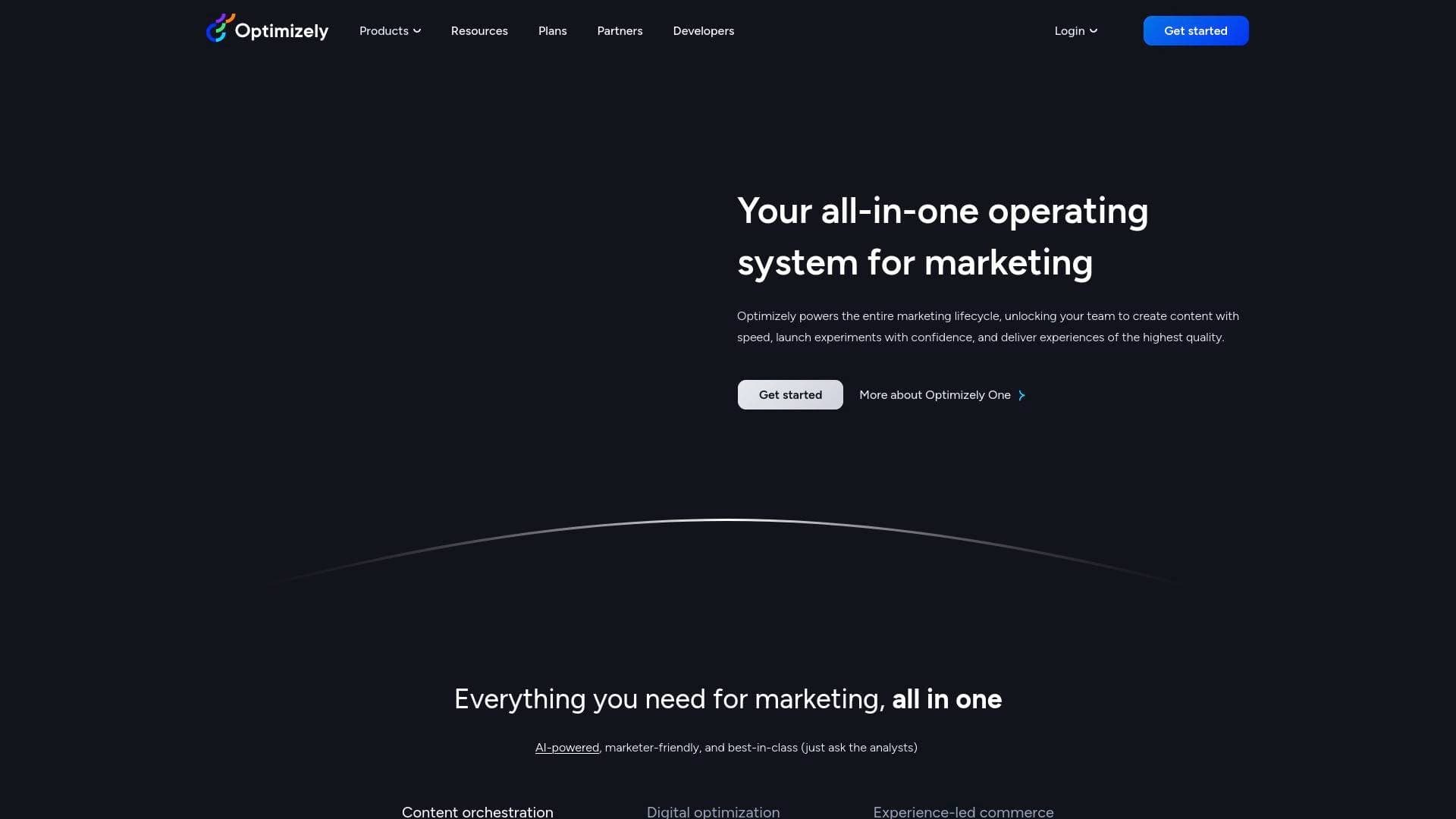
Brief Overview of Optimizely for Content Creators
Optimizely is an AI-powered digital experience platform built to help creators and marketers move from gut-feel decisions to data-driven content strategies that deliver real results. At its core, the platform tackles one of the biggest challenges content creators face: producing high-quality content at scale while actually knowing what works and what doesn't. Rather than relying on instinct, Optimizely gives creators the tools to plan, publish, test, personalize, and analyze every piece of content within a single connected ecosystem. The platform is organized around what it calls "Optimizely One," positioning itself as an all-in-one operating system for marketers and content teams. Powering the entire workflow is Opal, Optimizely's AI orchestration layer, which is designed to stay in context with a creator's brand, connect across workflows, and take proactive action on complex content tasks. Brands like Salesforce, Zoom, Nike, and Dolby already rely on the platform, which speaks to its enterprise-grade capabilities. For content creators looking to scale their output without sacrificing quality or relevance, Optimizely brings together content orchestration, experimentation, AI-driven personalization, and warehouse-native analytics under one roof.
Optimizely Key Features for Content Creators
-
Opal AI Agents: Optimizely's built-in AI system, Opal, functions as what the platform describes as an "infinite workforce." Powered by specialized AI agents, Opal stays connected across a creator's workflows, remains in context with brand guidelines, and can take proactive action on complex content requests. This means creators can delegate ideation, content generation, and campaign scaling tasks directly to AI rather than juggling multiple disconnected tools.
-
Content Orchestration: The platform's content orchestration solution covers the entire content supply chain, from planning and creation through to publishing. Creators can generate on-brand content, automate repetitive tasks, and manage high-quality experiences without the usual bottlenecks. This is particularly valuable for creators managing multiple content formats or publishing across several channels simultaneously.
-
AI-Powered Experimentation: Optimizely includes what it describes as the world's best experimentation platform, giving creators the ability to test content variations, campaign ideas, and digital experiences at scale. Notably, the platform reports a 35% increase in test impact for users, and highlights that 12% of ideas tested are proven to be winners, helping creators focus energy on what actually moves the needle.
-
AI-Driven Personalization: Rather than serving the same content to every audience member, Optimizely enables creators to deliver meaningful one-to-one interactions. The personalization engine adapts content dynamically based on visitor behavior, location, and content consumption patterns, ensuring each audience segment receives the most relevant experience possible.
-
Warehouse-Native Analytics via NetSpring: Following its acquisition of NetSpring, Optimizely now offers warehouse-native analytics, a capability that allows creators to tie their content and experimentation activities directly to business outcomes stored in data warehouses like Snowflake, Databricks, Google BigQuery, and Amazon Redshift. Critically, this analysis happens without extracting data from those warehouses, which maximizes speed, minimizes cost, and protects data privacy.
-
Content Management System (CMS): The platform includes a full content management system that supports multi-site, multi-language publishing at scale. Real-world deployments include managing 80 different sites across 22 languages and 5 brands, demonstrating the CMS's capacity to handle complex, large-scale content operations that growing creator businesses or media brands might eventually require.
-
Visitor Groups and Dynamic Content Display: Creators can use Optimizely's Visitor Groups capability to display different content to different users dynamically. Segmentation is based on factors like geographic location, type of content consumed, and visitor behavior, giving creators a practical way to tailor experiences without manually building separate content tracks for each audience.
-
Commerce Integration: For creators who also sell products or digital goods, Optimizely includes commerce capabilities designed to turn storefronts into conversion engines. Features include smarter product search and AI-powered product recommendations, helping creator-entrepreneurs keep audiences engaged and purchasing.
-
Broad App and Tool Integrations: Optimizely connects with a wide range of third-party apps and tools, allowing creators to build a workflow that fits their existing tech stack rather than rebuilding everything from scratch. The platform's integration library is designed to make Optimizely work alongside the tools creators already rely on.
-
Data-Driven Content Measurement Framework: The platform supports structured measurement frameworks that help creators understand why content underperforms and how to fix it. Industry insights shared through the platform highlight that 60% of content adds no value and 75% doesn't convert, reinforcing the platform's focus on helping creators identify what truly drives impact and reduce wasted content effort.
Optimizely Target Users & Use Cases for Content Creators
Optimizely is built for content creators and digital teams who have moved beyond basic publishing and are ready to treat content as a measurable, scalable asset. The platform suits creators who want to back their content decisions with data rather than instinct, and who need tools capable of growing with their audience and output.
- Primary creator types: Digital content managers, content marketing creators, multi-platform publishers, creator-entrepreneurs running online stores, and podcast or video creators looking to optimize their web presence and audience engagement.
- Experience level: Intermediate to advanced creators who are managing significant content volume or audience scale and need more than a basic CMS or scheduling tool.
- Team size: Works for solo creators with ambitions to scale, but particularly well-suited to creator teams or media brands managing multiple content streams, sites, or audience segments.
- Specific use cases:
- Running A/B tests on blog headlines, landing pages, or newsletter CTAs to identify which versions drive the most engagement or conversions
- Using AI agents to generate on-brand content drafts, freeing creators to focus on strategy and storytelling
- Personalizing a creator's website so returning visitors see content tailored to their previous behavior and interests
- Managing a multi-site content operation across different languages or regional audiences from a single platform
- Connecting content performance data directly to revenue outcomes stored in a data warehouse, without manual data exports
- Building a measurement framework to identify which content pieces actually drive audience growth versus which ones add no value
- Scaling an integrated content campaign by stretching core assets across different audience personas and stages of the viewer or reader journey
- Running an ecommerce storefront alongside a content hub, using AI-powered recommendations to convert content audiences into customers
Frequently Asked Questions About Optimizely
What is Opal and how does it help content creators? Opal is Optimizely's AI orchestration system, built from specialized AI agents that stay in context with a creator's brand and connect across workflows. It can take proactive action on complex content requests, effectively acting as an always-on AI collaborator for ideation, content generation, and campaign scaling.
What is warehouse-native analytics and why does it matter for creators? Warehouse-native analytics, brought to Optimizely through its acquisition of NetSpring, allows creators to analyze content and experimentation data directly inside cloud data warehouses like Snowflake, Databricks, Google BigQuery, and Amazon Redshift. No data extraction is required, which means faster insights, lower costs, and stronger data privacy protections.
Can Optimizely support creators managing multiple sites or languages? Yes. The platform's CMS has been used to manage up to 80 different sites across 22 languages and 5 brands simultaneously, making it a strong fit for creators or media organizations operating at significant scale across multiple markets.
What kind of results have users seen from Optimizely's experimentation tools? The platform reports a 35% increase in test impact for users leveraging its experimentation capabilities, and notes that 12% of ideas tested are proven to be winners, helping creators prioritize the content and campaign approaches most likely to succeed.
Does Optimizely integrate with other tools? Optimizely integrates with a wide range of third-party apps and tools, designed to fit into a creator's existing workflow rather than replacing every tool they already use.
What is the content supply chain feature? Content orchestration on Optimizely covers the full lifecycle of content creation, from initial planning through to publishing. It includes AI-powered content generation, task automation, and tools to help creators maintain brand consistency across all output.
Bottom Line: Should Content Creators Choose Optimizely?
Optimizely is a strong fit for content creators who have outgrown basic publishing tools and need a platform that connects content creation, testing, personalization, and analytics into a single, AI-powered workflow. The platform's standout strengths are its experimentation engine, the Opal AI agent system, and its newly added warehouse-native analytics, which together give creators an unusually complete picture of what their content is actually achieving.
That said, Optimizely is clearly built for creators operating at scale, whether that means managing large content teams, running multi-site operations, or needing enterprise-grade data infrastructure. Solo creators or those just starting out may find the platform's depth more than they need at this stage. Pricing is also not publicly listed and requires direct contact with the sales team, which suggests this is positioned as a premium investment rather than an entry-level tool.
For content creators serious about moving from volume-based publishing to performance-driven content strategy, Optimizely offers a genuinely comprehensive platform. The combination of AI content generation, rigorous experimentation, dynamic personalization, and deep analytics makes it one of the more complete options available for creators ready to treat their content operation as a measurable, scalable business.
Details
One link. Every channel, rate, and piece of work brands need to evaluate you. Built for how creators actually get hired.
Claim your profile
Live creator, content, and marketing roles from real companies, with the pay, market, and context the raw job page never gives you.
Browse jobs
 Post Bridge