

Livepeer
Livepeer is a decentralized network for video transcoding and AI processing, enabling developers and creators to build scalable, cost-effective live and on-demand video experiences.
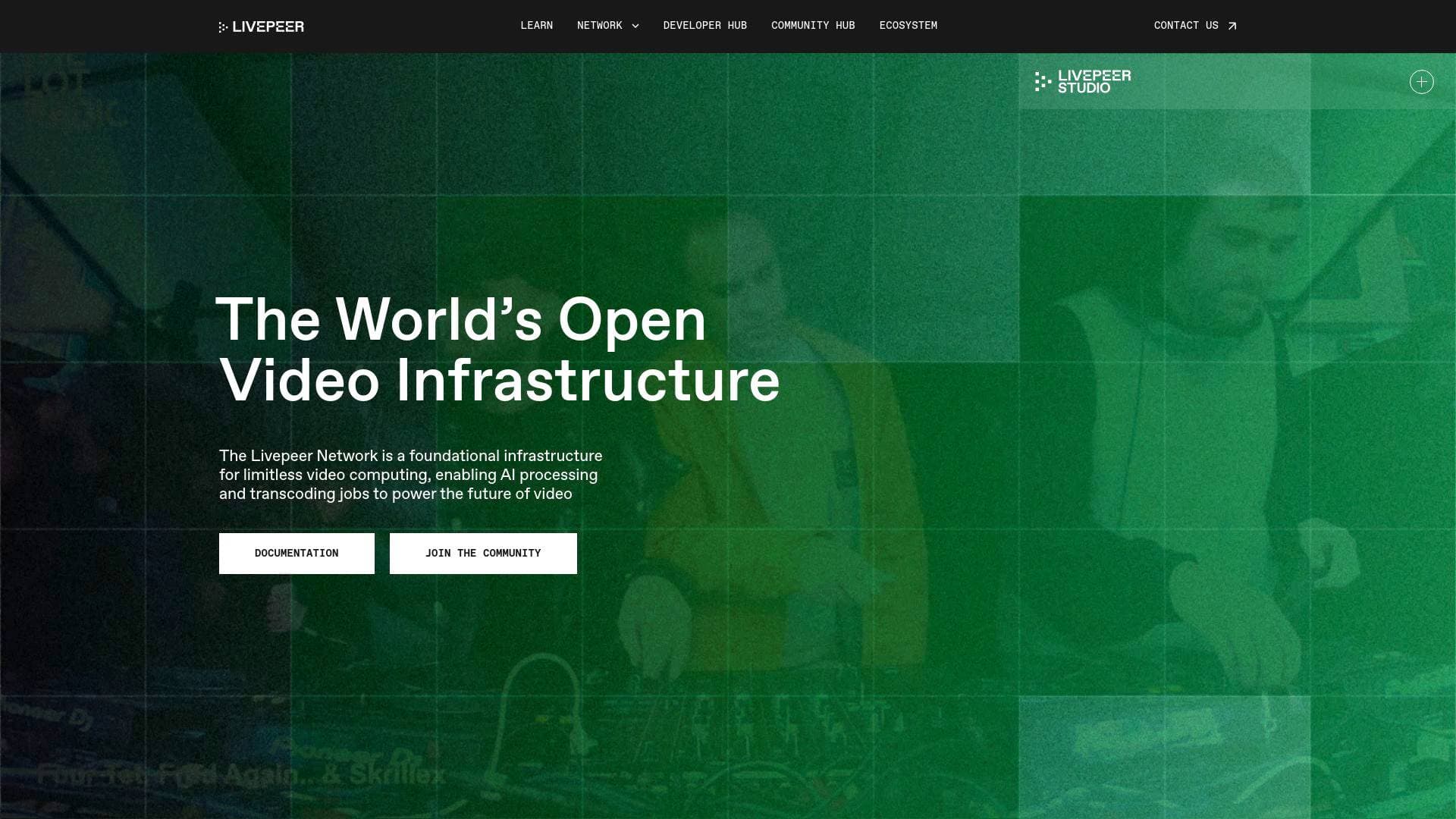
Brief Overview of Livepeer for Content Creators
Livepeer is a decentralized network built for limitless video computing, combining video transcoding infrastructure with real-time generative AI capabilities. For content creators who need scalable, open video infrastructure, it solves the problem of relying on expensive, centralized video processing systems by distributing compute work across a global network of GPU-powered nodes. The platform powers everything from live streaming transcoding to AI-driven video experiences, making it a compelling video production and streaming infrastructure option for technically inclined creators and developer-creators building their own platforms. One of its most distinctive offerings is Daydream, a generative AI video platform that transforms live camera input into animated visuals driven by text prompts in real time. Livepeer positions this as a tool for storytelling, marketing, and creative expression, opening up a new category of real-time AI content creation. The network runs on an open, accessible infrastructure, meaning creators and developers aren't locked into proprietary systems. With capabilities spanning real-time content creation, instant video understanding, and communication AI, Livepeer sits at the intersection of decentralized technology and next-generation video production workflows.
Livepeer Key Features for Content Creators
-
Daydream Generative AI Video Platform: Daydream converts a creator's live camera feed into animated visuals based on text prompts, all in real time. This opens up entirely new creative possibilities for streamers and video creators who want to produce stylized, AI-generated visual content without complex post-production pipelines. It's designed for storytelling, marketing, and creative expression.
-
Real-Time Video Transcoding: At its core, Livepeer handles video transcoding jobs through a decentralized network of Orchestrator nodes equipped with GPU clusters. For creators building their own streaming platforms or apps, this means video processing is handled at scale without relying on a single centralized provider.
-
Live and On-Demand Video Support: The network supports both live streaming and on-demand video experiences. Developers and creator-entrepreneurs building video-centric applications can access these capabilities through Gateway nodes that route video compute jobs across the network.
-
AI Processing Capabilities: Beyond transcoding, Orchestrator nodes on the network perform AI inference jobs including text-to-image, image-to-image, and image-to-video processing. This gives creators building AI-powered content tools access to distributed GPU compute for generative workflows.
-
Livepeer Token (LPT) Economy: LPT is the network's native token that powers access to video compute and AI processing jobs. Creators and developers who hold LPT can perform work on the network, earn fees and rewards, and participate in governance decisions that shape the platform's future direction.
-
Decentralized Community and Governance: Token holders and delegators gain voting rights on protocol upgrade proposals and treasury governance. This means the creator and developer community has a direct say in how the network evolves, rather than decisions being made by a single corporate entity.
-
Delegating and Staking for Passive Rewards: Creators who hold LPT tokens can stake them to support Orchestrator nodes through a process called delegating. This contributes to network security and reliability while earning a share of gateway fees and network rewards passively.
-
Open Developer Infrastructure: Livepeer provides a Dev Hub with guides and resources for building live and on-demand video experiences on the network. Creator-developers can experiment with, deploy, and scale real-time AI pipelines to build next-generation video applications on an open platform.
-
Micropayment System for Video Jobs: The network uses a ticket-based micropayment system where Gateway nodes send payment tickets to Orchestrators for completed jobs. Winning tickets can be redeemed for ETH, creating a transparent and efficient payment layer for video compute services.
-
Community Tools and Node Operator Ecosystem: A range of community-built tools support the network, including transcoding pools like Titan Node, Video Miner, and Livepool, as well as monitoring tools like the Livepeer Exporter and Telegram Orchestrator Watcher Bot. These resources help technically capable creators and node operators optimize their participation in the network.
Livepeer Target Users & Use Cases for Content Creators
Livepeer is primarily suited for content creators who sit at the intersection of technology and creative production. It's particularly valuable for developer-creators, technically minded streamers, and creator-entrepreneurs building their own video platforms or AI-powered content tools. The platform's complexity means it rewards creators who are comfortable with blockchain concepts, decentralized infrastructure, or software development.
-
Primary creator types: Developer-creators building custom streaming platforms, technically advanced live streamers, AI content creators experimenting with generative video, and creator-entrepreneurs launching video-centric applications.
-
Experience level: Intermediate to advanced. Creators comfortable with APIs, blockchain wallets, and infrastructure concepts will get the most out of Livepeer's full feature set.
-
Team size: Works for solo technical creators as well as small teams building video products.
-
Specific use cases for content creators:
- A live streamer using Daydream to transform their camera feed into real-time AI-animated visuals for a unique, branded stream aesthetic
- A creator-developer building a custom video platform who needs scalable transcoding without paying for centralized cloud video services
- A content creator with GPU resources running an Orchestrator node to earn ETH and LPT rewards while supporting the network
- A crypto-native creator staking LPT tokens to passively earn a share of network fees while contributing to the platform's security
- A marketing-focused creator using Daydream for instant AI video generation to produce unique visual content for campaigns
- A developer building an AI-powered content creation tool that leverages Livepeer's text-to-image, image-to-image, or image-to-video inference capabilities
- A creator participating in network governance to vote on protocol proposals that affect video infrastructure costs and capabilities
- A technically inclined streamer joining the community through weekly meetups, webinars, and ComfyUI community events to stay at the forefront of AI video innovation
How to Get Started with Livepeer
-
Explore the Dev Hub or Community Hub: New creators can start by visiting the Dev Hub for technical guides on building video experiences, or the Community Hub to connect with the broader ecosystem of developers, creators, and AI enthusiasts.
-
Read the 10-Minute Primer: Livepeer offers a short primer that explains the network's core problem and how it works through storytelling, illustration, and data. It's the fastest way to understand the platform before diving deeper.
-
Choose your role: Creators can participate as a Builder (building video apps on the network), an Orchestrator (running a GPU node to earn rewards), a Delegator (staking LPT tokens to support the network and earn fees), or a Community member (participating in governance and events).
-
Acquire LPT Tokens: LPT is available as an ERC-20 token on exchanges including Binance, Coinbase, Kraken, Uniswap, OKX, and Huobi. Holding LPT enables participation in network work, staking, and governance.
-
Try Daydream: Creators interested in AI video creation can jump straight into Daydream at daydream.live to experience real-time generative AI video from live camera input.
Frequently Asked Questions About Livepeer
What is Livepeer and what does it do for video creators? Livepeer is a decentralized network that handles video transcoding and AI processing jobs through a distributed network of GPU-powered nodes. For creators, it provides the infrastructure backbone for live streaming and on-demand video applications, as well as real-time AI video generation through its Daydream platform.
What is Daydream and how can creators use it? Daydream is a generative AI video platform built on Livepeer's infrastructure that turns live camera input into animated visuals based on text prompts in real time. Creators can use it for storytelling, marketing content, and creative expression without needing complex post-production tools.
What is the Livepeer Token (LPT) and why does it matter to creators? LPT is the native token that powers the Livepeer network. Holding LPT allows creators and developers to perform work on the network, earn fees and rewards, and vote on governance proposals. It's an ERC-20 token available on major exchanges including Binance, Coinbase, and Kraken.
What is delegating and how can creators earn rewards through it? Delegating means staking LPT tokens to support Orchestrator nodes on the network. By doing so, creators contribute to network security and reliability while passively earning a share of gateway fees and network rewards. Delegators also gain voting rights in network governance.
What is an Orchestrator and can creators become one? An Orchestrator runs a node on the Livepeer network that performs video transcoding and AI processing jobs using GPU clusters. Technically capable creators with GPU resources can become Orchestrators by installing the go-livepeer client, running it in orchestrator mode, and activating it via livepeer_cli. Orchestrators earn payments through a probabilistic micropayment system in ETH.
What AI capabilities does Livepeer support beyond Daydream? Livepeer's AI infrastructure supports text-to-image, image-to-image, and image-to-video inference jobs performed by AI Orchestrator nodes. These capabilities are available for developers building AI-powered content creation applications on the network.
How can creators participate in the Livepeer community? Livepeer hosts weekly meetups, webinars, and community calls, including events like ComfyUI NYC Meetups and Core Dev Calls. Creators can also participate in governance by voting on protocol upgrade proposals and treasury decisions through the Livepeer Explorer.
Bottom Line: Should Content Creators Choose Livepeer?
Livepeer is a strong fit for a specific type of content creator: technically minded developers, crypto-native creators, and innovators building their own video platforms or AI-powered content tools. The Daydream AI video platform alone makes it worth exploring for any streamer or visual creator curious about real-time generative AI aesthetics. For creators with GPU resources, running an Orchestrator node offers a genuine opportunity to earn ETH and LPT rewards while supporting open video infrastructure.
That said, Livepeer is not a plug-and-play tool for the average YouTuber or TikToker. Its strengths lie in its open, decentralized infrastructure, AI processing capabilities, and token-based economy, all of which require a baseline comfort with blockchain concepts and technical configuration. Creators who want to simply upload and stream without any technical overhead will find the learning curve steep.
For creator-developers, crypto-native content builders, and technically adventurous streamers looking to work at the frontier of AI video and decentralized infrastructure, Livepeer offers a genuinely differentiated platform with real earning potential and a vibrant open-source community behind it.
Details
One link. Every channel, rate, and piece of work brands need to evaluate you. Built for how creators actually get hired.
Claim your profile
Live creator, content, and marketing roles from real companies, with the pay, market, and context the raw job page never gives you.
Browse jobs Post Bridge