
Founder Brand: How to Build One Without the Burnout
Discover the 5 high-leverage contexts where founder visibility builds brand credibility and trust without making your media company dependent on you.
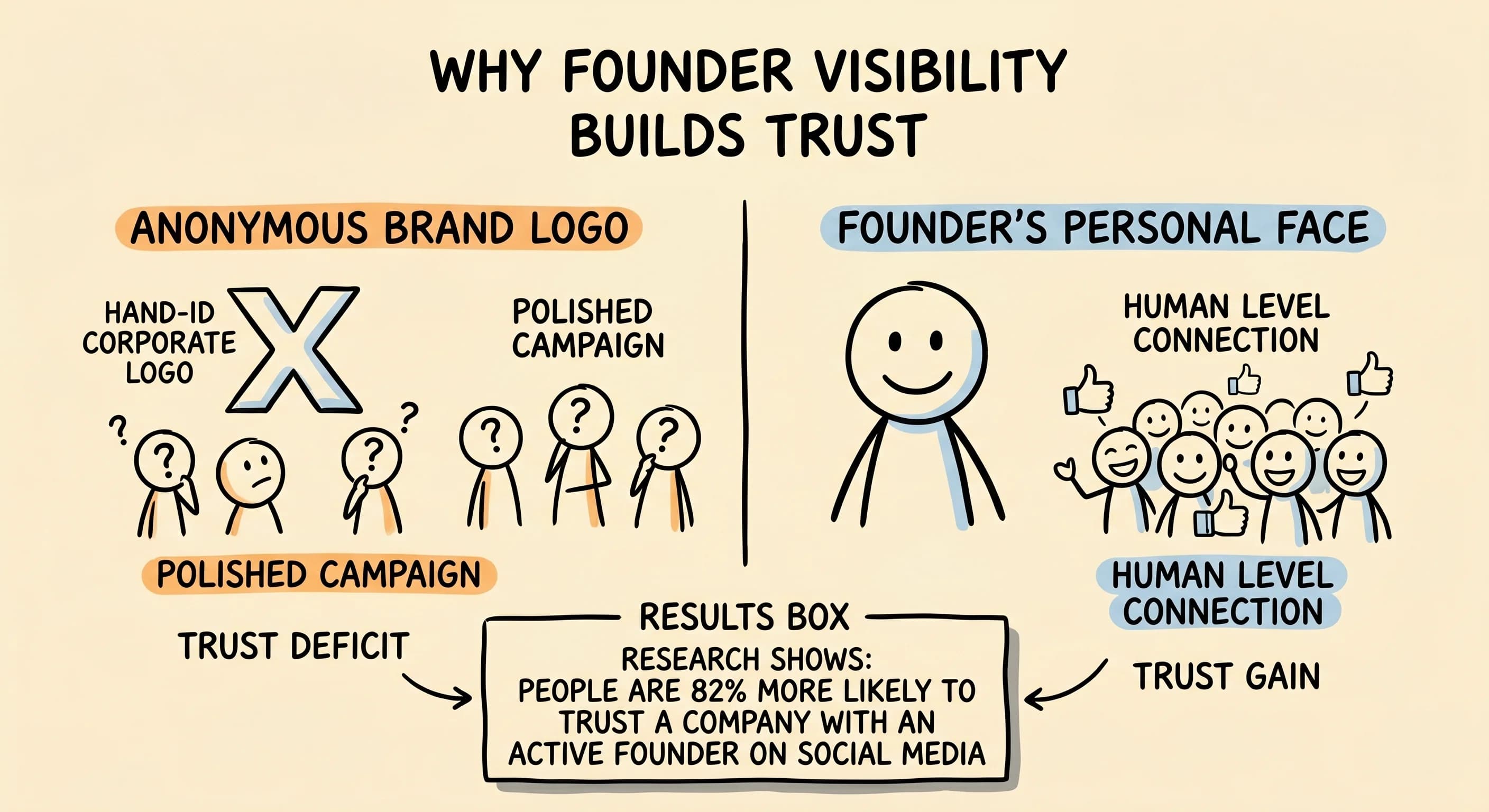
Most media company founders face the same painful paradox: show up too much, and your brand becomes dependent on you. Disappear completely, and you lose the long-term credibility that builds trust with sponsors, partners, and your community. The solution is not choosing between visibility and scalability. It is a deliberate presence that signals leadership without creating a one-person show.
That starts with clarity: what do you want to be known for, not someday, but now? Without that answer, even consistent posting becomes noise. And what makes your perspective not only credible but distinct? Answering both questions is where a founder brand actually begins. A founder brand, an idea Dave Gerhardt popularized, is simply the personal brand a founder builds to turn their story into the company's competitive advantage. Build a founder brand well and you become the reason people trust the company.
Why Every Founder Needs a Founder Brand
 Visibility builds trust in a way that no company page or polished campaign can replicate. People trust individuals before they trust logos. Research shows people are 82% more likely to trust a company whose founder is active on social media, and 70% would rather learn about a business through the founder's personal brand than a paid promotion.
For CEOs and founders competing in a crowded market, this is not a vanity play. It is differentiation. When you build a personal brand alongside your company, you give partners and every potential investor a reason to choose you over a competitor they cannot connect with on a human level.
People buy from people they know and trust. That is not a cliche. It is the core mechanic behind founder-led marketing, and it explains why thought leadership content from a named individual consistently outperforms anonymous brand content in building commercial relationships.
The question many founders ask is: should social media marketing come from the founder or the company page? The honest answer is both, but they serve different purposes. The company page scales content. The founder's voice creates the trust that makes that content worth reading.
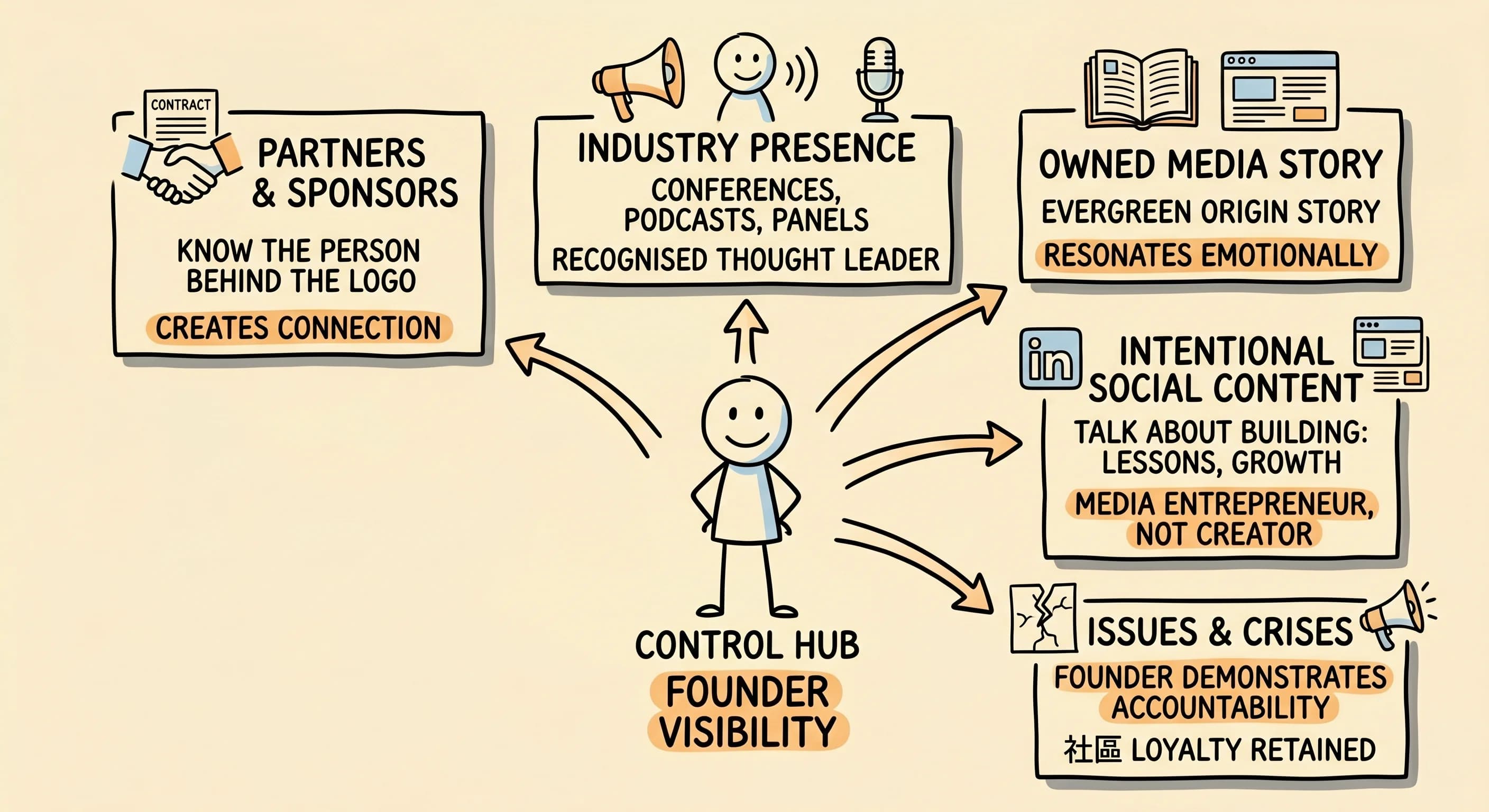
The Five Contexts for Strategic Founder Presence
Partners, Sponsors, and New Business
Business partners and sponsors should know you personally, not just your logo. Even when you have a salesperson, showing up as the owner who cares creates a connection that no salesperson can replicate. People should know you own this, that you are hands-on, and that you genuinely care about it.
When a potential sponsor searches your name before a call, what they find shapes how that conversation goes before it even starts. Thoughtful comments on LinkedIn, a strong origin story, and consistent industry positioning all work together here. Securing new business is easier when your reputation precedes you, and that reputation is built long before the first sales call.
Industry Presence and Speaking
Conferences, panels, podcast interviews, and speaking engagements position you as a credible voice in your space. Becoming a recognised thought leader creates a competitive moat a rival cannot easily copy.
Look at how Alex Lieberman and Austin Rief built Morning Brew. They were visible in origin story content, industry coverage, and partner relationships, but the daily personality of Morning Brew lived in its newsletters, shows, and hosts. Sam Parr followed a similar path with The Hustle. He was the founder in the origin story and a speaker in the startup and marketing space, but the newsletter had its own editorial voice. Your presence shapes industry perception without needing to carry the whole brand.
Your Origin Story on Owned Media
Knowing the person behind a business changes how people relate to it. When they know the story, the brand resonates emotionally in a way a logo never can. Storytelling here is not decoration. It is strategy.
Your backstory should live prominently on your website, in your media kit, in your sponsor decks, and in every pitch. It is the one evergreen piece of content that consistently works across every channel. Brand building happens fastest when the origin story does the heavy lifting across every stakeholder touchpoint.
Should Founders Post Content on Social?
 Yes, but with intention. The question is not whether to post content but how to structure your day so showing up online becomes as integral to your growth as closing deals or leading your team. Treating it as optional means it never happens.
On LinkedIn, do not just share your company's posts. Talk about the business of building: lessons learned, growth milestones, operational transparency. This positions you as a media entrepreneur, not just a content creator. That distinction matters to sponsors, partners, and anyone evaluating whether to work with you.
The 5-3-2 rule applies well here: five industry-relevant posts, three brand-related pieces, two personal perspective pieces. Founders who stay entirely safe and cautious rarely see the same trust returns as those willing to share a genuine lesson from failure. Relatable honesty converts where corporate smoothness does not. Authenticity requires some vulnerability to actually land.
Want insights from us directly? That instinct your readers have toward you is exactly why engaging directly with audiences on social, rather than broadcasting at them, drives the strongest results. A thought leader does not just publish. They participate.
Managing Privacy as the Face of the Brand
Not every part of your life needs to be public. The goal is presence that signals operator-level credibility. If you are posting personal lifestyle content daily, you risk overshadowing the hosts, writers, and contributors who are supposed to carry daily content. An influencer dynamic is not the same as a founder dynamic. Know the difference.
Brand values come through in what you choose to share and what you choose to protect. A platform built on your authority is durable only when the boundary between personal and professional stays intentional.
Showing Up During Issues and Crises
When reputation faces a challenge, step forward personally. Founder presence during a crisis demonstrates accountability that no team member can provide on your behalf. Trust flows to people, not logos. Your community is not looking for a brand statement. They are looking for a person who is accountable.
Decide in advance which situations trigger your personal involvement. Not every issue requires the same level of response, but the face of the brand must be accessible when it matters most. Accessibility in difficult moments separates founders who retain loyalty from those who lose it.
Why This Framework Works for Scaling
 A founder brand is not about being everywhere. It is about showing up precisely where your presence builds the most value, then building systems so everything else runs without you. That is what makes a founder brand scalable instead of a trap. Scaling a media company requires that other faces carry the daily content while you appear in the high-leverage situations that protect and grow commercial relationships.
The founders who scale successfully treat their founder brand the same way they treat any operational decision: intentional, measured, and connected to a clear outcome. A strong founder brand doesn't compete with your company brand; it makes it more trusted. Give your community the person behind the business, in the right contexts, and your founder brand becomes something both credible and durable.
Read more about Becoming a Content Creator
📚 Complete Guides
- How to Become a Content Creator: Complete Beginner's Guide
- Content Creator Platform Guide: Choose the Right Platform to Start Your Creator Journey
⚡ Tactics & Strategies
- 50% Retention Rate Optimization for YouTube Algorithm Success
- Age Bracket as Superpower Strategy for Older UGC Creators
- AI Workflow Integration for Content Reduction
- Audience Consistency Strategy to Avoid Algorithm Penalties
- Audience Poll on Instagram to Source Q&A Content in Advance of Recording
📄 Related Articles
- Relevant Content: A Two-Question Filter for Creators
- Customer Discovery Calls: Turn Free Consultations Into Content Gold and Audience Growth
- Emotional Marketing: Build Real Connection, Not Story Arcs
- Essential Skills Every Content Creator Needs to Succeed
- Evergreen Content: A Creator's Guide to Lasting Growth
- Fair Use on YouTube: A Creator's Copyright Guide
- The AI Persona Template for Consistent, On-Brand Content
- What Makes a Video Go Viral (and How to Repeat It)

Alex Kirillov
One link. Every channel, rate, and piece of work brands need to evaluate you. Built for how creators actually get hired.
Claim your profile
Live creator, content, and marketing roles from real companies, with the pay, market, and context the raw job page never gives you.
Browse jobs