
Fair Use on YouTube: A Creator's Copyright Guide
Master fair use and copyright laws for YouTube commentary content. Learn how creators build authority through educational analysis while navigating copyright compliance.
Details
Understanding Fair Use on YouTube
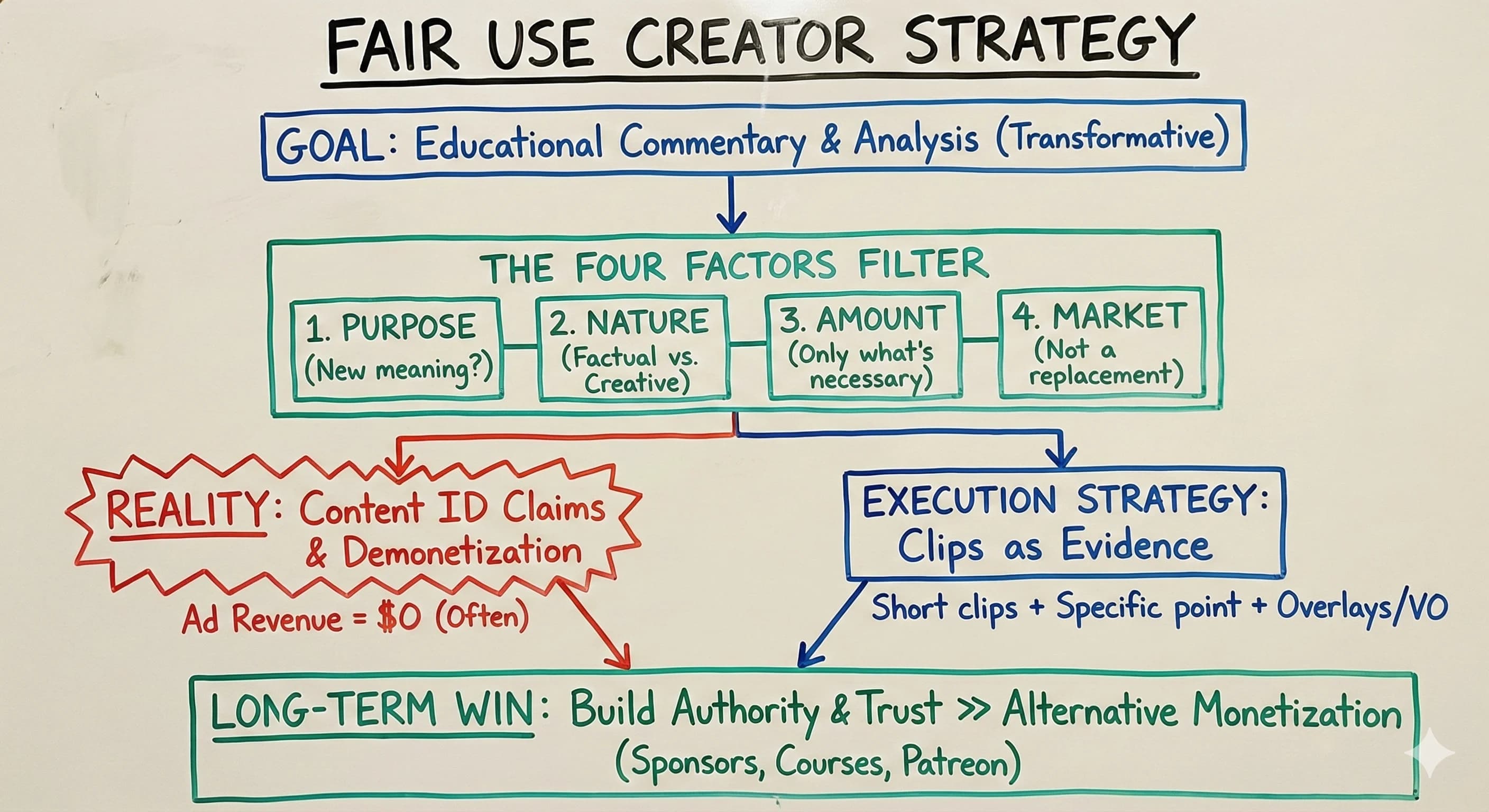
You've probably watched YouTube video essays where creators analyze movies using actual clips while adding their own analysis. That's not accidental: it's a deliberate strategy that relies on fair use. Fair use on YouTube is what lets creators legally use copyrighted material when they transform it with genuine commentary. When you provide genuine commentary on copyrighted material, you're exercising a fundamental right that allows creators to build authority while serving their audience.
Fair use protects creators who transform original work through criticism, analysis, or education. Research shows that YouTube movie reviews using short clips with analysis are consistently cited as classic fair use examples by legal experts. However, copyright owners may still dispute your content, making it essential to understand what qualifies as fair use versus copyright infringement.
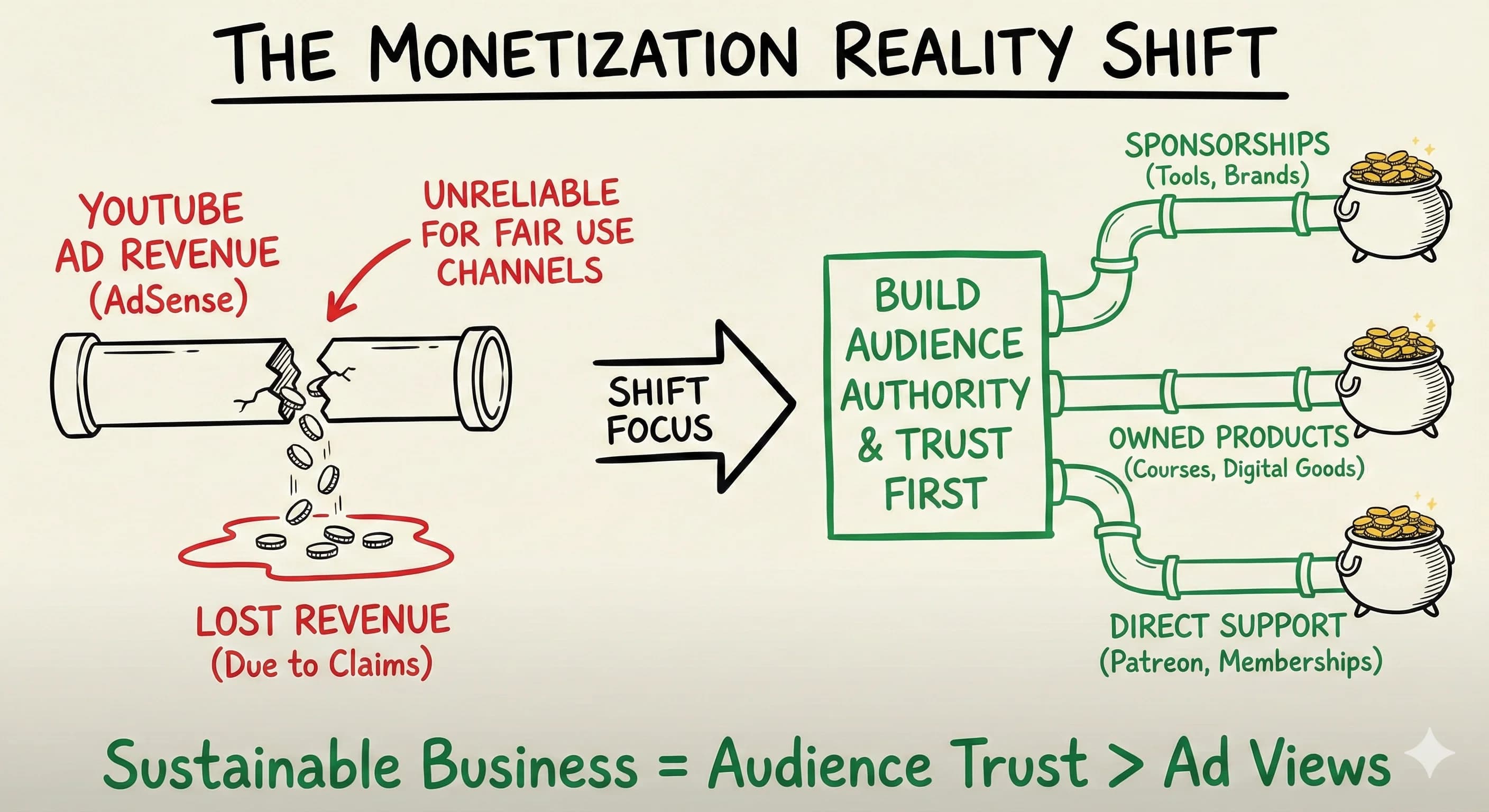
The reality? Even when you're legally protected, you'll likely lose monetization on these videos. That's actually part of the strategy: you're building audience and authority first, monetizing through alternative channels later.
The Four Factors of Fair Use
 Copyright laws establish four critical factors determining whether your use of copyrighted material falls under fair use protection. Understanding these isn't just legal theory: it's your blueprint for creating defensible content.
Purpose and Character of Use: Transformative content that adds new meaning, criticism, or educational value is more likely to be considered fair use. Film analysis channels showing brief clips while explaining cinematography techniques exemplify this perfectly. Simply reposting copyrighted work without permission fails this test completely.
Nature of the Copyrighted Work: Factual content receives less copyright protection than creative works. Using clips from documentaries may have stronger fair use arguments than fictional films. This doesn't mean you can't use fictional content, just that you need stronger transformative commentary.
Amount Used: Limited use of copyrighted material strengthens your fair use claim. Legal guidance consistently emphasizes using only what's necessary to support your analysis. Think multiple short clips rather than one extended sequence.
Market Impact: Your content shouldn't serve as a replacement for the original work or harm the copyright holder's market. This factor is crucial: viewers shouldn't get the core entertainment value from your video alone.
How Fair Use Applies to YouTube Commentary
 Does commentary fall under fair use? Absolutely, when executed properly. Successful creators have built entire channels around this approach, focusing on genuine education rather than entertainment replacement.
The Center for Media and Social Impact's Code of Best Practices specifically validates this approach for online video creators. Their research shows that commentary, criticism, and educational analysis using only necessary portions while avoiding substitutive viewing represents accepted professional practice.
Successful implementation focuses on:
- Adding educational value through technical analysis
- Critiquing directorial choices or editing techniques
- Teaching filmmaking concepts using examples
- Providing historical context or behind-the-scenes insights
- Ensuring your commentary dominates the content, not the copyrighted material itself
The key insight from legal experts: treat every clip as evidence for a specific claim. Before including any footage, ask yourself: what precise point does this clip prove? If you can't answer clearly, omit it.
Real Examples of Fair Use in Action
While specific creator names often aren't highlighted in legal guidance, the patterns are clear. Film analysis channels showing brief clips while explaining cinematography techniques represent the gold standard according to YouTube's own fair use documentation.
Successful implementations include:
- Movie review creators using short scenes to support their critiques
- Educational channels demonstrating storytelling principles through examples
- Technical breakdowns showing editing techniques or visual effects processes
- Comparative analysis examining how different films handle similar themes
Journalism provides another proven model. The Set of Principles in Fair Use for Journalism describes how cultural journalists regularly quote visual and textual material for "reporting, criticism, commentary, or discussion" without permission. They're instructed to take only as much as reasonably appropriate and contextualize the material clearly, exactly what successful YouTube creators do.
These creators understand that uses of copyrighted material must serve their transformative purpose, not replace the viewing experience. They're building educational brands, not entertainment channels.
Copyright Compliance Strategies That Actually Work
Here's the reality: even strong fair use cases often trigger Content ID claims. Legal sources acknowledge that platforms and rightsholders apply automated or risk-averse policies independent of what courts might decide. You need strategies that work within this system.
Build Evidence-Based Commentary:
- Keep detailed records of your educational purpose
- Structure scripts around specific analytical points
- Use clips as documentation, not entertainment
- Maximize your original commentary relative to footage
- Research copyright owners' typical responses
Optimize Your Clip Strategy:
- Prefer multiple very short clips over one long sequence
- Avoid pivotal scenes or "heart" of the work
- Add text overlays explaining why each clip is shown
- Use side-by-side comparisons and educational annotations
Diversify Monetization From Day One: Since platforms may demonetize even legally protected content, successful creators build alternative revenue streams:
- Sponsorships from educational or filmmaking tool companies
- Courses teaching film analysis, screenwriting, or editing
- Memberships offering deeper analysis and exclusive content
- Speaking opportunities and consulting work
Remember, even when monetization gets removed, educational content often remains available, allowing you to build audience trust and authority. That audience becomes your most valuable asset.
Moving Forward with Confidence
Understanding fair use commentary provisions empowers creators to produce valuable educational content while respecting copyright laws. Research from digital humanities projects shows that incorporating limited portions of copyrighted material in scholarly analysis, provided the amount is "no more than necessary" and integrated into substantial commentary, has strong legal footing.
The strategic value is clear: fair use enables "less privileged speakers to 'talk back' to dominant culture, find their own voices and audiences" by using copyrighted cultural material for commentary and criticism. You're not just analyzing films, you're building authority in your field.
Your Action Plan:
- Start with clearly educational content focused on genuine analysis
- Document your transformative purpose for every piece
- Keep clips short and tightly tied to specific points
- Build alternative monetization from the beginning
- Choose your battles: some studios are more tolerant than others
Focus on genuine transformation, provide substantial analysis, and always prioritize serving your audience's educational needs over simply showcasing copyrighted content. This isn't about finding loopholes: it's about exercising legitimate rights while building a sustainable creative business.
Read more about Becoming a Content Creator
📚 Complete Guides
- How to Become a Content Creator: Complete Beginner's Guide
- Content Creator Platform Guide: Choose the Right Platform to Start Your Creator Journey
⚡ Tactics & Strategies
- 50% Retention Rate Optimization for YouTube Algorithm Success
- Age Bracket as Superpower Strategy for Older UGC Creators
- AI Workflow Integration for Content Reduction
- Audience Consistency Strategy to Avoid Algorithm Penalties
- Audience Poll on Instagram to Source Q&A Content in Advance of Recording
📄 Related Articles
- AI Content Repurposing: Create Content 70% Faster
- Newsletter Segmentation: Target Your Best Subscribers First
- B2B Contact Database: How Creators Reach Decision-Makers
- Behind the Scenes Content: Turn Your Work Process Into Viral BTS Ideas
- Thought Leadership: Build It by Writing to Learn
- ChatGPT for Social Media: Prompts That Actually Work
- Content Creation Tools: The Ultimate Directory for Creators
- Emotional Storytelling: Turn Feelings Into Followers
Read more about Systems, Workflows & Operations for Content Creators
Read more YouTube Resources for Content Creators
📚 Complete Guides
⚡ Tactics & Strategies
- 50% Retention Rate Optimization for YouTube Algorithm Success
- Candy vs Vegetables Packaging Strategy for Educational Content
- Click-Through Rate Optimization as YouTube's Primary Success Metric
- Creating Viral Content Through Polarizing and Educational Hooks
- Doubling Production Effort Per Video to Exponentially Increase Views
🧮 Calculators
Free: The Fair Use Creator's Playbook
Get the interactive tool, downloadable PDF, and Notion template - all free.
No spam. Unsubscribe anytime.

Alex Kirillov
Details
One link. Every channel, rate, and piece of work brands need to evaluate you. Built for how creators actually get hired.
Claim your profile
Live creator, content, and marketing roles from real companies, with the pay, market, and context the raw job page never gives you.
Browse jobs