Newsletter Segmentation: Target Your Best Subscribers First
Learn why content creators should target newsletter subscribers before surveying millions of followers. Discover proven audience segmentation strategies that reduce noise and improve product feedback quality.
Details
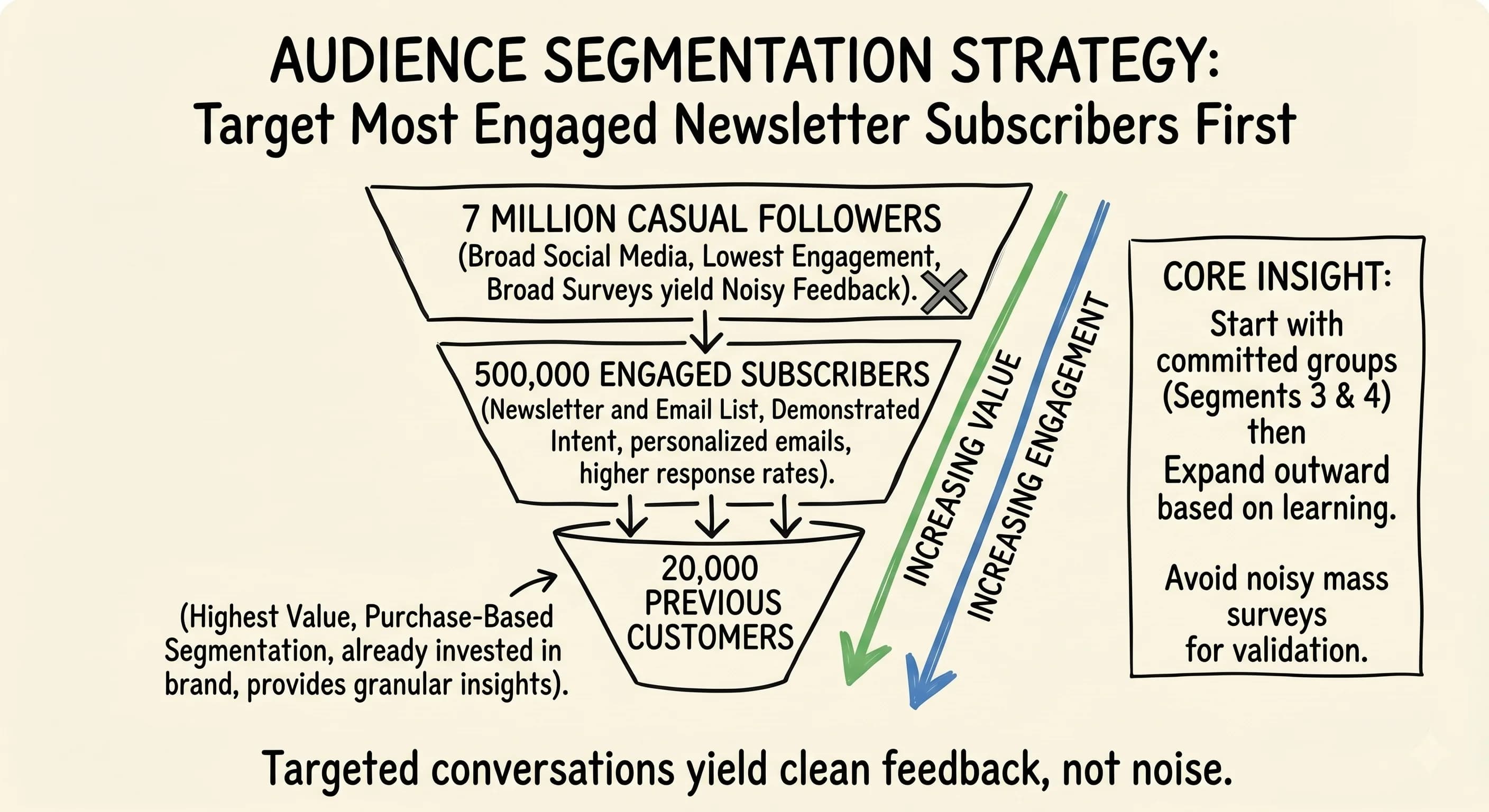
Here's what most content creators get wrong: they survey their entire audience when developing new products. You've probably done this too - blasted a survey to all 7 million followers hoping for meaningful insights. But this approach creates noise that drowns out the valuable feedback you actually need.
Smart creators understand that targeting your most engaged audience segments first produces cleaner feedback and higher conversion rates. Instead of casting a wide net, you want to start with your smallest, most committed group and work outward.
This is what newsletter segmentation is really for. Rather than blasting one generic email to your whole list, email segmentation splits subscribers into smaller groups so each gets the most relevant message. Done well, segmentation in email marketing turns a noisy list into a set of targeted campaigns that convert, and it is the same principle whether you are gathering product feedback or simply sending better newsletters.
The Funnel Approach to Effective Audience Segmentation
Successful creators map their audience funnel strategically. Picture this hierarchy: 7 million social media followers, 500,000 newsletter subscribers, and 20,000 previous customers. Each level represents deeper engagement and higher value.
Your customer base represents the highest value segment - these people have already invested in your brand and will likely participate in product development feedback loops. This mirrors what data analysts call "purchase-based segmentation," which focuses on real household purchases rather than broad demographics for more granular insights.
Content creator Peter McKinnon used this exact approach when developing his photography presets. Instead of surveying his millions of YouTube subscribers, he started with previous customers who'd bought his courses. This targeted group provided specific feedback about pricing, features, and use cases that led to a successful preset launch.
Best Practices for Newsletter-Based Audience Segmentation
 Your newsletter audience segment sits perfectly between broad followers and paying customers. These subscribers have demonstrated intent by sharing their email addresses, making them prime candidates for product feedback.
Start by analyzing audience data within your newsletter platform. Identify subscribers who consistently open emails, click links, or engage with surveys. Research shows that personalized emails to high-engagement segments yield 88% higher response rates than broad outreach.
Create different audience segments based on:
- Open rates and click-through rates (aim for 25%+ open rates)
- Previous purchase history
- Content preferences and engagement patterns
- Time as subscribers (longer subscribers often provide better feedback)
Creator Ali Abdaal segments his newsletter subscribers by course interest - productivity, YouTube growth, or writing. When he developed his Part-Time YouTuber Academy, he surveyed only subscribers who'd engaged with YouTube-related content, resulting in 40% higher survey completion rates.
Target Your Audience with Strategic Incentives
When reaching out to your most engaged segments, offer compelling incentives that resonate with their investment in your brand. Group calls, exclusive content previews, or early access opportunities work exceptionally well for newsletter audiences.
This approach transforms your marketing campaign from a broad survey blast into a targeted conversation with your most valuable supporters. These engaged subscribers provide cleaner feedback because they understand your brand voice and have genuine interest in your success.
Creator Matt D'Avella offered beta access to his Skillshare course to newsletter subscribers who completed a 10-minute feedback survey. The response rate hit 32% compared to his typical 3% response rate from general audience surveys.
The 4 Segments of Target Audience in Content Creation
 Content creators should recognize four primary audience segments:
- Casual followers - broad social media audience (lowest engagement)
- Engaged subscribers - newsletter and email list members
- Previous customers - those who've purchased products or services
- Brand advocates - super-fans who actively promote your content (highest value)
Each segment requires different marketing strategies, but starting with segments three and four ensures higher response rates and more actionable feedback. Experts recommend this approach because engagement and target audience size move in opposite directions - smaller, more targeted groups provide better insights.
Implementation Through Your Newsletter Platform
Leverage your newsletter as the primary vehicle for audience segmentation. Most savvy creators already have this foundation built, so you're not starting from scratch. Nearly every email marketing platform supports this with tags and marketing automation, so once you create segments you can personalize follow-up emails and run targeted campaigns without any manual work.
Create dedicated signup forms for product feedback volunteers within your existing newsletter flow. Segment based on purchase history and maintain ongoing communication throughout your product development process.
Toolkit creator Thomas Frank used his newsletter to recruit beta testers for his notion templates. He created a separate tag for "product feedback volunteers" and offered early access to new templates. This group of 2,000 subscribers (from his 100,000+ list) provided detailed feedback that shaped his entire product line.
This targeted approach prevents message dilution while building excitement among your most committed supporters. They become early adopters who provide testimonials and word-of-mouth marketing when you launch.
Advanced Segmentation Strategies That Work
Marketers usually start with a few core types of email segmentation: demographic segmentation (age, role, location), geographic segmentation, and behavioral segmentation based on how subscribers actually engage. For creators, two more approaches often work even better:
Psychographic segmentation combines behavioral data with interests and values. If you're a fitness creator, segment subscribers by workout preferences (strength training vs. cardio) rather than just engagement levels.
Technographic segmentation works well for creators in tech or productivity spaces. Segment by tools your audience uses - Notion users vs. Obsidian users will have different needs and feedback styles.
Productivity creator Francesco D'Alessio segments his newsletter by productivity system preference. When testing new courses, he targets specific segments first, leading to 60% higher conversion rates than broad announcements.
Keep Your Engaged Segment Involved Throughout Development
 Here's the key insight most creators miss: keep that subset of people engaged in the entire product development process. They're already your fans, and maintaining involvement transforms them into early customers and advocates.
Send regular updates about product development progress. Share behind-the-scenes content about challenges you're facing. Ask for input on naming, pricing, or feature priorities.
Creator Justin Welsh involves his most engaged newsletter subscribers in every course creation process through a private Slack channel. These 500 subscribers (from his 50,000+ list) provide ongoing feedback and become immediate purchasers when courses launch.
Start Small, Think Strategic
Effective audience segmentation begins with your most engaged supporters - your existing customer base and active newsletter subscribers. Research consistently shows that targeting high-value, behaviorally proven groups yields better results than mass outreach.
By focusing your marketing efforts on these proven segments first, you'll gather valuable insights while building anticipation for your product launch. This strategic approach transforms feedback collection from noisy surveys into meaningful conversations with people who genuinely want to see you succeed. That is the real goal of segmentation: an email marketing strategy where smart list segmentation sends the right email segments to the right people, so every newsletter feels personal instead of generic.
Remember: you don't need to survey all 7 million followers to validate your next product idea. Start with your 20,000 previous customers, expand to engaged newsletter subscribers, then scale outward based on what you learn.
Read more about Audience Building & Growth for Content Creators
📚 Complete Guides
- How to Build an Audience as a Content Creator
- How to Find Your Target Audience (Start With One Person)
⚡ Tactics & Strategies
- 30 Daily Outbound Pitches for UGC Deal Generation
- 50% Retention Rate Optimization for YouTube Algorithm Success
- Age Bracket as Superpower Strategy for Older UGC Creators
- Audience Consistency Strategy to Avoid Algorithm Penalties
- Audience Psychology Over Algorithm Optimization, Focusing on Human Pain Points and Goals Instead of Platform Tactics
📄 Related Articles
- Instagram Automation Tools: Automate Lead Capture & DMs
- AI Content Repurposing: Create Content 70% Faster
- Best Community Platforms for Course Creators
- Relevant Content: A Two-Question Filter for Creators
- Content Inspiration: Where to Find Fresh Ideas Beyond Your Niche
- How to Retain Clients and Build Recurring Revenue
- Customer Discovery Calls: Turn Free Consultations Into Content Gold and Audience Growth
- Course Landing Page: Validate Your Online Course Before You Build It
Read more about Monetization & Business Models for Content Creators
📚 Complete Guides
- Content Creator Monetization: Proven Revenue Streams
- Content Creator Income Streams: 7 Ways to Build Financial Stability
⚡ Tactics & Strategies
- 30 Daily Outbound Pitches for UGC Deal Generation
- Affiliate Code Negotiation Using Membership Audience Influence
- Age Bracket as Superpower Strategy for Older UGC Creators
- B2B Merchandise Bulk Sales to Industry Professionals- Packaging Products as Client Gifts for Lawyers and Service Providers
- Becoming Your Own Sponsor by Plugging Your Offer Within Episodes
🧮 Calculators
Read more about Systems, Workflows & Operations for Content Creators

Alex Kirillov
Details
One link. Every channel, rate, and piece of work brands need to evaluate you. Built for how creators actually get hired.
Claim your profile
Live creator, content, and marketing roles from real companies, with the pay, market, and context the raw job page never gives you.
Browse jobs