

Kontent
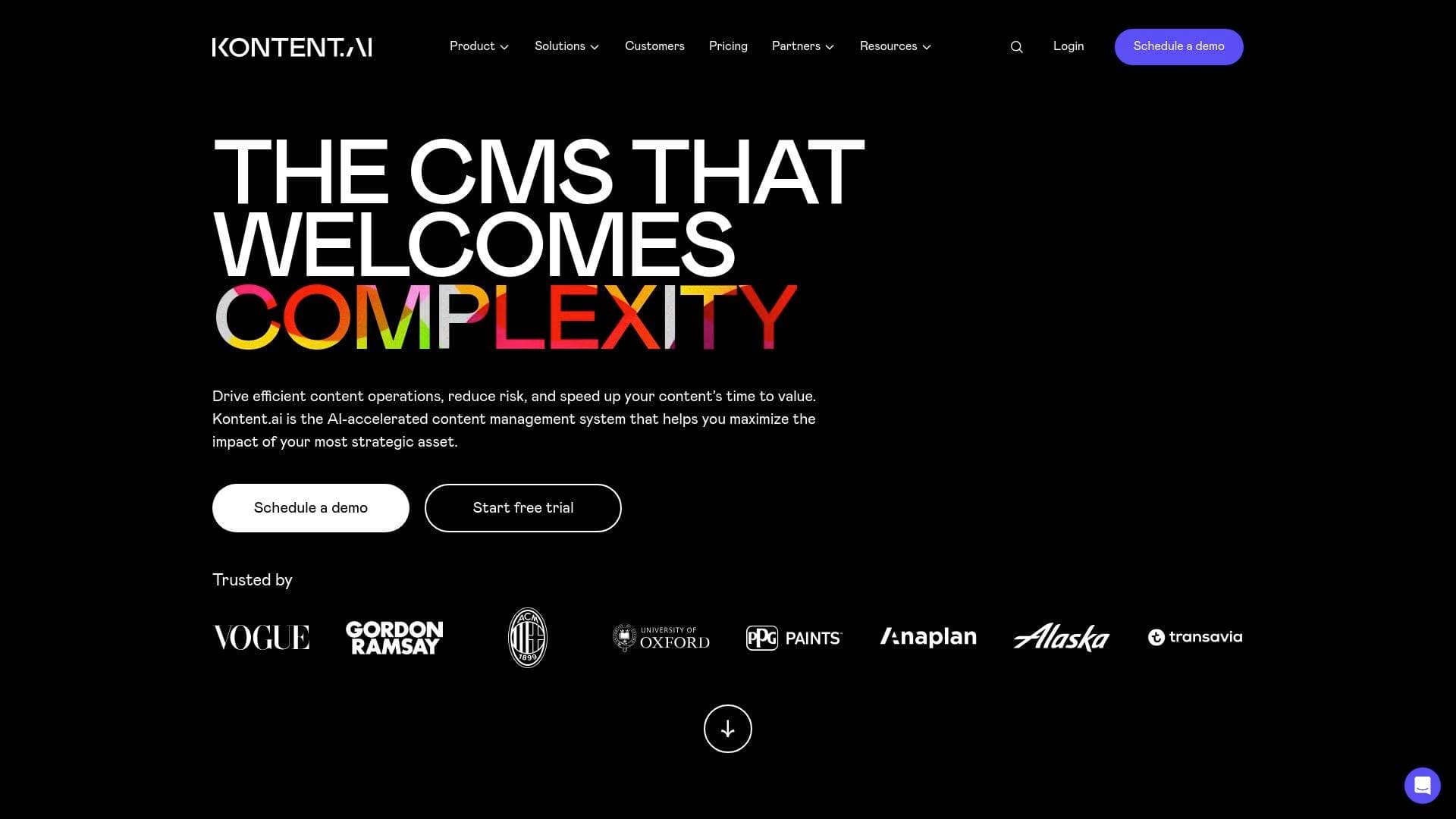
Kontent.ai is a headless CMS built for speed, control, and scale, helping content teams publish faster with AI automation, open APIs, and omnichannel delivery.
Brief Overview of Kontent.ai for Content Creators
Managing content across multiple channels, brands, and regions is one of the most persistent headaches for content-driven teams. Kontent.ai is a headless CMS built to solve exactly that problem, combining faster publishing workflows, AI-powered automation, and developer-friendly open APIs into a single unified platform. What sets it apart is its "Agentic CMS" approach, where AI agents handle audits, governance, and localization in minutes rather than months, freeing content teams to focus on creativity and growth. The platform is designed to give business users brand control without slowing them down, while simultaneously giving developers the flexibility of a composable, API-first stack. Content and marketing teams can build and publish quickly without depending on developer support, and a unified hub keeps the entire operation aligned. Real-world results back up these claims: customers have reported 35% faster content creation, 70% increases in web traffic, and content publishing timelines shrinking from months to minutes. For content creators managing large volumes of content across multiple platforms, Kontent.ai positions itself as a consolidation tool that replaces scattered, disparate tools with one secure, automated hub.
Kontent.ai Key Features for Content Creators
-
Agentic CMS with AI Automation: Kontent.ai introduces what it calls an Agentic CMS model, where AI agents autonomously handle content audits, governance tasks, and localization. This means repetitive, time-consuming busywork gets handled automatically, giving content creators more hours to spend on actual content strategy and production.
-
Headless, API-First Architecture: The platform is built on open APIs and a composable stack, meaning content can be delivered to any channel or frontend without being locked into a single presentation layer. Creators managing websites, apps, and other digital touchpoints can push content everywhere from one place.
-
Delivery REST API and GraphQL API: Kontent.ai supports both a Delivery REST API and a Delivery GraphQL API for retrieving published content. Creators working with developer teams can use whichever API approach fits their technical stack, with secure access controls and content preview capabilities built in.
-
Collections for Content Organization: Large content operations can be divided into collections, allowing teams to organize content by department, region, brand, or campaign. This prevents content sprawl and ensures the right people access only the content relevant to them, reducing errors and improving governance.
-
Multi-Environment Support: The platform supports multiple project environments, enabling creators and developers to preview, test, and stage content before it goes live. Delivery API keys can be scoped to specific environments, so preview content stays separate from published content.
-
Granular API Key Management: Kontent.ai provides detailed API key controls, including Delivery API keys, Management API keys, and Personal API keys, each with customizable permissions and expiration settings. Management API keys can be scoped to specific permissions like reading content, managing assets, managing workflows, and more, giving teams precise control over who can do what.
-
Version History and Audit Log: Every content change made via API is tracked and tied to the specific API key or user who made it. This creates a transparent audit trail that content teams can reference to understand what changed, when, and by whom.
-
Omnichannel Publishing: Content structured in Kontent.ai can be published instantly to every channel without compromising governance or security. Creators building content strategies that span web, mobile, and other digital surfaces benefit from a single source of truth.
-
WCAG 2.2 AA-Compliant Interface: Kontent.ai is noted as the only headless CMS with a WCAG 2.2 AA-compliant user interface, making it a strong choice for content teams that need to meet accessibility requirements in their content operations.
-
Localization and Multi-Language Support: The platform supports managing content across multiple languages, with customers like Wolf Oil Corporation managing 14 languages with zero content duplication. AI-assisted localization further reduces the manual effort involved in adapting content for different markets.
Kontent.ai Target Users & Use Cases for Content Creators
Kontent.ai is built for content creators and teams operating at scale, particularly those managing content across multiple channels, brands, or geographic markets. It suits both technical and non-technical users, with business-friendly tools for content editors and developer-grade APIs for those building custom integrations.
- Primary creator types: Content managers, digital marketers, web editors, and multi-brand content teams who need structured, scalable content workflows.
- Experience level: The platform caters to both non-technical content editors who want to publish without developer dependency and developers who need full API flexibility.
- Team size: Designed for teams ranging from small content groups to large organizations with 100+ marketers managing dozens of websites simultaneously.
- Specific use cases:
- A content team running multiple regional websites can use collections to separate content by market, reuse global content, and customize regional variations without duplication.
- A creator managing a multi-brand content operation can divide projects into brand-specific collections with role-based access, ensuring each team only touches their own content.
- Developers building headless frontends for creators can use the Delivery GraphQL API or REST API to pull structured content into any framework or platform.
- Content teams running campaigns can group campaign-specific content into dedicated collections, making it easy to manage and archive time-sensitive material.
- Organizations needing compliance and governance can use the audit log and version history to track every content change for accountability.
- Creators targeting global audiences can leverage AI-assisted localization to adapt content across multiple languages without manual rework.
- Teams integrating with third-party tools like translation management systems can use Management API keys with scoped permissions to automate content workflows securely.
- Large editorial teams can use environment cloning and multi-environment workflows to safely test content changes before pushing them live.
How to Get Started with Kontent.ai
- Create a project: Set up a Kontent.ai project and configure your environments through Project Settings to establish your content structure.
- Set up collections: Organize your content into collections based on your team structure, whether by brand, region, department, or campaign type.
- Generate API keys: Navigate to Project Settings > API keys to create Delivery API keys for retrieving published content and Management API keys for integrations and content migrations.
- Configure permissions: Assign granular permissions to each API key, scoping access to specific environments and content operations to keep your project secure.
- Connect and publish: Use the Delivery REST API or GraphQL API to connect your content to your chosen frontend or channel, then start publishing content instantly across every destination.
Frequently Asked Questions About Kontent.ai
What is the Agentic CMS approach in Kontent.ai? Kontent.ai's Agentic CMS model uses AI agents to handle content audits, governance, and localization automatically. Tasks that previously took months can be completed in minutes, freeing content teams to focus on strategic and creative work.
What types of API keys does Kontent.ai support? Kontent.ai supports three types of API keys: Delivery API keys for retrieving published or preview content, Management API keys for managing project environments and integrations, and Personal API keys for individual users working on personal projects or testing. Each type has configurable permissions and expiration settings.
How long do API keys last before expiring? Management API keys expire after six months by default, with a range of 1 minute to 2 years. Delivery API keys expire after one year by default, with a range of 1 minute to 5 years. Users receive email notifications before their keys expire.
What security certifications does Kontent.ai hold? Kontent.ai holds SOC 2 certification, ISO 27001, ISO 27001 SoA, and ISO 27017 certifications, and is compliant with GDPR, HIPAA, GLBA, and CSA STAR recognition, among others.
Can Kontent.ai handle multi-language content without duplication? Yes. The platform supports managing content across multiple languages, and customers have used it to manage up to 14 languages with zero content duplication by using language variants and shared global content structures.
What ROI has Kontent.ai demonstrated for content teams? A Forrester Consulting Total Economic Impact study found that a composite organization using Kontent.ai deployed new content 90% faster and achieved a 320% ROI. Individual customer results include 35% faster content creation and a 70% increase in web traffic.
Is Kontent.ai accessible for users with disabilities? Kontent.ai claims to be the only headless CMS with a WCAG 2.2 AA-compliant user interface, making it suitable for organizations with accessibility requirements in their content operations.
Bottom Line: Should Content Creators Choose Kontent.ai?
Kontent.ai is a strong fit for content creators and teams who are managing content at scale across multiple channels, brands, or regions and need a structured, governed approach to content operations. The combination of AI-powered automation, headless API flexibility, granular access controls, and proven performance metrics makes it a compelling platform for serious content operations. The collections system is particularly valuable for multi-brand creators or large editorial teams who need clear ownership boundaries without sacrificing collaboration. That said, Kontent.ai is clearly built for teams with some technical capacity or developer support, given the depth of its API management and configuration options. Solo creators or those with very simple publishing needs may find the platform more robust than necessary. For content teams ready to consolidate tools, automate governance, and publish faster across every channel, Kontent.ai delivers a well-rounded, enterprise-grade content management solution with real-world results to support its claims.
Details
One link. Every channel, rate, and piece of work brands need to evaluate you. Built for how creators actually get hired.
Claim your profile
Live creator, content, and marketing roles from real companies, with the pay, market, and context the raw job page never gives you.
Browse jobs

 Post Bridge