Creative Commons Search
Creative Commons is a nonprofit organization providing free legal tools and licenses that help content creators share their work openly with the world on their own terms.
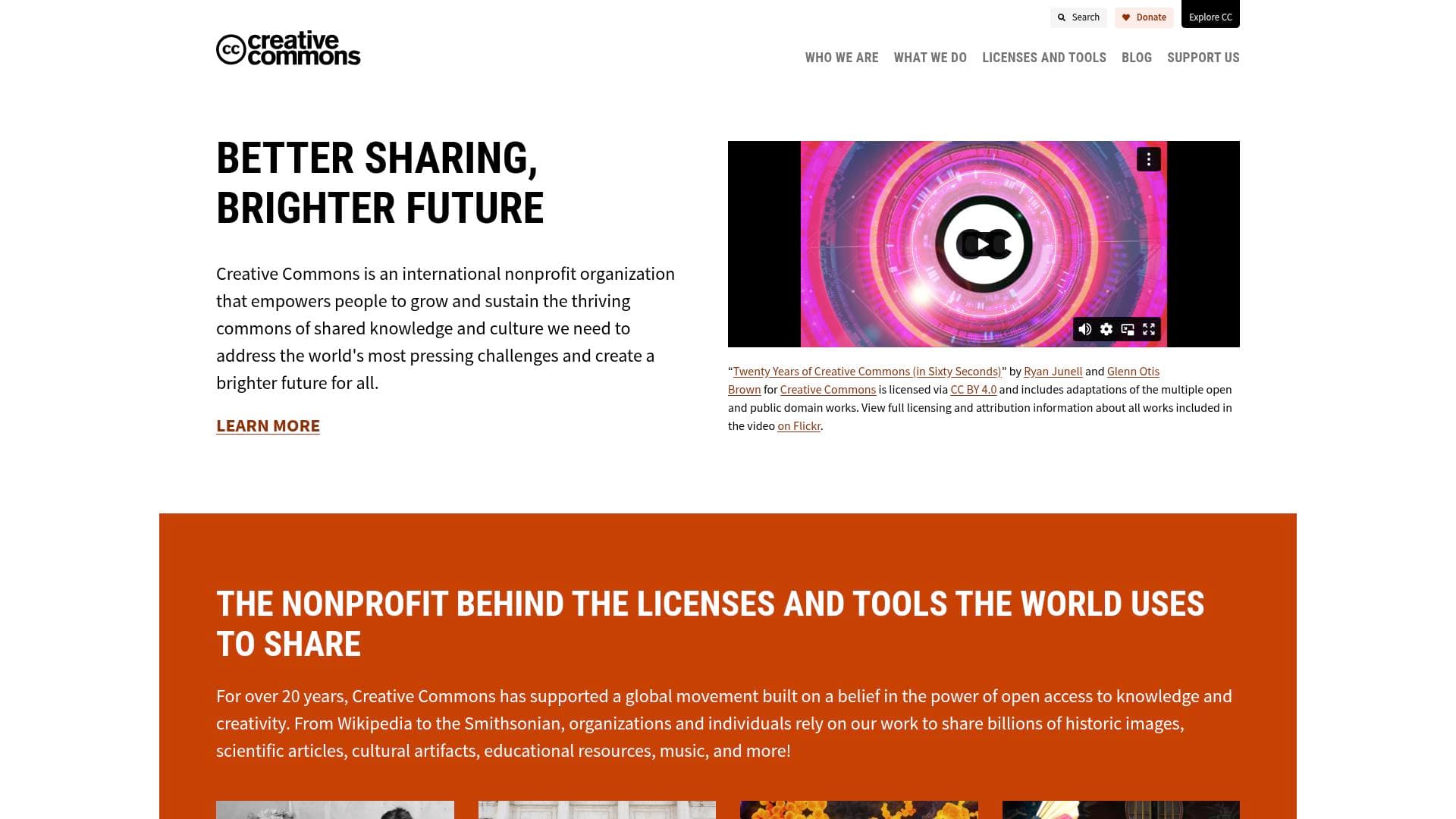
What is Creative Commons? A Content Creator's Guide
Creative Commons is an international nonprofit organization that has spent over 20 years building the legal infrastructure content creators need to share their work openly and intentionally. For YouTubers, bloggers, podcasters, and any creator who publishes original content, one of the most persistent challenges is controlling how that work gets used, remixed, or redistributed by others. Creative Commons solves this by providing a free, globally recognized set of licenses that let creators communicate exactly what others can and cannot do with their content. Rather than defaulting to "all rights reserved" copyright, creators can choose from a spectrum of open licensing options that reflect their specific goals, whether that means allowing commercial use, restricting adaptations, or dedicating work entirely to the public domain. The organization's tools are relied upon by individuals and institutions alike, from Wikipedia to the Smithsonian, covering billions of images, scientific articles, cultural artifacts, educational resources, music, and more. For independent creators building an audience and a body of work, Creative Commons provides a practical, legally sound way to participate in the global culture of open sharing without giving up control entirely.
Creative Commons Features That Matter for Content Creators
-
Interactive License Chooser: The License Chooser is a step-by-step tool that walks creators through a short series of yes/no questions to identify the right license for their work. It asks whether attribution is required, whether commercial use is allowed, and whether adaptations must carry the same license terms, then generates the appropriate license automatically. This removes the guesswork from copyright decisions and makes legal licensing accessible to creators with no legal background.
-
Seven Distinct License Options: Creative Commons offers seven different license types, giving creators a meaningful range of control over their work. Options span from CC0 (full public domain dedication) to CC-BY-NC-ND (attribution required, no commercial use, no derivatives). This flexibility means a podcaster who wants credit but welcomes remixes can choose differently from a photographer who wants attribution but no commercial exploitation.
-
CC0 Public Domain Dedication: Creators who want to contribute their work entirely to the public commons can use CC0, which waives all copyright and related rights to the fullest extent possible under law. This is particularly useful for creators producing educational content, stock assets, or reference materials they want freely available to anyone, for any purpose, in any medium or format.
-
Attribution-Only License (CC-BY 4.0): The CC-BY license is one of the most permissive options, allowing anyone to distribute, remix, adapt, and build upon the work, even commercially, as long as credit is given to the original creator. For content creators who want maximum reach and reuse of their work while still being recognized as the source, this is a powerful tool for building visibility and influence.
-
ShareAlike Conditions: Several licenses include a ShareAlike (SA) requirement, meaning anyone who adapts or builds upon the work must release their version under the same license terms. This creates a reciprocal sharing ecosystem where derivative works remain open, which is valuable for creators who want their contributions to keep circulating freely within the commons.
-
NonCommercial Restrictions: Creators who want their content shared freely but not monetized by others can apply a NonCommercial (NC) condition to their license. This is especially relevant for independent creators and artists who rely on their content for income and want to prevent third parties from profiting off their work without permission.
-
NoDerivatives Option: The NoDerivatives (ND) condition allows distribution of the work in its original, unadapted form only. Creators who want their content shared widely but are protective of its integrity, such as documentary filmmakers, journalists, or musicians, can use this to prevent unauthorized remixes or modifications.
-
Machine-Readable Attribution Code: When using the License Chooser, creators can optionally enter details like the title of the work, creator name, link to the work, link to a creator profile, and year of creation. The tool then generates machine-readable code alongside the human-readable license text, making it easier for search engines and platforms to correctly attribute and surface the work.
-
Global Legal Infrastructure: Creative Commons licenses are designed to function across jurisdictions, addressing the legal complexity that arises when content crosses international borders. For creators with global audiences, this means their licensing terms carry recognized legal weight whether their content is shared in the US, Europe, or anywhere else.
-
Open Infrastructure Advocacy: Beyond the licenses themselves, Creative Commons actively works to defend and advocate for open sharing policies at a legislative and policy level. This matters for creators because it means the infrastructure they rely on is being actively protected and maintained by an organization committed to keeping it available and functional long-term.
Which Content Creators Should Use Creative Commons?
Creative Commons is relevant to virtually every type of content creator, but it is especially valuable for those who publish original work and care about how it gets used, credited, or built upon by others. Whether a creator is sharing freely or protecting specific rights, these tools provide a clear, legally grounded way to communicate intent.
-
Primary creator types: Bloggers and writers who publish articles, essays, or tutorials and want to allow republication with credit; musicians and podcasters who want their audio content remixed or shared under specific conditions; photographers and visual artists who contribute images to platforms like Flickr or Wikimedia; educators and course creators who want their materials used freely in classrooms; YouTubers and video creators who produce documentary or educational content and want to control adaptation rights.
-
Experience level: The License Chooser is designed to be beginner-friendly, requiring no legal knowledge to navigate. The step-by-step question format guides creators to the right license regardless of prior experience with copyright law.
-
Specific use cases: A blogger who wants readers to share and republish posts with attribution can apply CC-BY. A musician releasing instrumental tracks for other creators to sample can use CC0 or CC-BY. A photographer contributing to open educational resources can mark images with CC-BY-SA. A documentary filmmaker who wants their work distributed but not altered can apply CC-BY-ND. A course creator building open educational resources can use CC-BY-NC-SA to allow free educational use while blocking commercial exploitation. A creator building a brand and wanting maximum recognition can use CC-BY to ensure their name travels with every share and adaptation.
-
Content types: The licenses apply to any medium or format, including written content, audio, video, images, and educational materials.
Getting Started with Creative Commons
-
Identify your sharing goals: Before choosing a license, consider whether you want to allow commercial use of your work, whether you are comfortable with others remixing or adapting it, and whether you want adaptations to remain openly licensed.
-
Use the License Chooser: Navigate to the Chooser tool and answer the yes/no questions about attribution, commercial use, derivatives, and ShareAlike requirements. The tool will identify the appropriate license from the seven available options.
-
Enter optional attribution details: Add your name, the title of the work, a link to the work, a link to your creator profile, and the year of creation. The tool generates both human-readable license text and machine-readable code for embedding.
-
Apply the license to your content: Use the generated license text and code on your published content, whether on a blog, a video description, a podcast page, or an image hosting platform, so that anyone encountering your work knows exactly how they can use it.
Creative Commons FAQ for Content Creators
Can I use a Creative Commons license for commercial content I also monetize? Yes. Choosing a CC license does not mean giving up your ability to monetize your work. You can apply a NonCommercial license that prevents others from profiting off your content while you retain that right yourself.
Is a Creative Commons license permanent? Yes. CC licensing is not revocable. Once you apply a CC license to a work, anyone who received it under those terms can continue to rely on them. This is an important consideration before applying any license.
What is the difference between CC-BY and CC0? CC-BY requires anyone who uses your work to give you credit as the creator. CC0 is a full public domain dedication that waives all rights, including the right to attribution, allowing completely unrestricted use.
Can I apply a Creative Commons license to any type of content? The licenses apply to any medium or format, including written articles, audio recordings, video, and images. Creators must own or have authority to license the work before applying a CC license.
What does ShareAlike mean for my content? If you apply a ShareAlike condition, anyone who remixes, adapts, or builds upon your work must release their modified version under the same license terms. This keeps derivative works within the open commons.
Do Creative Commons licenses work internationally? Yes. The licenses are designed to function across different legal jurisdictions, which is particularly useful for creators with global audiences whose content is shared and reused across borders.
The Verdict: Is Creative Commons Worth It for Content Creators?
Creative Commons is an essential resource for any content creator who publishes original work and wants intentional control over how it is shared, credited, adapted, or used commercially. The License Chooser makes the process of applying legally recognized copyright terms genuinely accessible, even for creators with no legal background. The range of seven license types means there is an appropriate option for nearly every sharing scenario, from full public domain dedication to tightly restricted noncommercial, no-derivatives licensing.
The main limitation to be aware of is that CC licensing is irrevocable once applied, so creators should think carefully about their goals before committing to a license for any given piece of work. There is also no enforcement mechanism built into the licenses themselves; they are legal tools, not technical restrictions.
For bloggers wanting their writing republished with credit, musicians sharing samples, educators building open courseware, or photographers contributing to the public commons, Creative Commons provides the legal foundation to share confidently and on your own terms. After more than 20 years of building and maintaining this infrastructure, it remains one of the most trusted and widely adopted systems for open content licensing in the world.
Details
One link. Every channel, rate, and piece of work brands need to evaluate you. Built for how creators actually get hired.
Claim your profile
Live creator, content, and marketing roles from real companies, with the pay, market, and context the raw job page never gives you.
Browse jobs
 Post Bridge