

Copy Smith
Copysmith is an AI content infrastructure company behind three specialized platforms — Frase, Describely, and Rytr — built to help creators rank in search, get cited by AI engines, and scale content production.
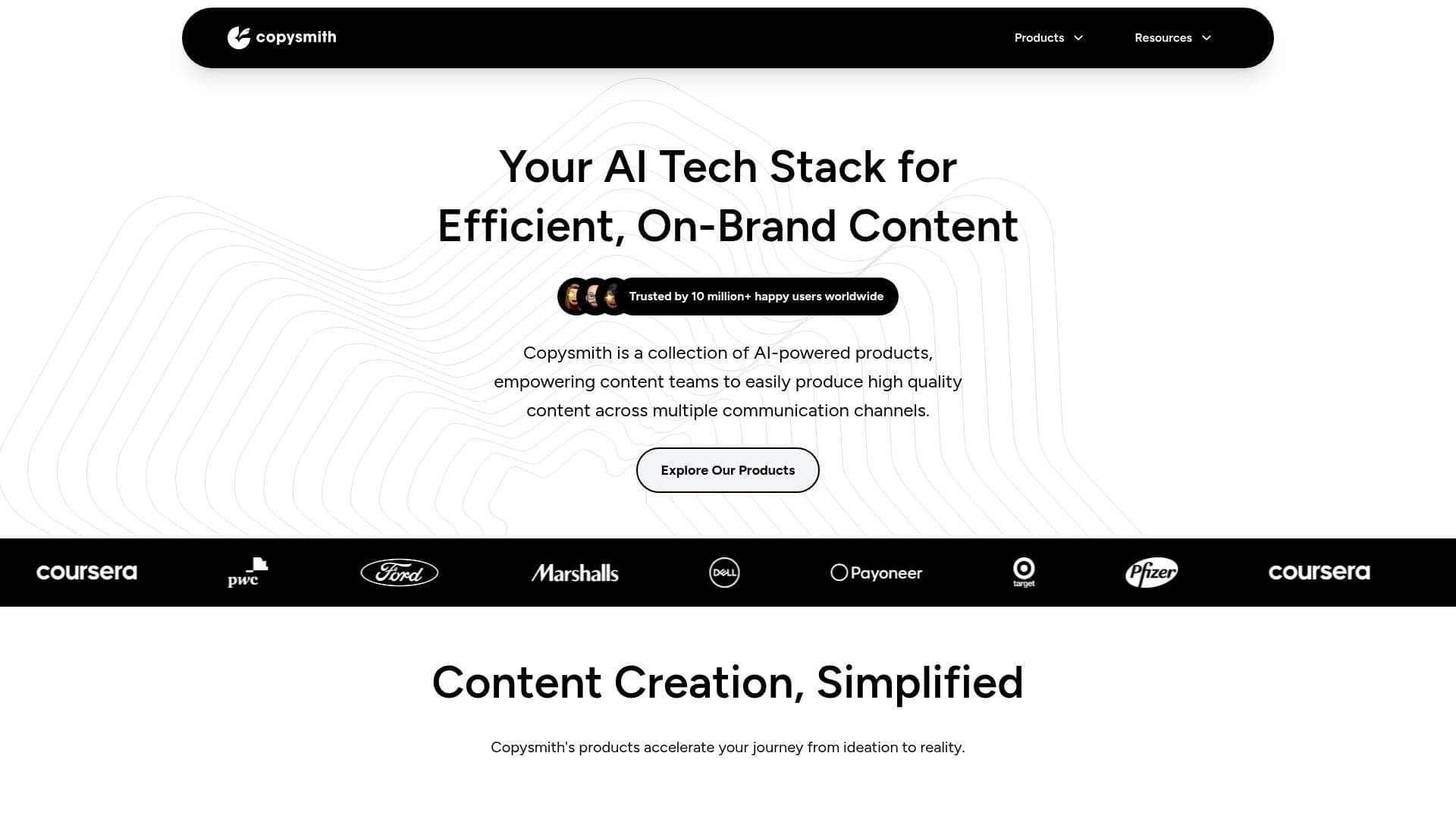
What is Copysmith? A Content Creator's Guide
Copysmith is an AI content infrastructure company that operates three distinct platforms — Frase, Describely, and Rytr — each solving a different piece of the modern content creation puzzle. Rather than offering a single generalist writing tool, Copysmith built what it calls the first GEO-native content stack, where each platform reinforces the others in a continuous cycle. The core problem it addresses is one every serious content creator faces: content needs to rank on Google, get cited by AI-powered search engines like ChatGPT and Perplexity, and scale to thousands of pages without burning out the team behind it. At the center of this approach is Generative Engine Optimization (GEO) — a discipline rooted in a 2023 research paper from Princeton University and Georgia Tech — which focuses on getting content discovered, cited, and recommended by AI search engines, not just traditional search results pages. Frase handles SEO and GEO tracking, Describely automates bulk content generation for product-heavy creators and eCommerce brands, and Rytr produces voice-matched writing across every channel. Together, they form a content creation workflow that covers research, writing, optimization, and distribution. Trusted by over 30,000 content teams and rated 4.8 on G2 with 295+ reviews, Copysmith's ecosystem is built for creators who need to stay visible in a world where AI increasingly answers questions before users ever click a link.
Copysmith Features That Matter for Content Creators
-
GEO Scoring and AI Citation Tracking (Frase): Frase assigns a GEO score to every piece of content, giving creators a clear signal of how visible they are to AI search engines before they even publish. It tracks brand citations across ChatGPT, Perplexity, Google AI Overviews, Claude, and Gemini in real time, with alerts when those citations change. For creators building authority in a niche, knowing exactly where AI engines are referencing your content — and where they aren't — is a significant strategic advantage.
-
Agentic SEO with 80+ Skills (Frase): Frase's AI agent handles the entire SEO workflow autonomously, covering research, drafting, and optimization across more than 80 individual SEO skills. Creators can focus on strategy and editorial direction while the agent handles the repetitive groundwork. It's designed to reduce the time from topic idea to published, optimized article from days to minutes.
-
Programmatic SEO and Site Auditor (Frase): For creators managing large content libraries or topic clusters, Frase audits thousands of pages and generates optimized content programmatically. This means fixing SEO gaps at scale without manual spreadsheet work, making it especially useful for bloggers or newsletter writers expanding into high-volume content strategies.
-
Frase Integrations: Frase connects directly with Google Search Console, WordPress, Webflow, Sanity, HubSpot, and Shopify, fitting into the publishing stacks most creators already rely on.
-
Bulk Product Description Generation (Describely): Describely can generate over 1,000 SEO-optimized product descriptions in a single week, starting from a simple CSV upload or PIM connection. For creators who run eCommerce stores alongside their content channels, this eliminates the bottleneck of manually writing listings for every SKU. Target Australia used Describely to achieve a 60x faster turnaround with 98% accuracy.
-
Brand Rules Engine (Describely): Creators can define their tone, banned words, required attributes, and style preferences once, and Describely applies those rules consistently across every piece of content it generates — whether that's 10 products or 10,000. This keeps brand voice consistent without requiring manual review of every output.
-
Data Enrichment (Describely): When product data is sparse or inconsistent, Describely fills in the gaps automatically — generating tags, categories, SEO fields, meta descriptions, and more from whatever raw data exists. Creators running product-focused channels or affiliate content operations benefit from richer, more complete listings without extra research time.
-
MyVoice Technology (Rytr): Rytr's MyVoice feature analyzes 50 samples of a creator's existing writing — emails, blog posts, social content — and learns the specific patterns that define their voice. The result is a reported 97% voice match, meaning AI-generated content sounds like the creator wrote it personally. This is a meaningful distinction for creators whose audience loyalty is tied to a distinctive writing style.
-
Multi-Channel Output from a Single Prompt (Rytr): One prompt in Rytr can produce an email, a LinkedIn post, an ad, and a document simultaneously, with the AI automatically adapting format, length, and tone for each channel. Creators managing presence across multiple platforms can produce a full content suite without rewriting the same message five times.
-
Chrome Extension (Rytr): Rytr's Chrome extension embeds directly into Gmail, Google Docs, LinkedIn, Twitter, WordPress, and Slack, so creators can generate on-brand content without switching tabs or copying between tools. It also includes a built-in tone analysis feature that recommends the optimal tone for a given piece of writing.
Which Content Creators Should Use Copysmith?
Copysmith's three-platform ecosystem covers a wide range of creator needs, from solo bloggers trying to rank in AI search to large content teams managing thousands of product pages. The depth of each platform means it skews toward creators who are serious about content strategy, not just casual writers looking for a quick draft. Here's a breakdown of who gets the most value from each platform.
Primary creator types:
- Bloggers and SEO-focused writers who want to rank on Google and also get cited by AI engines like ChatGPT and Perplexity
- Newsletter writers looking to produce consistent, voice-matched content faster across multiple channels
- eCommerce creators and product-focused YouTubers or TikTokers who need to generate large volumes of product descriptions or affiliate listings
- Social media creators who need to adapt a single message across LinkedIn, Twitter, email, and ads without rewriting from scratch
- Content strategists managing large topic clusters or programmatic content operations
Experience level: Rytr is accessible for beginners, while Frase and Describely are better suited to creators with some familiarity with SEO concepts and content workflows.
Team size: All three platforms work for solo creators, but the bulk generation and programmatic SEO features in Frase and Describely are particularly powerful for small teams managing high content volume.
Specific use cases:
- A blogger optimizing existing articles to appear in Google AI Overviews and ChatGPT answers
- A YouTuber running a product review channel who needs SEO-ready descriptions for hundreds of affiliate products
- A newsletter writer training Rytr on their existing archive to maintain voice consistency when scaling output
- A creator-turned-eCommerce operator generating an entire product catalog's worth of descriptions from a single CSV
- A social media manager producing platform-specific versions of a brand announcement from one prompt
- A content team auditing thousands of pages for GEO readiness before a site relaunch
- A podcaster repurposing episode content into emails, show notes, and social posts using Rytr's multi-channel output
- A creator building topical authority who needs to track where AI engines are and aren't citing their content
Copysmith FAQ for Content Creators
What are the three platforms Copysmith operates? Copysmith operates Frase (AI search intelligence and GEO platform), Describely (eCommerce content generation), and Rytr (AI writing with voice-matching technology). Each platform is purpose-built for a specific content job, but they're designed to work together as a unified content infrastructure.
What is GEO and why does it matter for creators? Generative Engine Optimization (GEO) is the practice of optimizing content to be discovered, cited, and recommended by AI-powered search engines like ChatGPT, Perplexity, and Google AI Overviews. As more users get answers directly from AI without clicking through to websites, creators who aren't optimized for these systems risk becoming invisible. GEO is rooted in a 2023 research paper from Princeton University and Georgia Tech.
Which AI search engines does Frase track? Frase tracks brand citations and visibility across five AI platforms: ChatGPT, Perplexity, Google AI Overviews, Claude, and Gemini. Creators receive real-time monitoring and alerts when citations change.
How does Rytr's MyVoice feature work? MyVoice analyzes 50 samples of a creator's existing writing to learn the specific patterns that define their voice. After training, every email, ad, social post, or document Rytr generates reflects that voice with a reported 97% voice match accuracy.
What platforms does Rytr's Chrome extension support? The Rytr Chrome extension works directly inside Gmail, Google Docs, LinkedIn, Twitter, WordPress, and Slack, allowing creators to generate content without leaving the tools they already use.
How fast can Describely generate product descriptions? Describely can produce over 1,000 product descriptions per week from a CSV upload or PIM connection. Based on the Target Australia case study, teams using Describely achieved a 60x faster turnaround with 98% accuracy compared to manual writing workflows.
What tools does Frase integrate with? Frase integrates with Google Search Console, WordPress, Webflow, Sanity, HubSpot, and Shopify.
The Verdict: Is Copysmith Worth It for Content Creators?
Copysmith is a strong fit for content creators who think seriously about discoverability — not just on Google, but in the AI-powered search landscape that's rapidly reshaping how audiences find information. The combination of Frase's GEO scoring and AI citation tracking, Describely's bulk content automation, and Rytr's voice-matched writing covers three genuinely distinct creator needs under one strategic umbrella.
The standout capability is Frase's GEO infrastructure. For bloggers, newsletter writers, and content strategists who want their work cited by ChatGPT or surfaced in Google AI Overviews, having a platform that scores, tracks, and optimizes for AI visibility is a meaningful edge. Rytr's MyVoice technology is equally compelling for creators whose brand is built on a recognizable writing style — the ability to scale output without losing voice is a real problem, and a 97% voice match is a credible solution.
The main consideration is that Copysmith's ecosystem is built for creators who are already invested in content strategy. Casual or occasional writers may find the depth of Frase and Describely more than they need. But for creators running content operations at any meaningful scale — whether that's a high-volume blog, a product-heavy channel, or a multi-platform social presence — Copysmith's three-platform approach addresses the full content lifecycle from creation to citation.
Details
One link. Every channel, rate, and piece of work brands need to evaluate you. Built for how creators actually get hired.
Claim your profile
Live creator, content, and marketing roles from real companies, with the pay, market, and context the raw job page never gives you.
Browse jobs

 Post Bridge