
YouTube Shorts vs Long-Form Content: Which Fits Your Creator Personality
Choosing between YouTube Shorts vs long-form content? Your motivation type determines which format you will actually stick with. Find out which one fits you.
Details
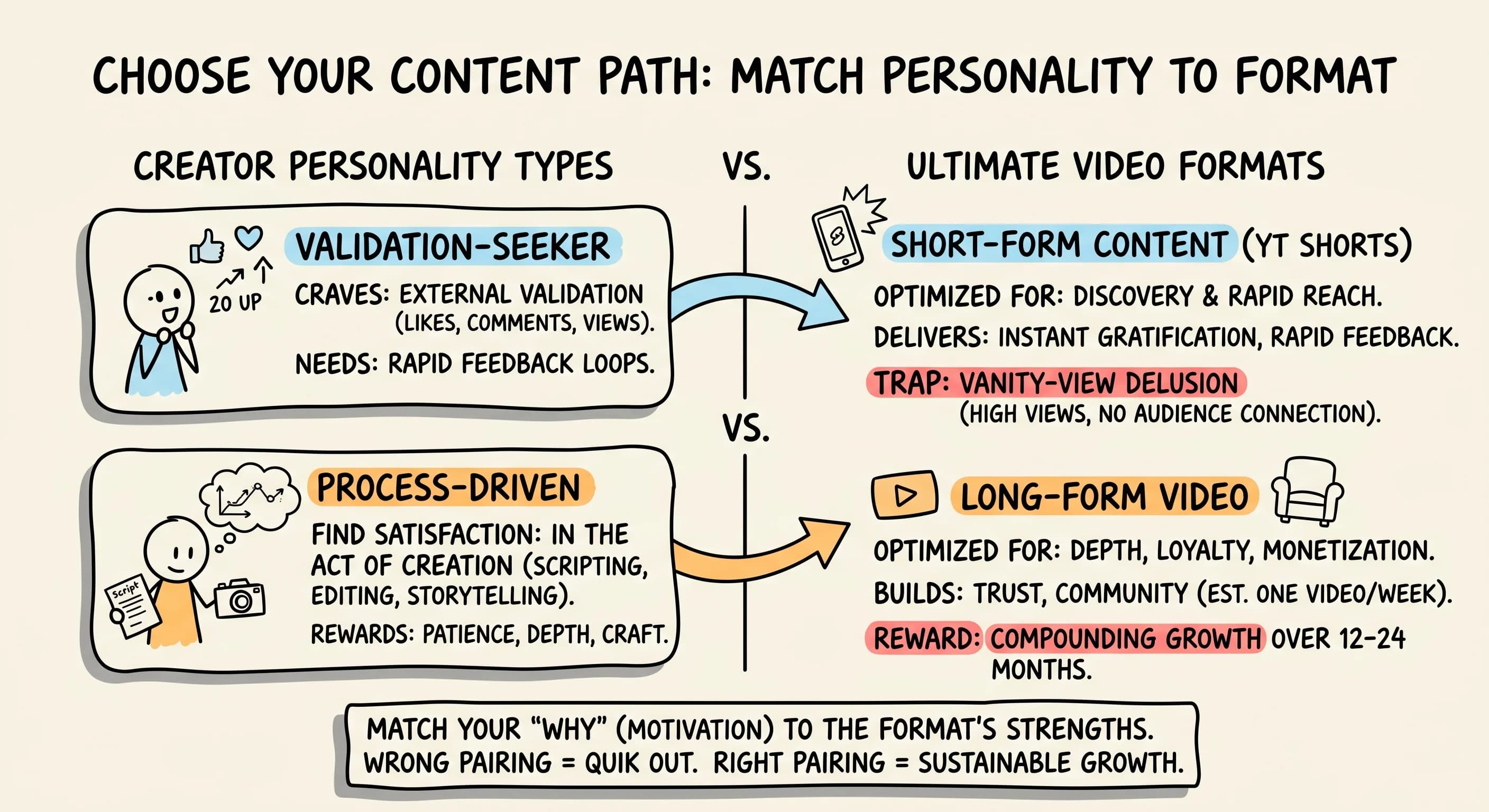
Most new creators quit before their tenth video. Not because they lack talent or ideas, but because they chose the wrong format for their personality. Understanding the psychology behind YouTube Shorts vs long-form content could be the difference between building a thriving YouTube channel and burning out silently.
Why Your Motivation Type Matters More Than Your Niche
Before you film a single second of video content, ask yourself one honest question: Why do I actually want to create? Your answer determines everything, especially whether you should use Shorts or commit to long-form video. Starting a new YouTube channel without that self-knowledge is one of the most common reasons creators stall out in the first three months.
There are two distinct creator motivation types. The first craves external validation, likes, comments, subscriber counts, and view spikes. The second is process-driven, finding satisfaction in the act of creation itself. Neither type is wrong. But putting the wrong youtube creator in the wrong format is a recipe for early dropout.
Experts who coach youtube creators on sustainable youtube channel growth reinforce this exact point. The right approach comes down to your ultimate goal with YouTube, your personal strengths, and what you can consistently execute. That last one matters more than most people realize.
Shorts vs Long Videos on YouTube: Which One Wins?
Creators are always asking: what video length is best for YouTube? The honest answer is that it depends on what kind of content you are building and what you need from the process. YouTube rewards both types of content, but in very different ways, and the distinction between them has widened as the platform has matured.
When it comes to youtube shorts and long-form video sitting side by side on the same platform, many creators are surprised to discover that they serve almost entirely different audience behaviors. Shorts get attention in seconds, while long-form videos earn trust over minutes. Both outcomes matter, but they serve different strategic goals.
How Do Shorts and Long-Form Compare?
The most useful way to look at shorts vs long form content is through the lens of what each format is actually optimized for. Short-form video is built for discovery and rapid reach. Long form content is built for depth, loyalty, and monetization. Understanding that split is the foundation of any smart content strategy.
Compared to long-form, a single piece of content in the short format can reach hundreds of thousands of people who have never heard of your channel. A longer video watched all the way through builds the kind of trust that turns a casual viewer into a subscriber who actually shows up for your next upload. Those are different content types doing different jobs, and treating them as interchangeable is a mistake that costs many creators months of wasted effort.
Here's YouTube Shorts vs long-form content at a glance:
| Dimension | YouTube Shorts | Long-form video |
|---|---|---|
| Built for | Discovery and rapid reach | Depth, trust, and loyalty |
| Speed of feedback | Hours | Weeks to months |
| Algorithm | Shorts feed, favors new viewers | Recommendations, favors watch time |
| Revenue (RPM) | Low shorts RPM | Higher, unlocks mid-roll ads |
| Subscriber quality | Lower long-form conversion | Higher-intent, sticky viewers |
| Best for | Testing ideas, fast subscriber growth | Monetization and durable channel authority |
YouTube Shorts vs Long Videos: Matching Format to Psychology
Validation-Seekers and Short-Form Content
 If you check your analytics obsessively, refresh your notifications, and feel deflated when a video underperforms, short-form content is your natural habitat. YT Shorts and TikTok deliver rapid feedback loops. Short content can accumulate views, comments, and engagement within hours of posting.
For this creator type, the instant gratification of the Shorts feed acts as fuel. Each spike in metrics reinforces the behavior and keeps you publishing consistently. Using shorts for discovery is ideal for rapid testing because you find out quickly whether an idea resonates before investing hours into a longer video.
If you force a validation-seeker into long form content, where one long-form video might take weeks to gain traction, the silence becomes demoralizing fast. You have probably experienced this. You upload something you are proud of, and it sits at 23 views for two weeks. For a process-driven creator, that is fine. For someone who needs feedback to keep going, it is crushing.
One pattern that shows up repeatedly in creator communities is shorts creators describing feeling genuinely addicted to checking views and likes, releasing new content daily to feed that need for feedback. When they try to switch to long-form without adjusting their expectations, they burn out within a month. The format and the motivation were misaligned from the start.
Process-Driven Creators: Embrace Long Form Videos
 If you lose yourself in scripting, editing, and storytelling, long form videos are built for you. Long-form video rewards patience, depth, and craft. Long form content compounds views over time, is less dependent on daily algorithm spikes, and functions more like an appreciating asset than a one-off lottery ticket.
Success on a new youtube channel rarely happens overnight, but if the process itself energizes you, the slow build will not break your momentum. For process-driven creators, finishing a well-edited ten-minute video that 47 people watched is still satisfying. That is not a failure. That is practice, and those 47 people are far more likely to stay and keep watching than someone who found you through a 30-second clip.
The key is deliberately keeping expectations low on early metrics. A new video with 47 views is not failure, it is practice. Detaching from view counts during the first ten videos protects your motivation long enough for compounding growth to kick in.
Creator education sources that track long-form growth consistently frame this format as the foundation for successful youtube channels. One high-quality video per week, focused on building an evergreen content library and honing your style, where quality and consistency eventually cut through the noise.
How Does the YouTube Shorts Algorithm Work?
The shorts algorithm operates very differently from the standard YouTube recommendation engine. Rather than relying heavily on your existing subscriber base, it surfaces content to fresh audiences based on early engagement signals like swipe-away rate, likes, and replays. This is why shorts views can spike dramatically even on channels with zero subscribers.
There is an important nuance here. The shorts algorithm is optimized to keep viewers inside the Shorts feed, not to route them to your channel page or your long-form uploads. This creates the well-documented pattern of high short-form video views with almost zero downstream traffic to your other content. High Shorts views with zero downstream traffic to your long uploads is one of the most frustrating experiences for creators who built their entire strategy around the format without understanding this mechanism first.
To understand what Shorts are actually doing for your channel, look at channel click-through rate alongside raw view counts. Raw view totals alone are misleading.
Shorts Revenue vs Long-Form Earnings
One of the main issues creators run into when it comes to monetization is the significant gap between what Shorts and long form videos actually pay. YouTube Shorts monetization exists through the YouTube Partner Program, but the rates are substantially lower per view than traditional youtube ad revenue. Long-form videos carry a significantly higher shorts RPM than the Shorts feed because they support mid-roll ad placements and attract advertisers willing to pay for an engaged, attentive audience. Shorts revenue can add up at scale, but for most channels it remains a secondary income stream rather than a primary one.
Can creators earn money from Shorts only? Technically yes, but the economics are challenging unless your views are extremely high and consistent. For most channels, using YouTube as a business requires long-form as the revenue foundation, with Shorts driving discovery and growth on top.
What is the best video length for YouTube monetization? For ad revenue, videos over eight minutes unlock mid-roll ads, which meaningfully increase earnings per view. That makes eight to fifteen minutes the sweet spot for creators focused on monetization rather than pure reach.
Do YouTube Shorts Subscribers Watch Long-Form Videos?
This question gets to one of the most debated topics in creator communities. If it is easier for a viewer to subscribe after a brief Shorts encounter, is that audience as discerning as someone who watched your long-form content and actively decided to subscribe? A shorts viewer who subscribes after a 30-second clip is often less likely to watch the long-form than someone who subscribed after sitting through fifteen minutes of your work.
Are they then considered a lower quality subscriber? Not inherently, but the conversion rate from Shorts viewer to long-form viewer is measurably lower on most channels. That does not mean those subscribers have no value. It means your content strategy needs to account for the warm-up time required to shift their behavior. You want viewers who found you through Shorts to eventually become interested in your long-form catalog, and that shift requires deliberate effort.
You probably know creators who like combining their formats specifically to bridge this gap. They use Shorts to grow a channel audience, then deploy a deliberate community post or pinned comment strategy to pull those subscribers toward their longer content and watch the long-form videos they might otherwise skip.
Shorts or Long-Form Content: Which Should Beginners Choose?
 Can a beginner start with Shorts? Absolutely. If you are starting a youtube channel with limited equipment, limited time, and limited editing experience, making Shorts is a genuinely low-barrier entry point. You can test ideas, build a posting habit, and learn what resonates with viewers without committing to longer productions.
For anyone wondering whether Shorts are your best bet as a beginner, the answer depends on your goals. Dedicated shorts channels have grown quickly in subscriber count, but they often struggle to convert that attention into revenue or loyal long-form viewers. If you want to build a channel that earns meaningful income and develops a real audience, you will eventually need to focus on long form content regardless of where you start.
Shorts or long-form content: which grows your channel faster? Shorts typically produce faster subscriber growth in the short term. Long form content produces stronger audience retention, higher revenue, and more durable channel authority over twelve to twenty-four months. How long does it take to grow a YouTube channel with Shorts vs long-form? Most creators using only Shorts see faster early numbers, but long-form channels that reach the one-year mark consistently report stronger monthly revenue and watch time.
Use Shorts and Long-Form Together: A Hybrid Approach
Once established, many creators use shorts and long-form together strategically. The workflow that shows up most consistently among sustainable channels looks like this: record one strong long-form video, then clip three to seven vertical snippets of 15 to 60 seconds, add subtitles and a hook, and publish those as Shorts with a call to action pointing to the full video. This approach lets Shorts channels that started with shorts eventually build a long-form library without starting from scratch.
Repurposing long-form videos into Shorts is one of the most efficient ways to expand your reach without doubling your workload. You use youtube shorts to push your long form content to new audiences while keeping your creative energy focused on the depth that long-form videos give you. The practice of converting long-form YouTube videos into short clips also means each long video generates multiple pieces of content simultaneously, and long-form videos rank better in YouTube search over time as they accumulate watch time signals.
This hybrid path also opens multiple income streams. A content ecosystem built around long-form and short-form working together means discovery through Shorts and revenue through long-form. Shorts can generate early momentum while long-form builds the foundation. Creators who track long-term channel value consistently report more stable revenue and stronger audience relationships when long-form is their foundation. Use youtube shorts and long-form together and you create a content ecosystem where each format supports the other rather than competing.
Tools like Nexus Clips are specifically designed to help creators repurpose footage into Shorts efficiently, which removes much of the friction from running both formats without doubling your workload.
Protecting Your Mental Health as a New Creator
One thing that does not get talked about enough is how damaging the wrong metrics focus can be early on. There is a real pattern that creator educators call the vanity-view delusion. High shorts views and dopamine spikes that do not translate into meaningful audience connection lead to frustration when numbers dip, and the creator starts chasing metrics rather than enjoying the work. This pattern can help you build momentum early, but it can also hollow out your motivation if you let it run unchecked.
A few practical rules that experienced creators recommend:
If you are building long form content, check your analytics once a week maximum. Focus on watch time and average percentage viewed rather than raw view counts. Those numbers tell you whether people actually value what you made.
If you are running Shorts as your primary format, track likes and comments per 1,000 views and channel click-through rate, not just raw views. Raw view counts on Shorts are notoriously misleading and can make you feel successful while your content gets no traction toward your actual goals.
The goal in both cases is the same: protect your motivation long enough to reach video ten, video twenty, video fifty. That is where real growth begins.
Start With Self-Awareness, Not Strategy
The best content type is the one you will stick with past video ten. Audit your motivation honestly, align your format choice accordingly, and protect your creative energy early. Different content formats help you build different things, and knowing which one fits your wiring is the most underrated skill in the YouTube creator toolkit.
Think Media founder Sean Cannell, who built a channel past 3 million subscribers, frames the format question around three things: your goals, your personal strengths, and how much time you can consistently execute. Not what is trending, not what the algorithm rewards this month, but what you can actually sustain.
That self-awareness is your real competitive advantage. Most people skip it entirely and wonder why they burned out.
Read more about Becoming a Content Creator
📚 Complete Guides
- How to Become a Content Creator: Complete Beginner's Guide
- Content Creator Platform Guide: Choose the Right Platform to Start Your Creator Journey
⚡ Tactics & Strategies
- 50% Retention Rate Optimization for YouTube Algorithm Success
- Age Bracket as Superpower Strategy for Older UGC Creators
- AI Workflow Integration for Content Reduction
- Audience Consistency Strategy to Avoid Algorithm Penalties
- Audience Poll on Instagram to Source Q&A Content in Advance of Recording
📄 Related Articles
- Social Media SEO: How UGC Creators Get Found by Brands
- The Four Sentence Story: A Writing Exercise for Better Content
- Instagram Engagement Strategy: The 5-10 Minute Rule
- Competitive Content Analysis: The 5-Competitor Method
- How to Find Your Target Audience (Start With One Person)
- Educational YouTube Video Ideas: The Candy vs. Veggies Strategy for Maximum Appeal
- Counter-Positioning: How to Win by Going Against the Grain
- The LinkedIn Hook: Templates and Types to Stop the Scroll
Read more about Systems, Workflows & Operations for Content Creators
Read more TikTok Resources for Content Creators
📚 Complete Guides
⚡ Tactics & Strategies
- Creating Viral Content Through Polarizing and Educational Hooks
- Finding and Supporting Small Creator Communities
- Long-Form to Short-Form Content Batching System
- Matching Content Format (Shorts vs Long-Form) to Creator Motivation Type
- Monetizing Through Paid Sound Campaigns
🧮 Calculators
Read more YouTube Resources for Content Creators
📚 Complete Guides
⚡ Tactics & Strategies
- 50% Retention Rate Optimization for YouTube Algorithm Success
- Candy vs Vegetables Packaging Strategy for Educational Content
- Click-Through Rate Optimization as YouTube's Primary Success Metric
- Creating Viral Content Through Polarizing and Educational Hooks
- Doubling Production Effort Per Video to Exponentially Increase Views
🧮 Calculators

Alex Kirillov
Details
One link. Every channel, rate, and piece of work brands need to evaluate you. Built for how creators actually get hired.
Claim your profile
Live creator, content, and marketing roles from real companies, with the pay, market, and context the raw job page never gives you.
Browse jobs