
Competitive Content Analysis: The 5-Competitor Method
Discover the 5-business content analysis tool that transforms struggling creators into successful marketers. Learn proven competitive analysis strategies for content marketing success.
Details
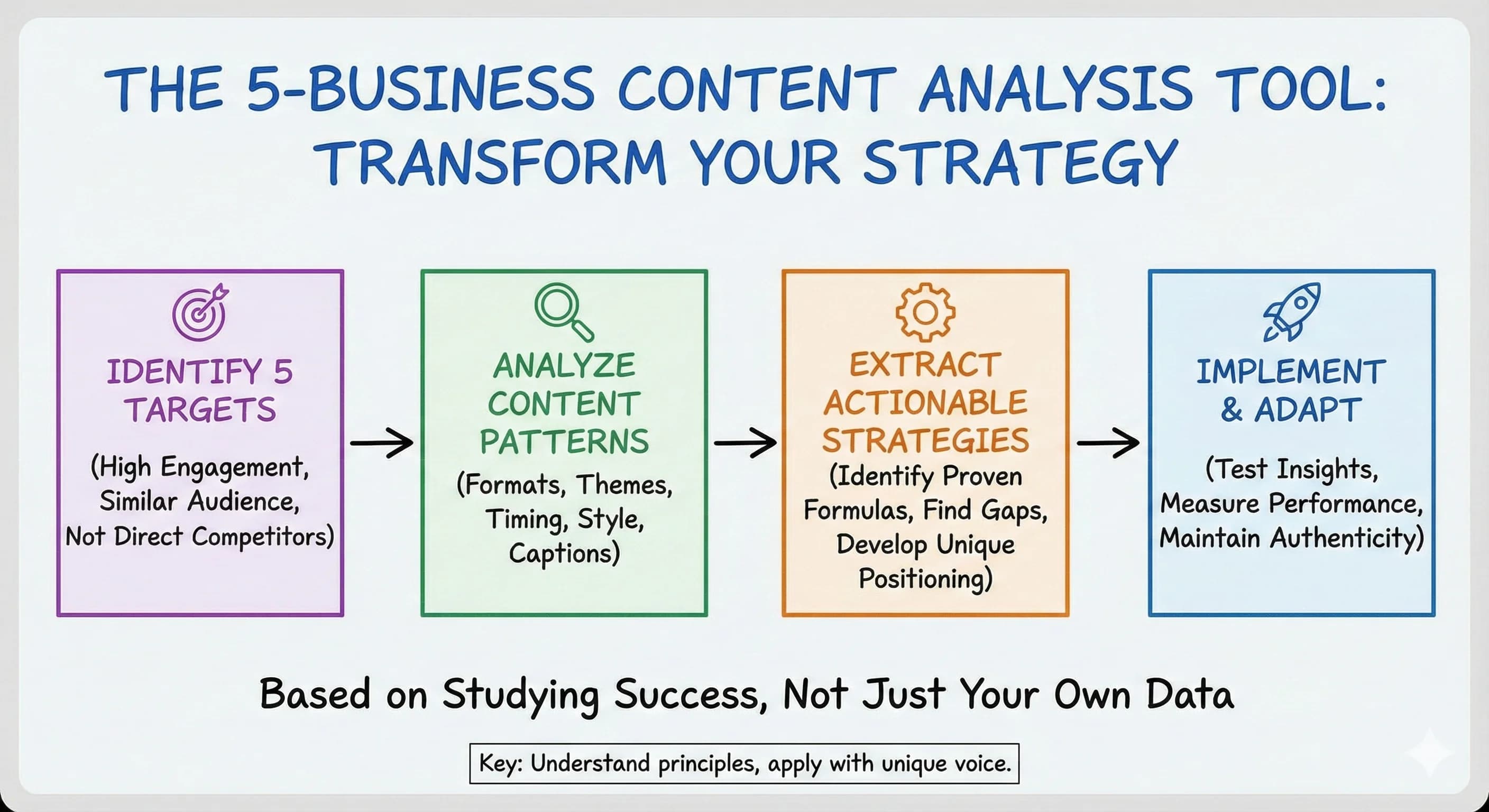
When your content isn't getting the traction you hoped for, you're probably not understanding what your audience actually wants. The fix isn't expensive software: it's a competitive content analysis, a structured look at what your competitors publish, what works for them, and where the gaps are that you can own.
A competitive content analysis simply means studying your competitors' content the way a strategist would: the formats they use, the topics that perform, the keywords they rank for, and the content gaps they've left open. Done well, it turns guesswork into a winning content strategy built on what's already proven in your niche.
Why Analyzing Your Content in a Vacuum Fails
You've likely been staring at your own analytics, wondering why your posts aren't landing. Here's what most content creators get wrong: they analyze their performance in a vacuum without considering the broader competitive landscape. While social media marketing tools provide valuable metrics, they don't reveal why your competitors succeed where you struggle.
Successful content creation requires understanding not just your performance, but your industry's performance patterns. When content isn't resonating, the problem often lies in misaligned content strategies rather than poor execution. You're creating in the dark instead of learning from what's already proven to work.
The 5-Competitor Method: A Simple Competitive Content Analysis Framework
This proven competitor analysis framework involves systematically analyzing five competitors, similar businesses or creators that demonstrate strong engagement. Unlike complex competitor analysis tools that overwhelm you with data, this competitive content analysis method focuses on actionable insights you can implement immediately. Think of it as a lightweight competitive analysis template you can run in an afternoon and repeat every quarter.
Take creator Michelle Phan, who analyzed successful beauty creators before building her own empire. She studied their tutorial formats, lighting setups, and presentation styles across multiple successful channels before developing her unique approach. This type of strategic analysis helped her understand what resonated with beauty audiences.
Step 1: Identify Your Competitive Analysis Targets
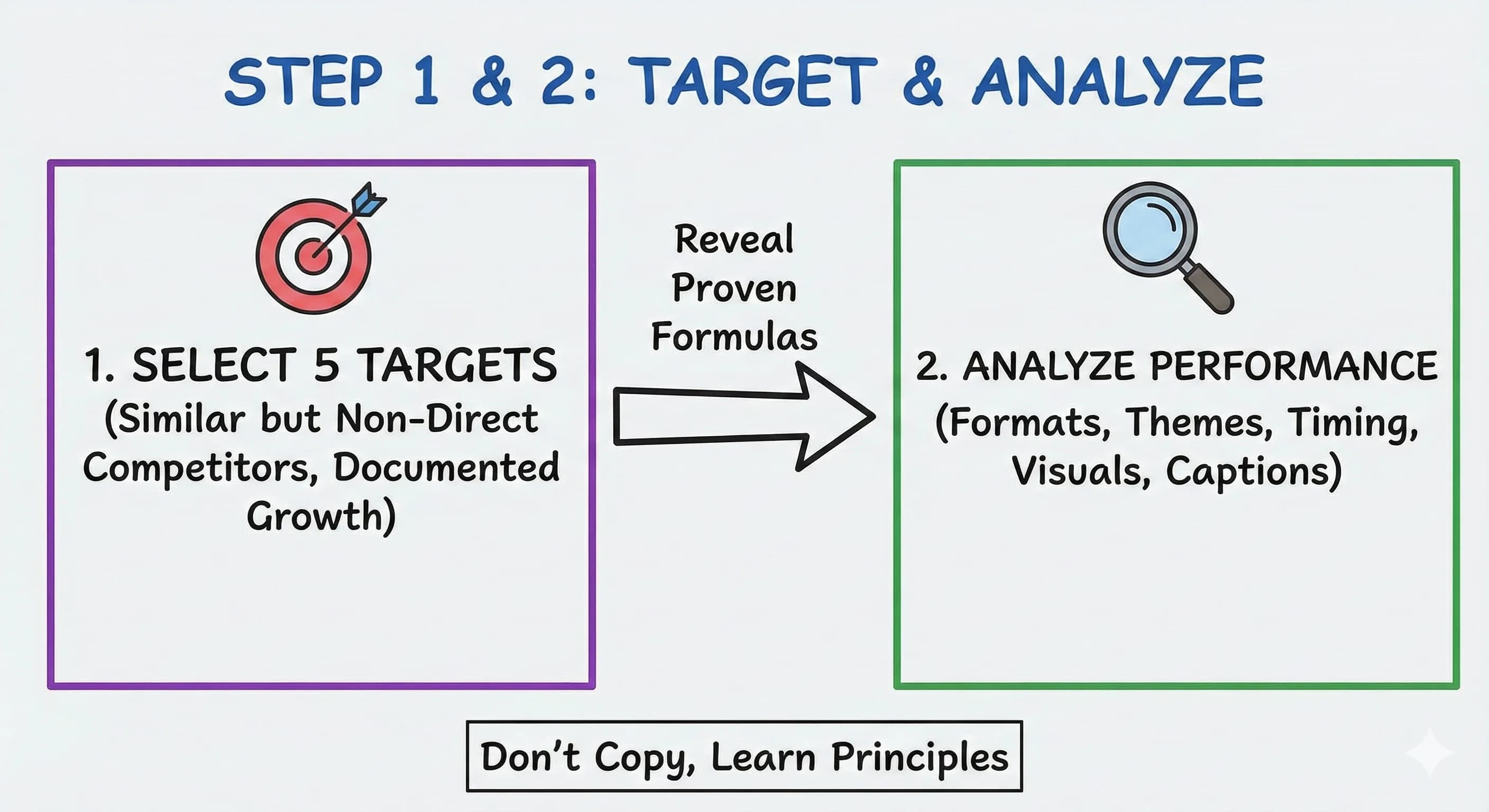
Select five businesses or creators in your niche with consistently high engagement. Look for accounts that serve a similar audience but aren't direct competitors: you want inspiration, not copying. These become your content analysis subjects, providing the foundation for your marketing campaign improvements.
Focus on creators who've documented their growth. For instance, productivity creator Thomas Frank analyzed successful educational YouTubers before developing his signature style of mixing entertainment with actionable advice, leading to over 2.8 million subscribers.
Step 2: Analyze Content Performance Patterns
Examine their recent posts using this content analysis tool approach:
- Document content formats generating highest engagement (videos vs. carousels vs. single images)
- Identify recurring themes and topics that consistently perform well
- Note posting frequency and optimal timing patterns
- Analyze visual styles, color schemes, and presentation methods
- Track which captions or hooks generate the most comments
This competitive analysis reveals what resonates with your shared target audience. You're not looking to copy, you're identifying proven formulas you can adapt to your voice.
Step 3: Extract Actionable Content Strategies
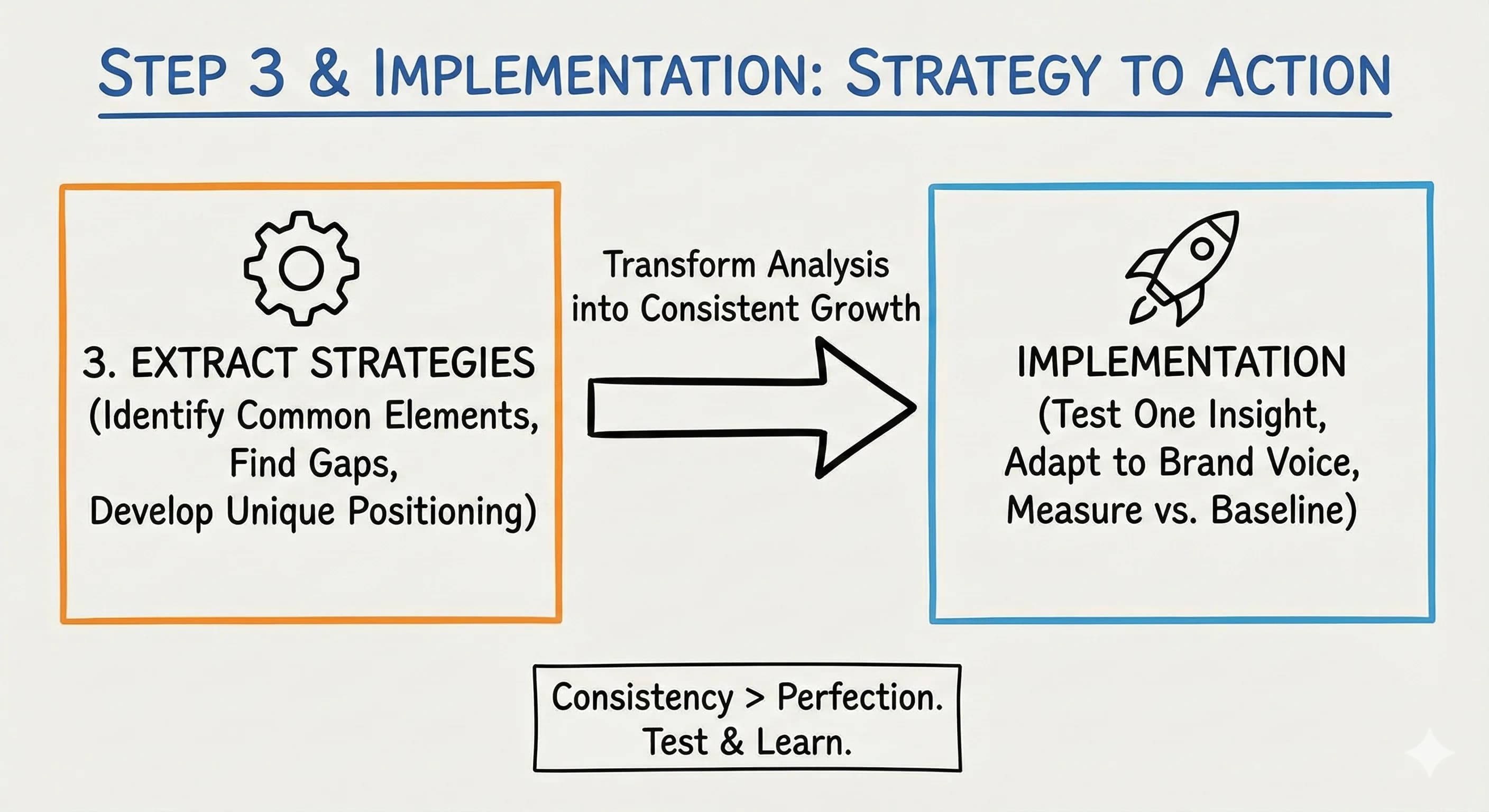
Look for patterns across all five creators or businesses. Common elements likely indicate proven marketing strategies that work within your industry. This analysis tool helps identify content creation opportunities you've overlooked.
Creator Pat Flynn used this approach when transitioning from architecture to online business education. He studied successful business educators, identified gaps in beginner-friendly content, and positioned himself as the "regular guy" teaching business basics. This counter-positioning strategy helped him build a multi-million dollar brand.
What Are the 4 Types of Social Media Analytics?
Effective content analysis encompasses four key areas that most analytics tool platforms track:
- Engagement analytics - likes, comments, shares, saves
- Reach analytics - impressions, audience growth, and discovery metrics
- Conversion analytics - click-throughs, website visits, and actions taken
- Competitive analytics - performance relative to similar creators in your space
Understanding these metrics helps you benchmark your performance against successful creators in your analysis.
SEO and Keyword Competitive Content Analysis
Engagement is only half the picture. The other half lives in search, and a complete competitive content analysis has to look at the keywords and blog content your competitors rank for. Pull each competitor's top-performing pages and note the keyword each one targets. Patterns emerge fast: the topics several competitors all cover are the ones your audience is actively searching for.
Pay attention to content format and content length too. If every competitor ranking for a keyword has published a 2,000-word guide with a mix of content formats, a thin 400-word post won't compete. This is where SEO and content strategy meet: you're not just matching your competitors, you're looking for the angle that lets you create superior content on the same topic.
Free and paid competitor keyword tools speed this up, but even a manual pass through competitors' blog content and their SEO titles will surface most of the opportunities.
Content Gap Analysis: Find What Your Competitors Missed
A content gap analysis flips the exercise around. Instead of copying what competitors do well, you hunt for what they've ignored: the questions their content leaves unanswered, the keyword no one in your niche has covered properly, the audience segment everyone overlooks. Those content gaps are your fastest route to a competitive advantage, because you can own them before anyone else notices.
Run a quick SWOT-style pass on each competitor: their content strengths and weaknesses, where their content quality dips, and where their coverage stops. The overlap of "high demand" and "weak competitor coverage" is where your next winning content lives. Repeat this content gap analysis each quarter and you build a durable competitive edge instead of a one-time snapshot.
Implementation Across Multiple Platforms
This content marketing strategy works across platforms with slight modifications for each environment:
Instagram: Focus on visual content styles, caption length, hashtag strategies, and story formats. Beauty creator James Charles analyzed successful makeup artists' posting patterns before developing his bold, tutorial-heavy approach.
LinkedIn: Analyze post formats, professional topics, engagement timing, and comment-driving questions. Career coach Jenny Blake studied successful business leaders' content before developing her pivot-focused messaging.
TikTok: Study video formats, trending sounds, content themes, and hook strategies. Dance creator Charli D'Amelio's team analyzed viral dance content patterns before developing her signature approachable style.
Twitter: Examine tweet structures, conversation starters, thread formats, and timing patterns. Marketing creator Gary Vaynerchuk analyzed successful business voices before developing his direct, no-BS communication style.
Best Competitor Analysis Tools to Enhance Your Research
While manual analysis provides core insights, these marketing tools can accelerate your research:
Sprout Social offers comprehensive competitor monitoring with engagement tracking and post analysis across networks. It's particularly useful for identifying top-performing content formats and optimal posting times.
Sociality tracks multiple competitors' posts, content types, engagement patterns, and timing while generating automated reports on successful patterns.
BuzzSumo helps identify high-engagement content in your niche and shows which formats drive the most shares and comments.
 These analytics tools complement your manual analysis but shouldn't replace the strategic thinking behind pattern recognition.
Transform Analysis Into Action
The most effective analysis tool becomes worthless without proper implementation. You can't just copy what works, you need to adapt successful elements to fit your brand voice while maintaining authenticity.
Start by testing one insight at a time. If you notice successful creators in your space use carousel posts with bold, contrasting colors, create your own version with your brand colors and messaging style. Measure performance against your baseline metrics.
Creator Ali Abdaal used this approach when building his productivity channel. He analyzed successful educational creators, identified the gap for evidence-based productivity advice, and developed his unique blend of personal experience and scientific research. This positioning helped him grow to over 4 million subscribers.
Turning Insights Into Consistent Growth
This competitor analysis tool transforms struggling content strategies into engagement magnets, but consistency matters more than perfection. By understanding what works for similar creators, you'll develop content marketing approaches that resonate with your audience and drive meaningful results across all platforms.
The key isn't becoming like everyone else, it's understanding the underlying principles that make content work, then applying those principles through your unique perspective. When you combine proven patterns with authentic voice, you create content that both algorithms and audiences love.
Start your analysis today by identifying those five creators or businesses. Your content breakthrough might be just one pattern away.
Read more about Becoming a Content Creator
📚 Complete Guides
- How to Become a Content Creator: Complete Beginner's Guide
- Content Creator Platform Guide: Choose the Right Platform to Start Your Creator Journey
⚡ Tactics & Strategies
- 50% Retention Rate Optimization for YouTube Algorithm Success
- Age Bracket as Superpower Strategy for Older UGC Creators
- AI Workflow Integration for Content Reduction
- Audience Consistency Strategy to Avoid Algorithm Penalties
- Audience Poll on Instagram to Source Q&A Content in Advance of Recording
📄 Related Articles
- Founder Brand: How to Build One Without the Burnout
- The AI Persona Template for Consistent, On-Brand Content
- Media Kit for Content Creators: What to Include (and Auto-Update)
- How Many Followers Do You Need to Make Money? (Start at 500)
- Content Gap Analysis: A Step-by-Step Guide for Creators
- Creator Collectives: How They Land Bigger Brand Deals
- Business Storytelling: What Movies Teach Creators
- Personal Brand Identity: How One Signature Item Built Instant Recognition
Read more about Systems, Workflows & Operations for Content Creators
Free: The 5-Business Content Analysis Kit
Get the interactive tool, downloadable PDF, and Notion template - all free.
No spam. Unsubscribe anytime.

Alex Kirillov
Details
One link. Every channel, rate, and piece of work brands need to evaluate you. Built for how creators actually get hired.
Claim your profile
Live creator, content, and marketing roles from real companies, with the pay, market, and context the raw job page never gives you.
Browse jobs