
Personal Brand Identity: How One Signature Item Built Instant Recognition
Discover how one content creator used a simple pink purse to transform her brand recognition strategy and build lasting audience connection through signature item branding.
Details
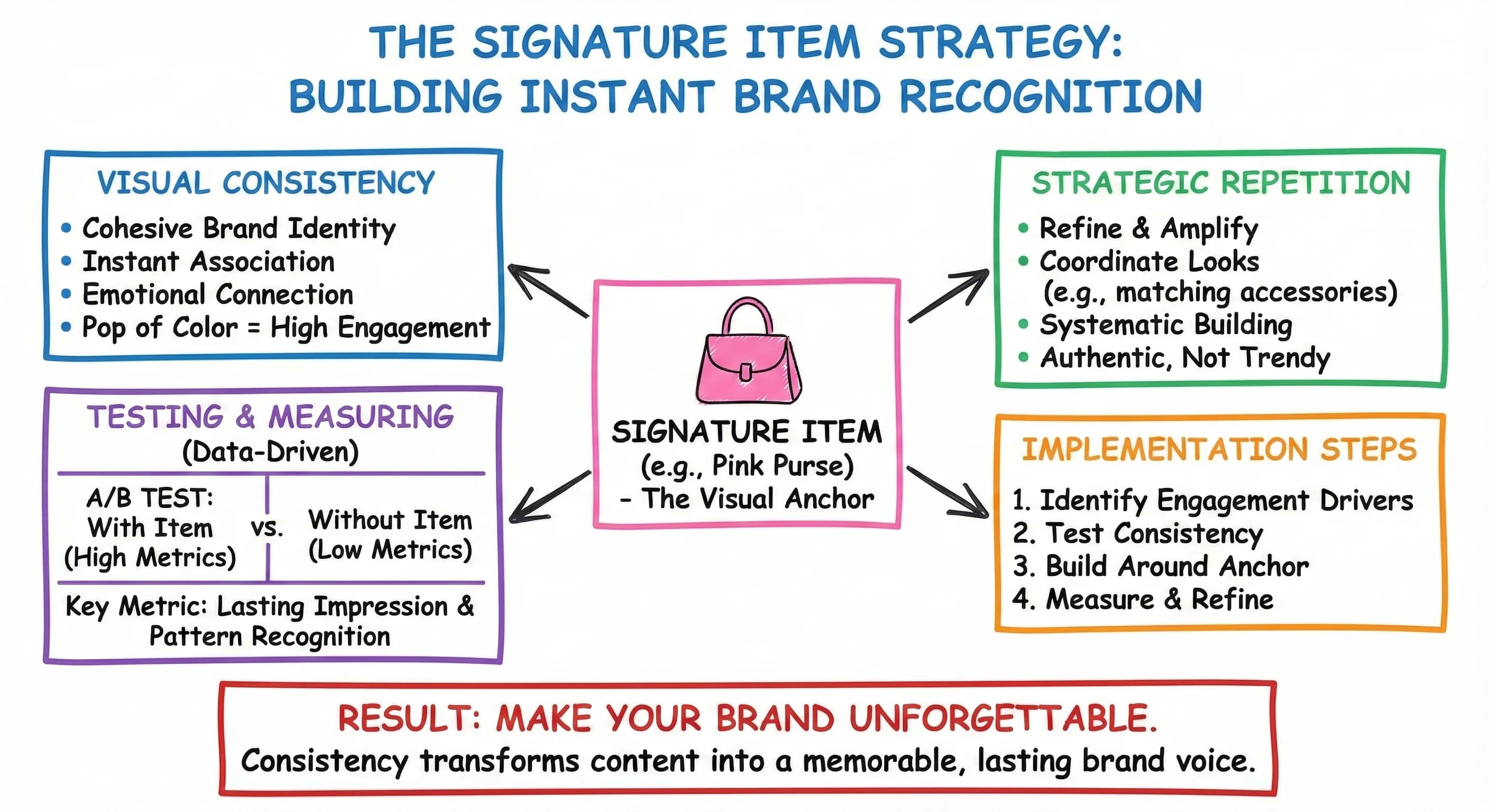
In the competitive world of content creation, standing out requires more than just great photos: it demands a clear personal brand identity. One content creator discovered this when a simple pink purse became the cornerstone of her personal brand, transforming her Instagram presence and creating lasting recognition that resonates with her target audience.
This isn't just a lucky coincidence. It's proof of how a personal brand identity actually works: you find one thing that genuinely represents you, then you repeat it until your audience can't picture you without it. When you look at creators who've built a strong personal brand, they all share this trait. They found something that fit both their personal style and their audience's preferences, then amplified it consistently.
What a Personal Brand Identity Really Is
A personal brand identity is the set of signals people use to recognize you before they read a single word you wrote. It is not your logo, and it is not one polished profile picture. It is the consistent thread, visual and verbal, that runs through everything you publish.
Think of your personal brand as the answer to a simple question: what do people say about you when you are not in the room? For this creator, the answer became "the one with the pink bag." That is what a signature element does. It gives your personal brand identity a hook that sticks. Before you can build your personal brand, you need to know what that hook is for you, because personal branding isn't decoration you add at the end. It is the foundation everything else sits on.
The Power of Visual Consistency in Your Personal Brand
Building a personal brand identity isn't just about color schemes: it's about creating visual anchors your audience instantly associates with you. This creator's pink purse became exactly that, a consistent visual brand element that appeared across multiple posts and gave her personal brand a look people could recognize at a glance.
When she wore the pink bag as a "pop of color," those specific posts performed exceptionally well. The audience engagement told a clear story. This signature item was creating an emotional connection that other content wasn't achieving. The pink purse became her personal brand in visual form, speaking to her audience before she even wrote a caption.
This mirrors what other creators have discovered about signature elements. Take Emma Chamberlain's coffee obsession or James Charles' bold makeup looks. These aren't random choices. They're deliberate decisions that create immediate visual shorthand for their personal brands. Your signature item becomes the thing people associate with you before they even see your username.
Build the Visual Layer of Your Brand Identity
Your signature item is the anchor, but a complete visual brand needs a few more consistent pieces. Choose a small palette of colors and use them everywhere. Pick a typography style, one or two fonts, and keep it across your graphics and thumbnails. Use the same headshot or profile picture on every platform so your face reads as one person, not five.
None of this has to be complicated. A cohesive personal brand identity often comes down to repetition: the same colors, the same font, the same energy, the same signature element, post after post. That repetition is what makes your brand feel intentional instead of accidental.
Define What Your Personal Brand Stands For
Visuals get you recognized, but they don't tell people why to care. That's the job of your value proposition. Before you build your personal brand any further, get clear on your unique value proposition: who you help, what you help them do, and what makes your take different.
Write it down as a short mission statement or tagline, the kind of line you could put in your bio or as your link in bio. When your value proposition is clear, everything else gets easier, because every post either supports that promise or it doesn't. A personal brand identity without a value proposition is just a nice aesthetic. With one, it becomes a reason to follow.
Building Your Personal Brand Through Strategic Repetition
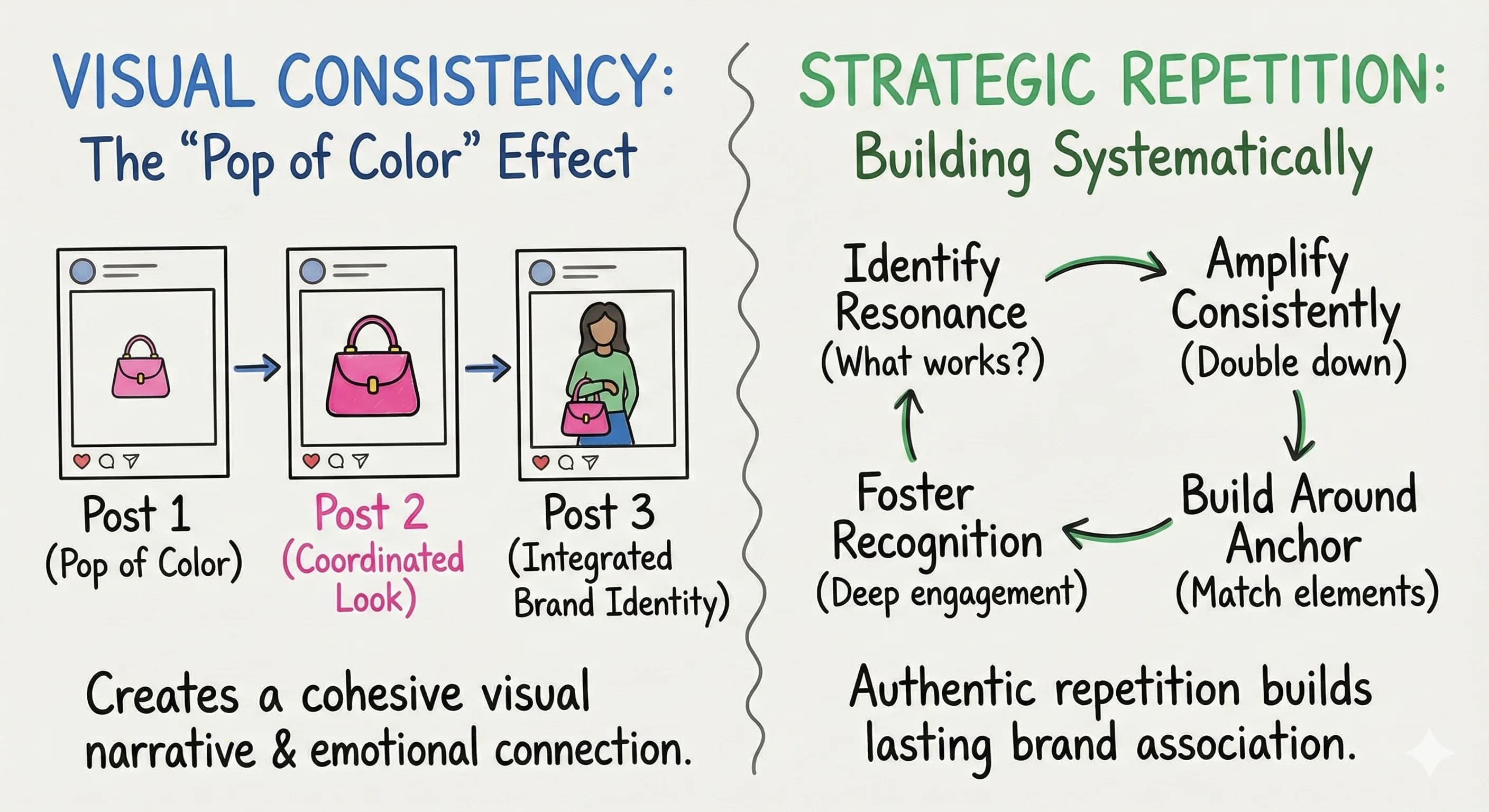 The most powerful part of this strategy wasn't the initial success: it was how she refined her personal brand based on audience response. She began matching other elements to the pink bag, creating entire looks that centered around this signature piece. Pink accessories, complementary colors, and coordinated outfits all aligned with her emerging brand identity.
This shows how to build your personal brand systematically. Rather than constantly changing aesthetics, she doubled down on what resonated with her audience, creating the kind of consistency that deepens recognition and engagement.
You've probably seen this work for other creators too. Think about how lifestyle creators like Aspyn Ovard built recognition around neutral, minimalist aesthetics, or how fitness creators like Whitney Simmons became known for specific workout gear and color palettes. The key isn't finding something trendy: it's finding something authentically you that your audience connects with.
Keep Your Personal Brand Consistent Across Platforms
A personal brand identity only compounds when it's the same person everywhere. The creator who is instantly recognizable on Instagram should be just as recognizable on LinkedIn, on Substack, or anywhere else they show up. Same value proposition, same visual cues, same voice.
That doesn't mean posting identical content on every platform. It means the core of your personal brand, the promise and the look, stays constant while the format adapts. Someone who discovers your LinkedIn thought leadership and then finds your Substack should feel they've met the same person twice, not two strangers who happen to share a name.
Show Up Authentically, Not Just Consistently
Consistency without authenticity reads as a costume. The reason the pink purse worked is that it fit the creator: it felt authentic, not bolted on. A personal brand identity that resonates has to embody something true about you, quirks included. Audiences are quick to sense when a brand feels inauthentic or overly formal, and they disengage from it.
This is also where well-known personal brands earn trust. Gary Vaynerchuk's high-energy delivery and Simon Sinek's focus on thought leadership work because each one is unmistakably theirs. You don't copy their style; you find the version of consistency that feels authentic to you and repeat it until it becomes your signature.
Testing and Measuring Your Personal Brand Strategy
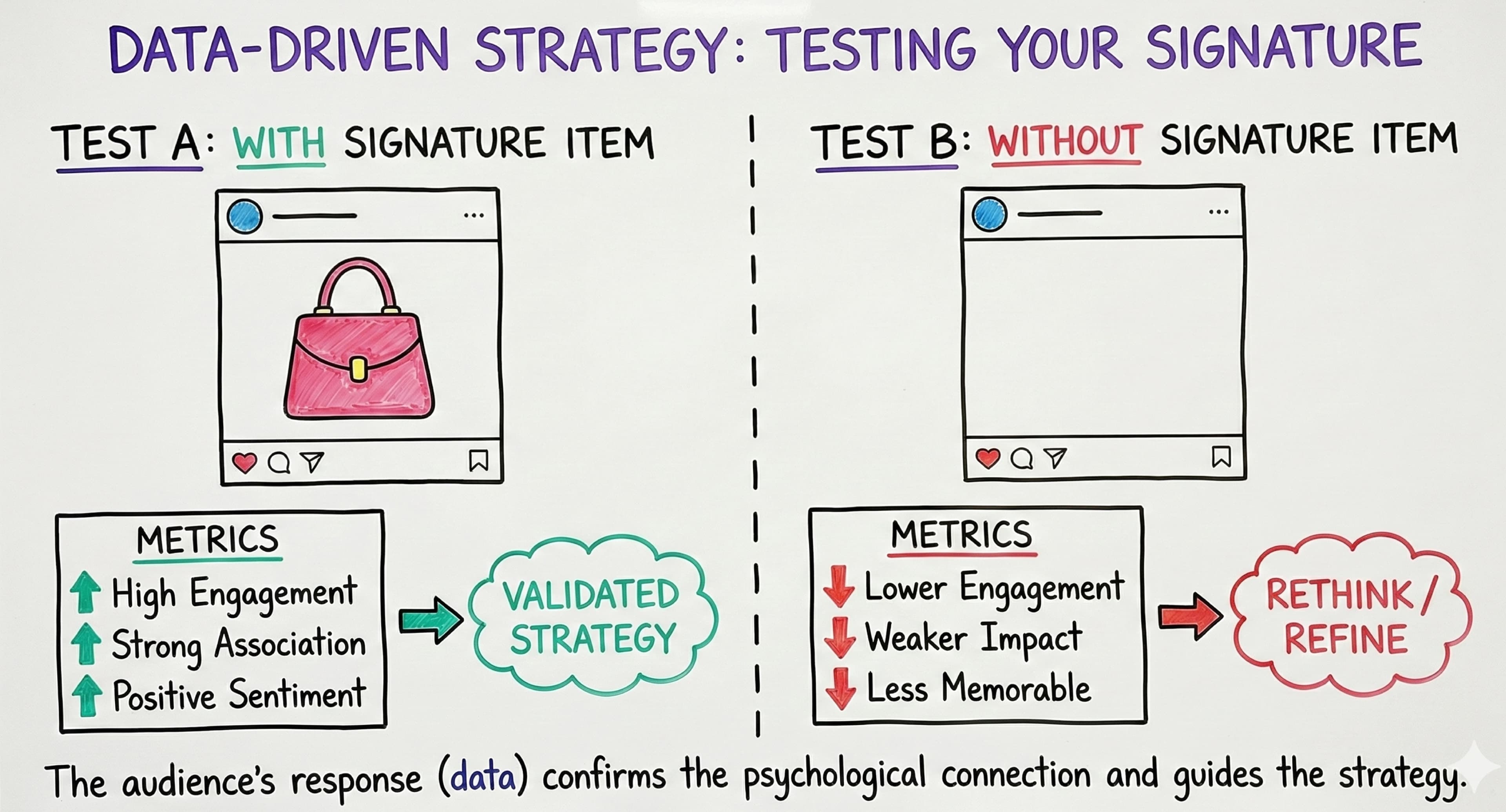
What makes this approach smart is the data behind it. She tested her theory by occasionally posting content without pink elements, and the metrics confirmed her suspicions. Those posts underperformed. This kind of testing is crucial for anyone looking to build a personal brand that actually lands.
The key metric wasn't just likes or comments, but the lasting impression she was creating. Her audience began associating her with pink, proof that her personal brand identity was working at a psychological level.
This testing separates creators who build recognition from those who struggle to. You can't just assume something works: you need to measure it. When beauty creator Nikkie Tutorials leaned into bolder, more colorful looks, she tracked which styles generated the most engagement and brand mentions. Your audience will tell you what strengthens your personal brand, but only if you're paying attention to the data.
A Step-by-Step Roadmap to Build Your Personal Brand
Use this as a simple roadmap, a template you can adapt to your own niche:
1. Define your value proposition - Write one sentence on who you help and what makes your take different. This is the spine of your personal brand identity.
2. Identify a signature element - Monitor which accessories, colors, or styling choices consistently perform well. Look beyond likes: pay attention to saves, shares, and comments that mention these elements.
3. Lock your visual brand - Set your colors, typography, and profile picture, then use them everywhere so your personal brand looks like one coherent identity.
4. Test consistency - Use your signature element across multiple posts to gauge response. Experiment with different ways of incorporating it.
5. Measure and refine - Track which posts drive profile visits and follower growth, and double down on what resonates.
Remember, this works because it creates pattern recognition. Your followers start to anticipate your signature element, which increases engagement and makes your content more memorable in crowded feeds.
Make Your Personal Brand Unforgettable
 This creator's success illustrates that building a personal brand doesn't require a big budget or a professional team. Sometimes the most effective approach is identifying what already works and amplifying it consistently.
By focusing on one signature item that genuinely fit both her personal style and her audience's preferences, she built a personal brand identity that extends far beyond individual posts. Her pink purse became a symbol of her whole approach: proof that thoughtful consistency can turn any content creator into a memorable, recognizable personal brand.
The beauty of this approach is its accessibility. You don't need a massive budget or a design agency to implement it. You need to define what your personal brand stands for, pay attention to what your audience responds to, and have the discipline to build on that foundation consistently.
Start defining your personal brand identity today. Look at your recent posts and notice the patterns in your highest-performing content. What colors, accessories, or styling choices appear most often? That's your starting point for a personal brand your audience won't forget.
Watch how consistency transforms your recognition, and don't be surprised when followers start associating you with your signature element even outside of social media. That's when you know your personal brand identity is truly working.
Read more about Becoming a Content Creator
📚 Complete Guides
- How to Become a Content Creator: Complete Beginner's Guide
- Content Creator Platform Guide: Choose the Right Platform to Start Your Creator Journey
⚡ Tactics & Strategies
- 50% Retention Rate Optimization for YouTube Algorithm Success
- Age Bracket as Superpower Strategy for Older UGC Creators
- AI Workflow Integration for Content Reduction
- Audience Consistency Strategy to Avoid Algorithm Penalties
- Audience Poll on Instagram to Source Q&A Content in Advance of Recording
📄 Related Articles
- Cold Email Outreach: A 90-Day System for Creators
- Instagram Lead Generation: The Comment-to-Get Strategy
- Influencer Gifting: The Creative Method That Wins Collabs
- How to Drive Traffic From Social Media: The Octopus Tentacle Strategy
- Viral Content: The Big Idea Formula for Content That Spreads
- Bucket Brigades: The Copywriting Technique That Keeps Readers Reading
- Content Batching: Turn One Video Into Weeks of Content
- Influencer Contract Template: What to Include (and Why)
Read more about Audience Building & Growth for Content Creators
📚 Complete Guides
- How to Build an Audience as a Content Creator
- How to Find Your Target Audience (Start With One Person)
⚡ Tactics & Strategies
- 30 Daily Outbound Pitches for UGC Deal Generation
- 50% Retention Rate Optimization for YouTube Algorithm Success
- Age Bracket as Superpower Strategy for Older UGC Creators
- Audience Consistency Strategy to Avoid Algorithm Penalties
- Audience Psychology Over Algorithm Optimization, Focusing on Human Pain Points and Goals Instead of Platform Tactics
Read more about Systems, Workflows & Operations for Content Creators
Free: The Signature Brand Builder
Get the interactive tool, downloadable PDF, and Notion template - all free.
No spam. Unsubscribe anytime.

Alex Kirillov
Details
One link. Every channel, rate, and piece of work brands need to evaluate you. Built for how creators actually get hired.
Claim your profile
Live creator, content, and marketing roles from real companies, with the pay, market, and context the raw job page never gives you.
Browse jobs