How to Spot Trends Early (Before Everyone Else Does)
Learn why successful content creators avoid trending too late and discover the strategy for perfect timing on social media platforms.
Details
Timing isn't just important in content creation, it's everything. You've probably felt that sinking feeling when you finally post your take on a trend, only to watch it get buried under an avalanche of similar content. Here's the reality: most creators are chasing trends instead of riding them, and that's exactly why they're always playing catch-up.
The secret isn't creating better content, it's knowing when not to create it.
Ever wonder how some brands always seem ahead of the curve, jumping on the next big thing before everyone else? It comes down to a repeatable process for identifying emerging trends before they hit the mainstream, and knowing when to walk away.
What Is Trend Spotting and Why Trend Spotting Matters
Trend spotting is the practice of identifying an emerging trend while it still has room to grow, rather than after it's already everywhere. For content creators and marketing teams alike, spotting a trend early is the difference between leading the conversation and joining a crowd that's already moving on.
The goal isn't to react to every trending topic. It's to find trends early, filter out the noise, and act inside the window when your content can still gain traction. That's where the real first-mover advantage lives.
The Mainstream Media Death Signal Every Creator Needs to Know
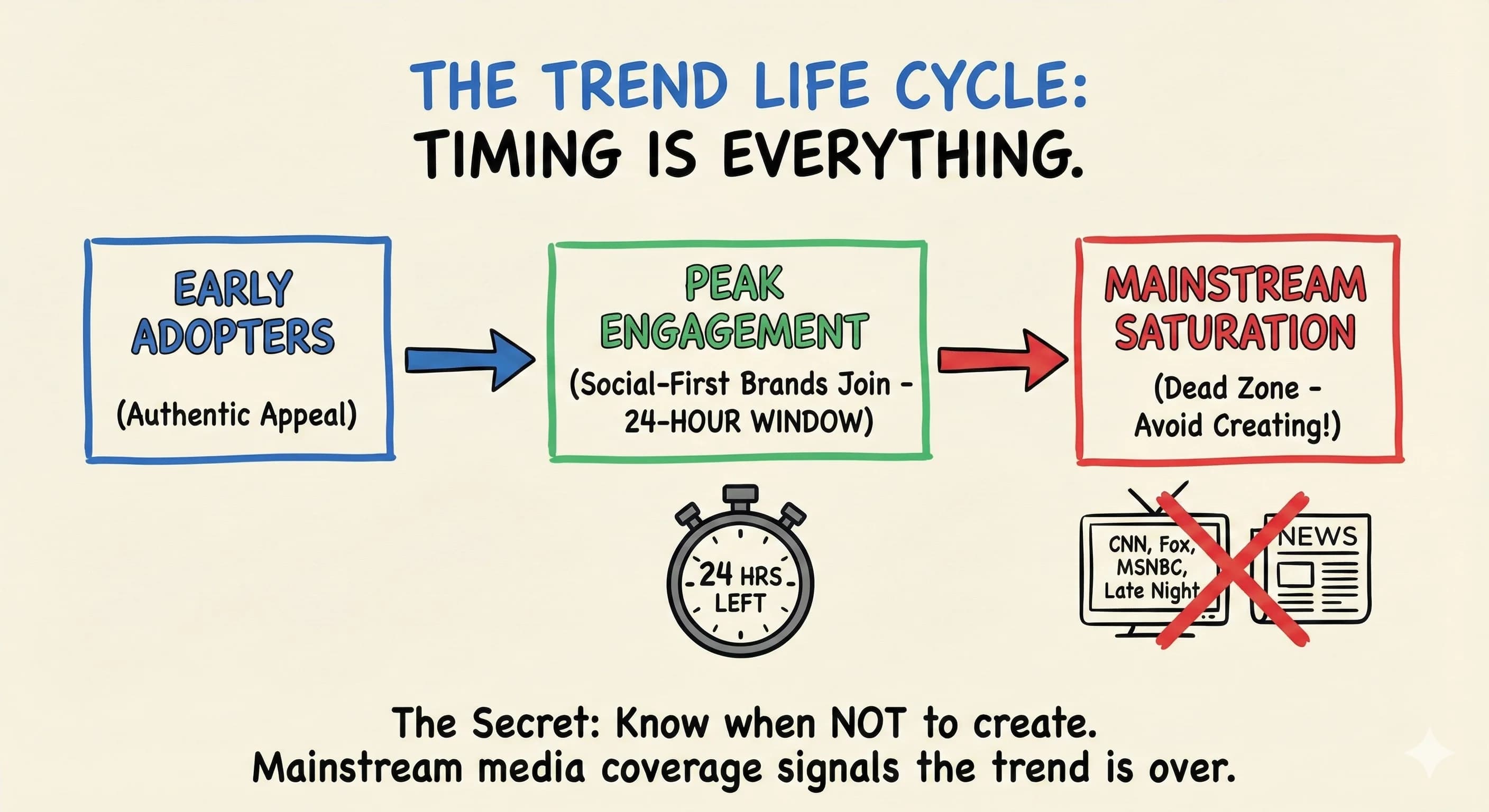
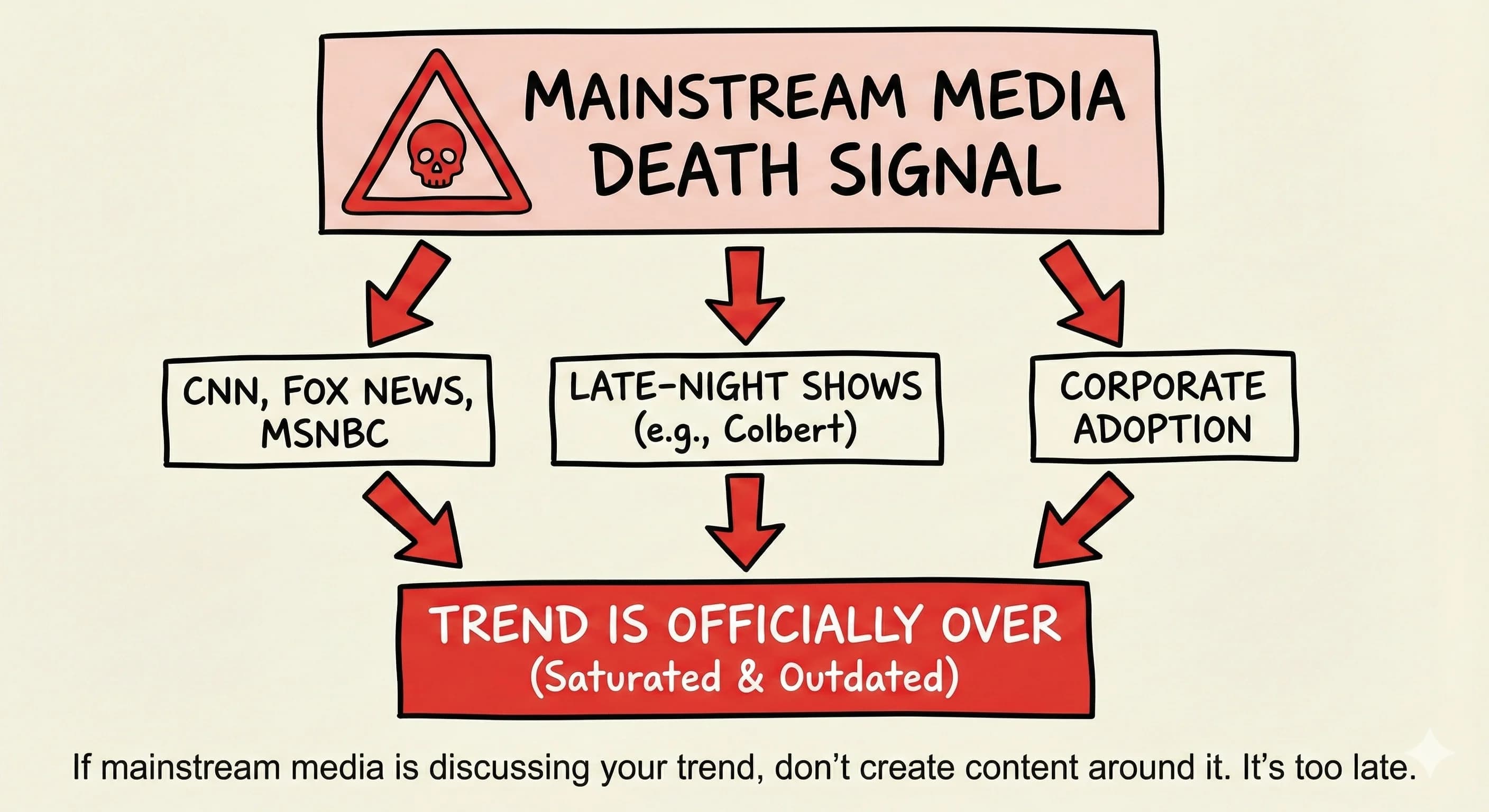
Here's your golden rule: if CNN, Fox News, or MSNBC is discussing your trend, don't create content around it. When late-night shows like Colbert mention a viral moment, that trend has already peaked and you've missed your window.
This isn't speculation. It's a data-driven reality that separates successful creators from those constantly scrambling for relevance. Think about the mannequin challenge or any major social media phenomenon. Once mainstream breaking news outlets cover these trends, they've already saturated the major platforms and lost their appeal to the audiences who drove them.
Gen Z audiences, who drive most of this content, abandon trends faster than you can say "demure and mindful" once they feel corporate or outdated. Research shows that social media users are increasingly seeking real-time content over polished, late-to-the-party posts. Early signals, like a format popping up in niche communities before any brand account touches it, are what you actually want to pay attention to.
How to Spot Trends Early: Your 24-Hour Window and Social Media Strategy
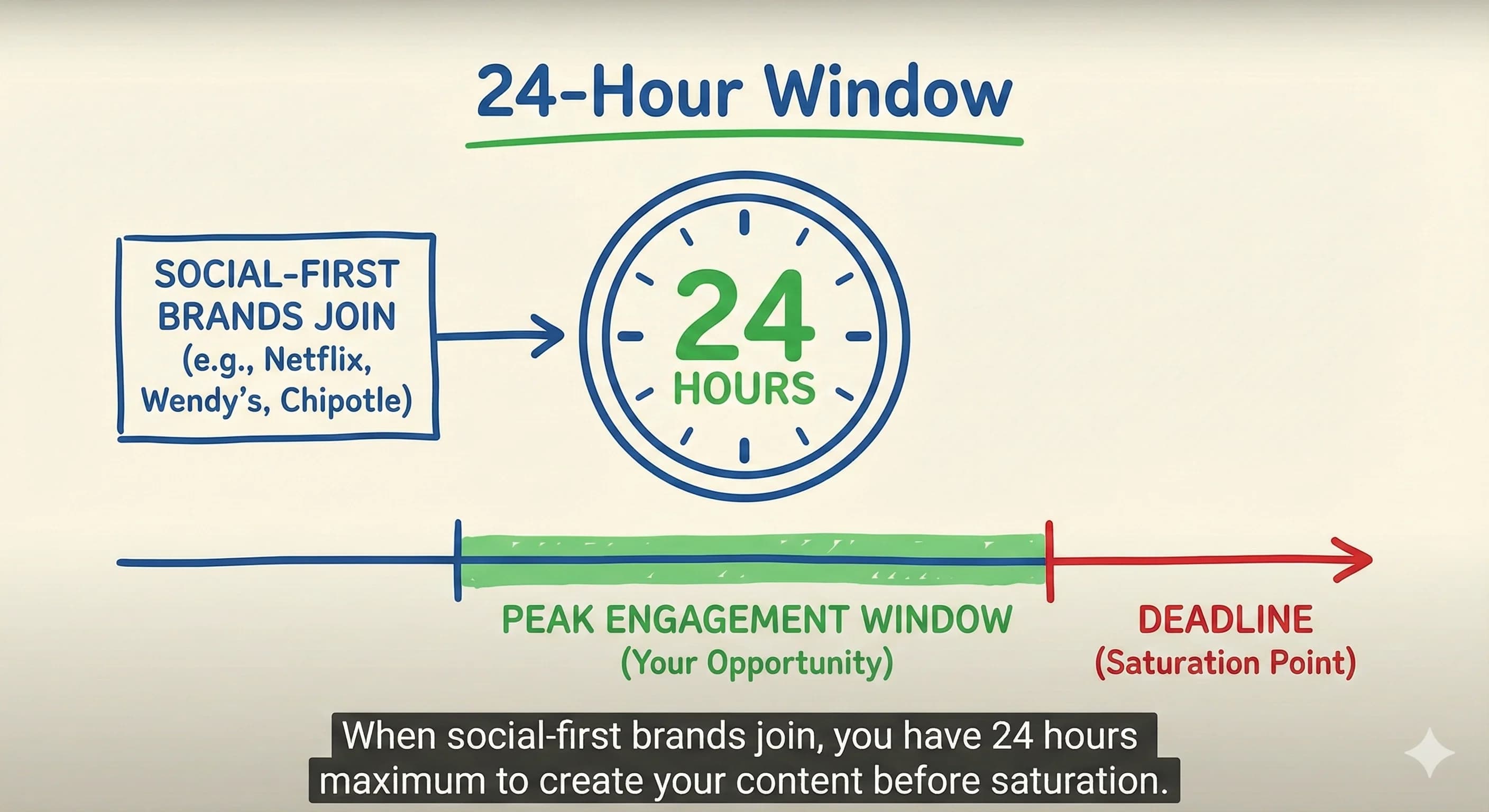
Watch social-first brands like Netflix, Wendy's, and Chipotle religiously. These companies have dedicated marketing teams using social listening tools to analyze real-time data across multiple platforms. When they join a trend, you have exactly 24 hours maximum to create your own content.
Why such a tight window? These brands hit trends at their highest engagement moment. Their participation signals the trend's saturation point. After they jump in, algorithms begin prioritizing newer, fresher content. Your short-form video content needs to capture this narrow window to resonate with your target demographics.
So does a quick gut-check: how many brand accounts have already posted in this format? If the answer is more than a handful, the window is closing fast. That single question is one of the most practical decision filters you can apply before you launch any trend-based piece of content.
Successful creators have built their careers on this principle. Instead of following trends, they've learned to detect the signals that indicate when a trend is about to die, specifically when traditional media outlets start covering it.
How to Find Trends Early: Platform-Specific Signals
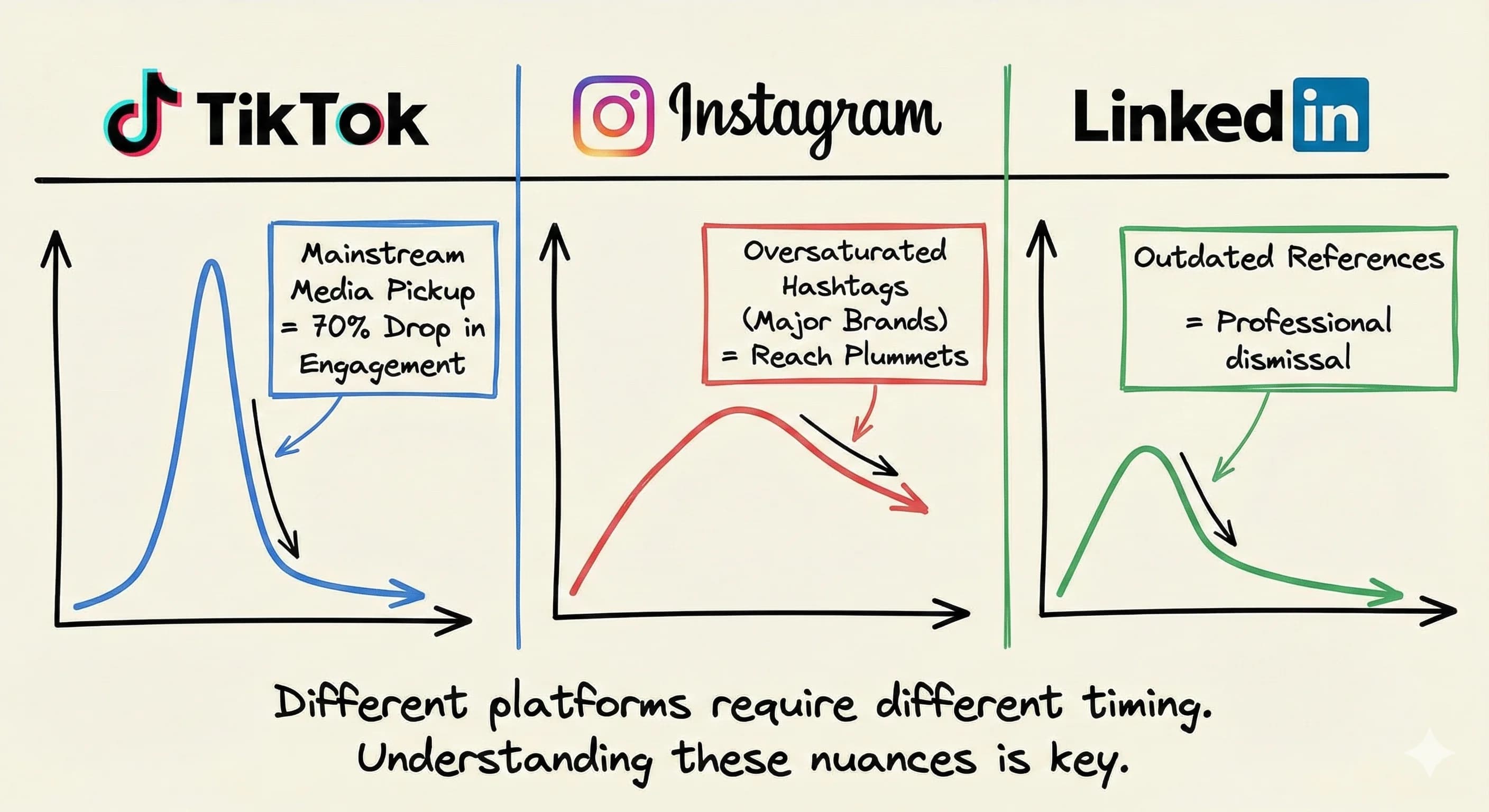
Different platforms require completely different approaches to trend timing, and understanding these nuances can make or break your content strategy.
The brutal timeline on short-form video: Hashtag performance drops dramatically once mainstream media picks up trends. The algorithm heavily favors early adopters over late participants. Engagement rates can collapse once a trend reaches mainstream media coverage, which is why identifying emerging trends at the niche stage matters so much.
Instagram's saturation signals: The algorithm deprioritizes content using oversaturated hashtags. You'll notice your reach dropping when you're using the same hashtag that major brands have already adopted. Watch the visual content landscape too: when a specific reel format is everywhere, that's a shift in the signal, not an invitation to join.
LinkedIn's professional lag: Even B2B content sees decreased engagement when it feels behind-the-curve. Professional audiences are surprisingly quick to dismiss outdated trend references, so identifying emerging trends early matters there just as much.
Smart creators also monitor Reddit. Niche subreddit discussion threads are where a lot of formats and ideas emerge before they ever reach mainstream feeds. Comment sections on early-adopter posts often reveal what's gaining momentum before the trend data shows up anywhere else.
Real Creators Who've Mastered Counter-Trend Positioning
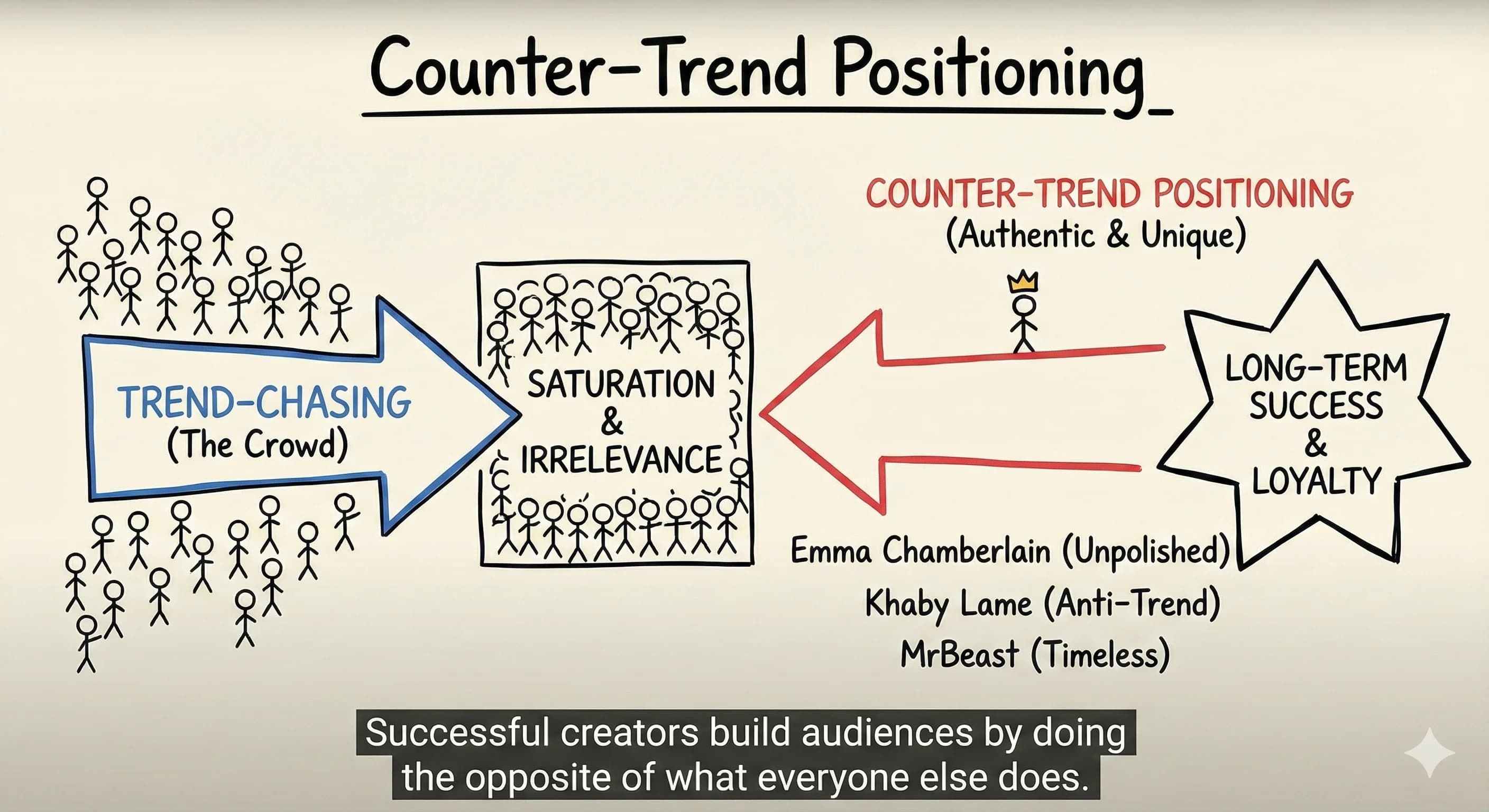
Some of the most successful creators have built audiences by doing the opposite of what everyone else does. Take Emma Chamberlain, who acquired millions of followers by creating deliberately unpolished content while everyone else was chasing perfect, trend-driven posts.
Khaby Lame became the most-followed creator on one major platform by consistently posting simple reaction videos that went against the trend toward complex, over-produced content. His strategy was essentially anti-trend: creating content that worked regardless of what was popular.
Jimmy Donaldson (MrBeast) famously studies trends not to follow them, but to understand what makes content timeless. His biggest videos succeed because they tap into human psychology rather than fleeting cultural moments. That's a strategic insight worth carrying into your own process.
The Predictive Gut-Check: Is This Trend Worth It?
Before you create anything trend-based, run it through a quick predictive filter. Ask yourself:
- Is this trend in early growth or approaching peak?
- Does this trend have a clear brand entry point for my niche?
- Does the tone align with my actual range, not just what I wish my range was?
- Can I actually execute it well within the window?
These questions aren't just useful for solo creators. Marketing teams, especially in B2B contexts, need this kind of structured trend analysis before committing resources. You're "almost ready to launch" but just now learning about a format? That's usually a sign the window has closed. Pre-launch marketing built around a trend that's already peaking is rarely worth the effort. Isn't it better to launch at the right moment than to launch fast into a crowded space?
The Algorithm Reality Check
Here's what most people don't understand: algorithms reward consistency and relevance over trend-chasing. The creator economy and monetization models favor those who build real relationships with their audiences, not those who constantly jump from trend to trend.
Audiences quickly move on from creators who consistently miss trend windows or produce content that feels stale. Your content strategy needs real-time monitoring systems, but more importantly, it needs to focus on evergreen value.
Data from social media analytics shows that creators who focus on consistent content see significantly higher engagement rates than those who constantly chase trends. The most successful people in this space understand that different strategies require different timing, and what works for podcasts differs dramatically from short-form video.
Building Your Trend Spotting System
So, you want to be the person who effortlessly spots trends before they're plastered all over everyone's feeds? It takes a system, not just good instincts.
Implement a trend-tracking workflow that monitors both early signals and mainstream media coverage. Use this system to discover trending formats before they saturate, and to identify when to walk away.
Set up your monitoring workflow:
- Subscribe to industry newsletters that surface trend insights before they hit the mainstream
- Create alerts for when major brands join specific conversations
- Monitor mainstream media mentions of social phenomena
- Track hashtag performance across platforms
- Analyze comment sections and niche community threads regularly
Create content formats that allow quick pivots when opportunities arise, but don't sacrifice your voice for trend participation. The most sustainable creators focus on their unique perspective rather than copying what's already working for others.
Develop your own trend indicators. Look for patterns in your audience's behavior, comments, and engagement. Often, your community will signal emerging interests long before they become mainstream. That's social listening in its most practical form, and it's how you consistently stay ahead of the curve.
Your Content Strategy Moving Forward
Remember: in the creator economy, being perfectly timed beats being perfectly polished. But being genuinely you beats both.
Focus on creating content that serves your specific audience rather than chasing moments that have already peaked. Build systems that help you recognize when trends are dying, not just when they're emerging. Most importantly, develop your unique voice so strongly that you don't need trends to create content worth watching.
The creators who thrive won't be the ones who jump on every trend. They'll be the ones who know exactly which trends to avoid and when to focus on building deeper connections with their audiences instead.
Your audience doesn't want another person doing the same thing everyone else is doing. They want your unique perspective on the world, delivered consistently and honestly. That's something no algorithm change or trend cycle can take away from you.
Read more about Becoming a Content Creator
📚 Complete Guides
- How to Become a Content Creator: Complete Beginner's Guide
- Content Creator Platform Guide: Choose the Right Platform to Start Your Creator Journey
⚡ Tactics & Strategies
- 50% Retention Rate Optimization for YouTube Algorithm Success
- Age Bracket as Superpower Strategy for Older UGC Creators
- AI Workflow Integration for Content Reduction
- Audience Consistency Strategy to Avoid Algorithm Penalties
- Audience Poll on Instagram to Source Q&A Content in Advance of Recording
📄 Related Articles
- Personal Brand Statement Examples (and How to Write Yours)
- Instagram Branding Tips: How the Smallest Aesthetic Details Create the Most Powerful Brand Recognition
- Storytelling in Marketing: How to Adapt It for Every Audience
- How to Build Community on Instagram Using the Hybrid Creator Model
- Professional Branding for Creators: Build a Career Asset
- How to Choose a Social Media Platform for Your Content Strategy
- How to Choose a Niche as a Content Creator: A Step-by-Step Guide
- Curated Newsletter: How to Make Yours Feel Prestigious
Read more about Systems, Workflows & Operations for Content Creators
Free: The Trend Timing Playbook
Get the interactive tool, downloadable PDF, and Notion template - all free.
No spam. Unsubscribe anytime.

Alex Kirillov
Details
One link. Every channel, rate, and piece of work brands need to evaluate you. Built for how creators actually get hired.
Claim your profile
Live creator, content, and marketing roles from real companies, with the pay, market, and context the raw job page never gives you.
Browse jobs