Professional Branding for Creators: Build a Career Asset
Learn how to build your professional brand as a content creator and turn your platform into a permanent career asset. Practical steps for LinkedIn, resumes, and beyond.
Details
What Professional Branding Means for Content Creators
Professional branding is the practice of shaping how your work, expertise, and identity show up publicly so that peers, recruiters, and potential employers understand your value at a glance. For a content creator, your personal brand and your professional brand are the same thing: every video, post, and episode is quietly building a professional identity and online presence that follows you into every room you haven't entered yet.
Most content creators obsess over views, followers, and engagement metrics. But here's what the smartest creators already know: your platform is so much more than a content machine. It's a living, breathing professional presence that works for your career long after you hit publish.
Whether you're creating on YouTube, LinkedIn, podcasts, or social media, every piece of content you put out is quietly building something invaluable. A permanent resume asset.
Your Content Brand Is Your Professional Brand
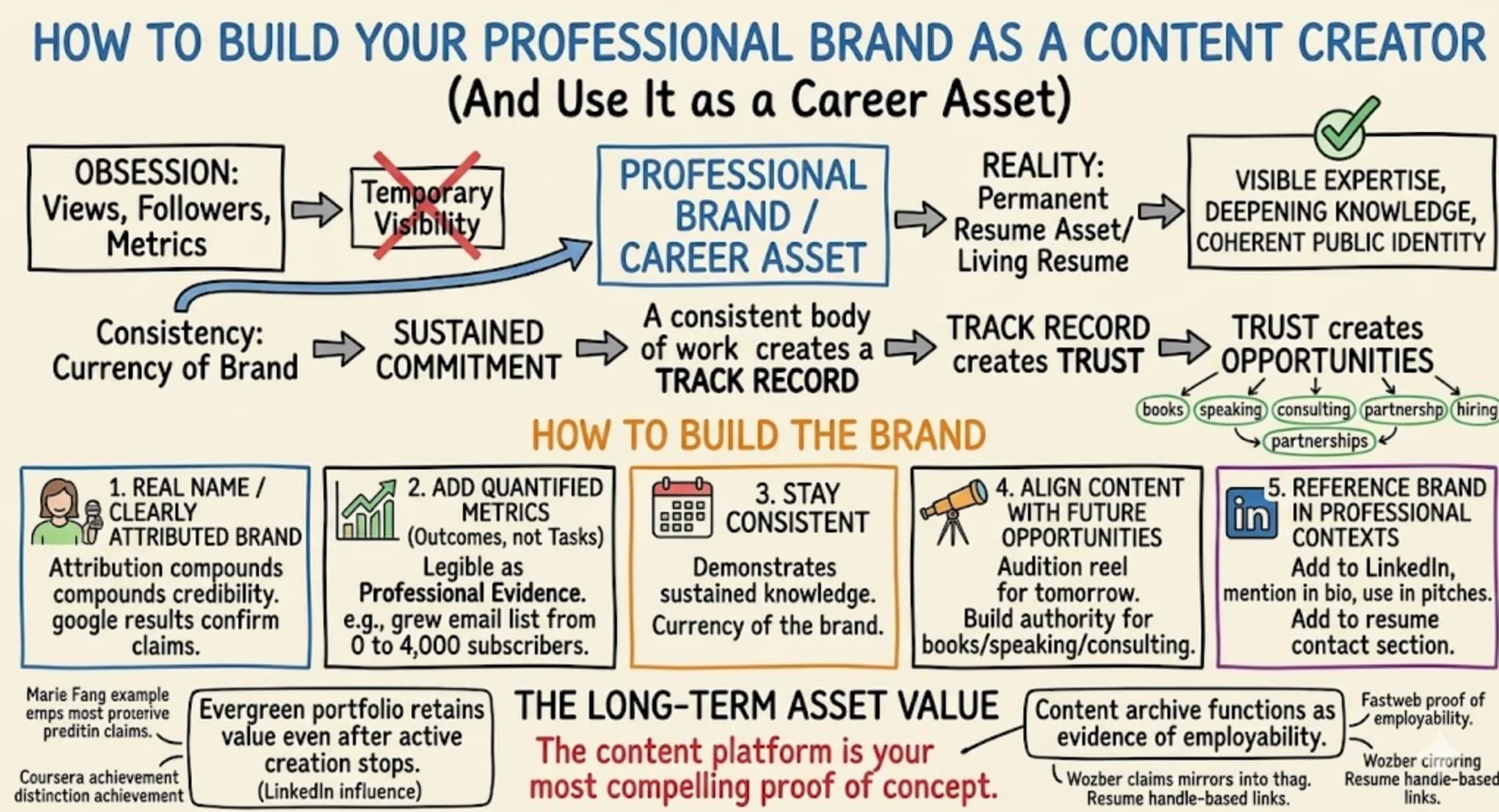
 Think about it this way. A therapist named Marie Fang who built Private Practice Skills will always have that brand on her resume. Even if she stopped creating tomorrow, that platform signals expertise, audience-building ability, and professional trustworthiness to publishers, event organizers, and consulting clients alike.
That's the real power of deciding to build your personal brand through content creation. You're not just making videos or writing posts. You're constructing a public track record that speaks for you in rooms you haven't entered yet.
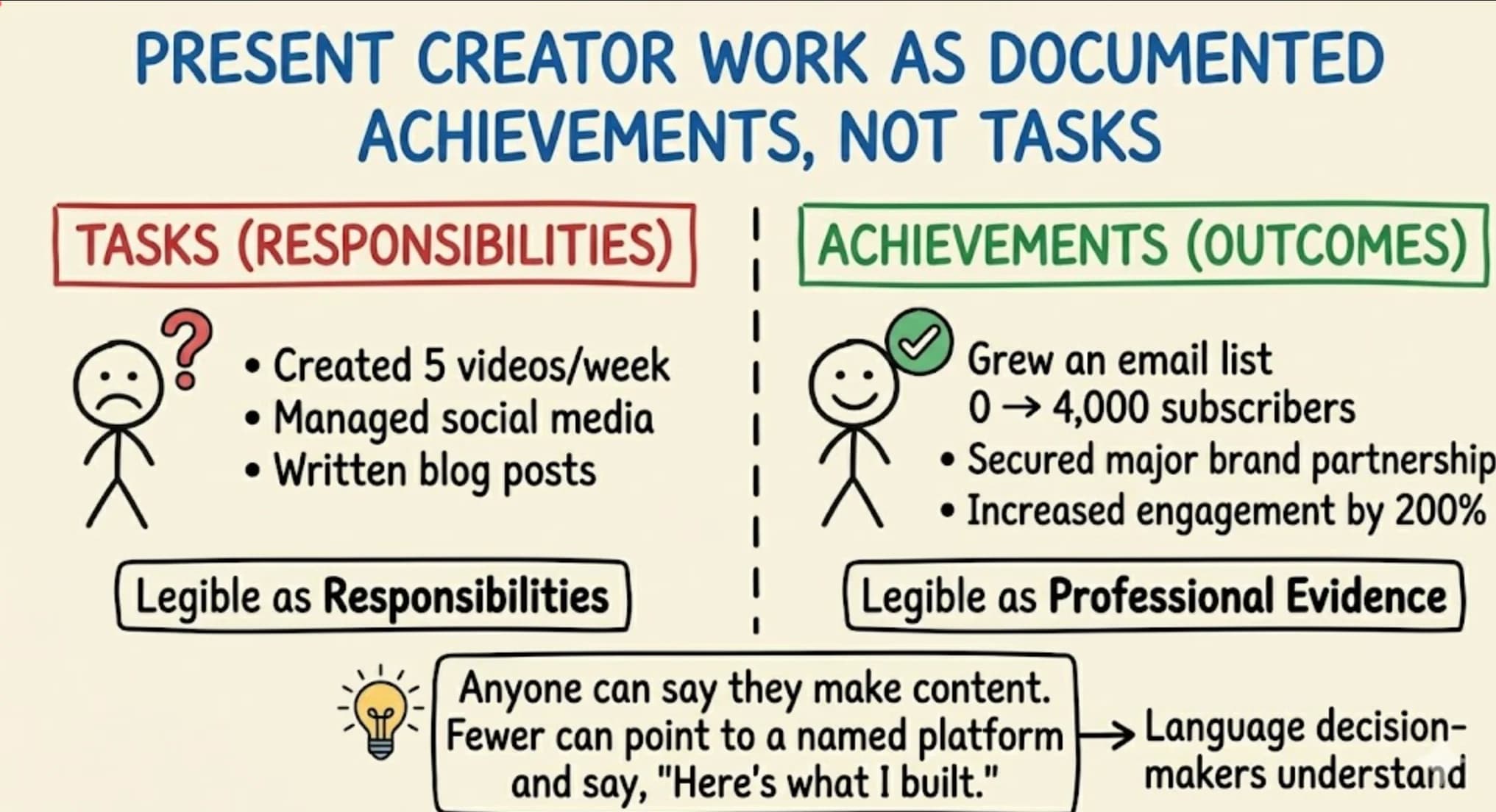
Career experts back this up. Resume guidance from Coursera emphasizes that a content creator's professional website or portfolio should showcase work as documented achievements, not just a list of tasks completed. The distinction matters more than most creators realize. Anyone can say they make content. Fewer can point to a named platform with a real audience and say, "Here's what I built."
This is especially true on LinkedIn, where your content creator identity can directly influence recruiters, hiring managers, collaborators, and industry leaders. A strong personal brand on LinkedIn transforms your profile from a static resume into a dynamic demonstration of your expertise, positioning you as a thought leader and steadily building your professional reputation. Career guidance from Fastweb reinforces this, noting that employers will actively search for your online presence and that a curated digital footprint can be used to prove employability before you ever walk into an interview.
How to Build Your Professional Brand as a Content Creator
1. Create Under Your Real Name or a Clearly Attributed Brand
Building your professional identity starts with attribution. Use your real name or a brand name closely tied to your identity. This ensures that every piece of content compounds your credibility over time in search results, social platforms, and professional directories.
Career experts at Wozber highlight that your name or brand should function as the hook, and your public portfolio should mirror the claims you make in professional contexts. If someone Googles you after reading your resume or LinkedIn profile, what they find should confirm and expand on what you've told them, not contradict it.
2. Add Quantified Metrics to Make Your Brand Legible as Professional Evidence
One of the most common mistakes creators make when positioning their platform as a career asset is describing what they do instead of what they've achieved. Resume experts consistently emphasize that creator work should be presented as outcomes, not responsibilities.
That means translating your content work into language decision-makers understand. Audience growth figures, engagement rates, collaboration outcomes, and reach numbers all make your brand legible as professional evidence. You've probably experienced this yourself: two creators can have identical platforms, but the one who can say "grew an email list from zero to 4,000 subscribers in 18 months" is going to stand out in a pitch or job application.
You don't need massive numbers to make this work. You need honest, specific ones.
3. Stay Consistent to Demonstrate Sustained Expertise
Consistency is the currency of a strong personal brand. Publishing regularly, even across multiple platforms, signals that you're not a one-hit wonder. It shows sustained commitment and deepening knowledge, which is exactly what book publishers, speaking bureaus, and consulting clients look for.
This is also what separates creators who build lasting career assets from those who build temporary visibility. A consistent body of work creates a track record. A track record creates trust. Trust creates opportunities.
4. Align Your Content With Future Opportunities
When you build your personal brand intentionally, every post should connect to where you want to go. Want to become an author? Build authority around your niche topic. Eyeing speaking engagements? Document your ideas publicly. Your content creation today is the audition reel for tomorrow's opportunities.
This isn't abstract. Career advice platforms that help creators structure their professional presence point to speaking, consulting, authorship, partnerships, and hiring as the documented downstream outcomes of a well-positioned content brand. The content itself creates the proof of concept that makes those conversations possible.
5. Reference Your Brand in Professional Contexts
Don't leave the connection implicit. Add your platform to your LinkedIn profile, mention it in your bio, and reference it in pitches. Resume guidance consistently recommends including social media profiles and portfolio links in the header or contact section of professional documents, using handle-based links rather than raw URLs to make the brand easy to verify and remember.
A strong personal brand only creates professional growth when decision-makers can actually find it and understand what it represents. Make that as easy as possible for them.
The Long-Term Value of Building Your Brand
 Here's the insight most creators miss: your brand retains value even after you stop actively creating. The content lives on. The audience remains. The credibility you built doesn't expire.
Resume experts and career advisors consistently recommend building an evergreen portfolio for exactly this reason. Whether you slow down your posting schedule, pivot to a new focus, or transition into a different role entirely, a well-maintained content archive continues to function as evidence of who you are and what you're capable of.
If your goal is authorship, speaking, consulting, or any professional leap, your content platform is your most compelling proof of concept. It is how you stand out and build credibility in a competitive field, and how new career opportunities start finding you instead of the other way around. The mechanics are straightforward: visible expertise, audience growth, measurable engagement, and a coherent public identity that can be cited in professional contexts. This is professional development you can actually point to: a clear unique value proposition, growing professional visibility, and the kind of consistent presence that builds trust and helps you stand out from the crowd. Put those together consistently over time, and you've built something that works for you whether you're actively creating or not.
Start treating your content platform that way, and build your professional brand like the career asset it truly is.
Read more about Becoming a Content Creator
📚 Complete Guides
- How to Become a Content Creator: Complete Beginner's Guide
- Content Creator Platform Guide: Choose the Right Platform to Start Your Creator Journey
⚡ Tactics & Strategies
- 50% Retention Rate Optimization for YouTube Algorithm Success
- Age Bracket as Superpower Strategy for Older UGC Creators
- AI Workflow Integration for Content Reduction
- Audience Consistency Strategy to Avoid Algorithm Penalties
- Audience Poll on Instagram to Source Q&A Content in Advance of Recording
📄 Related Articles
- Emotional Marketing: Build Real Connection, Not Story Arcs
- Essential Skills Every Content Creator Needs to Succeed
- Evergreen Content: A Creator's Guide to Lasting Growth
- Founder Brand: How to Build One Without the Burnout
- The AI Persona Template for Consistent, On-Brand Content
- What Makes a Video Go Viral (and How to Repeat It)
- Business Storytelling: What Movies Teach Creators
- Personal Brand Statement Examples (and How to Write Yours)
Read more about Audience Building & Growth for Content Creators
📚 Complete Guides
- How to Build an Audience as a Content Creator
- How to Find Your Target Audience (Start With One Person)
⚡ Tactics & Strategies
- 30 Daily Outbound Pitches for UGC Deal Generation
- 50% Retention Rate Optimization for YouTube Algorithm Success
- Age Bracket as Superpower Strategy for Older UGC Creators
- Audience Consistency Strategy to Avoid Algorithm Penalties
- Audience Psychology Over Algorithm Optimization, Focusing on Human Pain Points and Goals Instead of Platform Tactics

Alex Kirillov
Details
One link. Every channel, rate, and piece of work brands need to evaluate you. Built for how creators actually get hired.
Claim your profile
Live creator, content, and marketing roles from real companies, with the pay, market, and context the raw job page never gives you.
Browse jobs