
How to Ask Someone to Be on Your Podcast (And Actually Get a Yes)
Discover why podcasting beats traditional coffee chats for networking. Learn how creators use small podcasts to build valuable business relationships with higher response rates.
Details
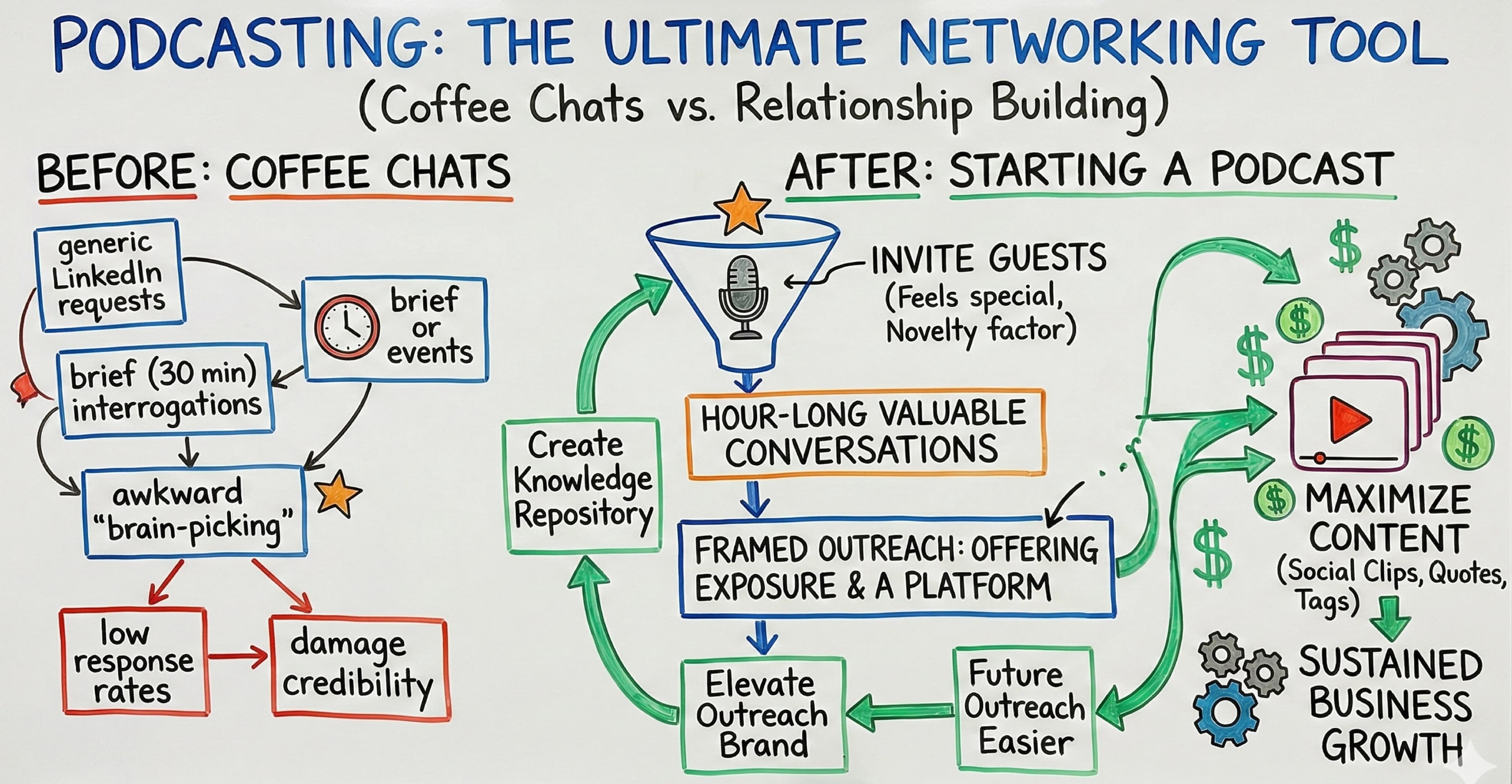
Forget everything you've been told about traditional networking. While everyone else is fighting for 30-minute coffee chats that feel more like interrogations, smart podcasters have discovered a networking strategy that's working incredibly well right now.
Starting a podcast, even with just ten regular listeners, can become your most powerful networking tool. The secret lies in knowing how to ask someone to be on your podcast in a way that transforms those brief, awkward "brain-picking" sessions into valuable, hour-long conversations that benefit everyone involved.
Why Podcast Guest Invitations Generate Dramatically Higher Response Rates
 Here's what most people don't realize: when you reach out with a podcast invitation versus a casual coffee request, your response rate absolutely skyrockets. The psychology behind this is fascinating, being invited as a podcast guest feels special and novel, even if your show has a tiny audience.
Sean Kelly from the Digital Social Hour calls this approach "the ultimate networking tool" because it gives you "a calling card to interview anybody you want," including celebrities and high-profile entrepreneurs who wouldn't typically say yes to coffee chats. He's seen big names like Gary Vaynerchuk and Daymond John appear on people's first podcast episodes, despite those shows being completely unproven.
People genuinely love telling friends they're "going to be on a show." It doesn't matter that your podcast has just ten regular listeners: the novelty factor is incredibly powerful. You're offering something unique in a world flooded with generic LinkedIn connection requests. And here's the thing, a well-crafted email to the right person, framed as an opportunity rather than a favour, is often all it takes.
Want to get booked on podcasts yourself? The same principle works in reverse. Reach out to a great podcast in your niche, mention that you've had a chance to listen to the podcast, and explain what specific topic you'd bring to the table. Thought leaders get pitched constantly, so the more tailored your ask, the better your odds of hearing back.
How to Find People to Be a Guest on Your Show
Before you can ask someone, you need to know who to ask. Finding the right people to be a guest on your podcast is half the battle, and there are some genuinely great options beyond just cold-emailing strangers.
One of the best ways to find guests for your podcast is to start close to home. Past guests are gold: they already know your format, they liked you enough to say yes once, and they'll often refer you to people in their own network. Ask them directly, "Who else do you think would be a great fit as a guest on the show?"
Beyond your existing network, platforms built specifically for this exist. PodMatch is a matching service that connects podcast hosts with people who want to be a guest on a podcast. Matchmaker.fm works on a similar idea, letting you browse potential guests who are actively looking to appear on shows like yours. Both platforms let you vet profiles before reaching out, which saves everyone time.
Social media is another reliable route. Search relevant hashtags or LinkedIn groups for thought leaders in your niche. Look for people who are already appearing on another podcast in your space, because that's a strong signal they're open to it and know what to expect.
If you want to find guests for your podcast more systematically, set up a simple guest application form on your site. People who want to get booked will seek you out, and an inbound form means you spend less time chasing and more time having great conversations. For podcasters who want to get booked on podcasts as a guest themselves, the same tools work: fill out a profile on PodMatch or Matchmaker.fm and let the algorithm do some of the legwork.
Also worth asking: are they a thought leader in the field? Do they have real expertise or experiences that complement the specific topic your episode will cover? What unique insights can they bring to your podcast listeners that they can't get anywhere else? These questions help you vet potential guests before you ever hit send.
How to Ask Someone to Be on Your Podcast: Best Ways to Reach Out
 Once you know who you want, the next question is how to ask someone to be on your podcast without coming across as spammy or generic. The best ways tend to share a few things in common: they're personal, they're specific, and they make the ask feel easy to say yes to.
Email is the most reliable channel for guest outreach, full stop. A direct, friendly email to the right inbox outperforms a DM or a LinkedIn message in most cases, especially when you're reaching out to busier professionals. Keep your email short, reference something specific about their work, mention your podcast name, explain why they'd be a great guest on your podcast, and include a clear next step.
Here's a simple email template to help you get started:
Subject: Guest spot on [Podcast Name]?
Hi [First Name],
I've been following your work on [specific topic] and I think you'd be a fantastic guest on my show, [Podcast Name]. We cover [brief description] and our podcast listeners would get a lot of value from your perspective on [specific angle].
The format is relaxed, usually around 45 minutes over Zoom, and I'll send you the questions in advance so there are no surprises. I'll handle all the editing and share a Calendly link to make scheduling easy.
Would you be open to it?
[Your name]
That email template works because it respects their time, shows you've done your homework, and removes friction. Notice it mentions Zoom so they know the format, and Calendly so they know booking is painless. The podcast host handling all the logistics is a big part of why guests say yes, so make that clear upfront.
Want to invite people via social media instead? It works, but keep the message just as specific. Generic "come on my show" requests get ignored. Reference a post they wrote, a talk they gave, or a specific angle you'd want to explore. Then move the conversation to email to lock in the details.
Real Creators Using This Strategy to Build Million-Dollar Networks
Shawn Flynn started The Silicon Valley Podcast specifically as a networking tool for his investment banking career, not to build a massive audience. His approach perfectly demonstrates how this works in practice. Flynn used interviews to connect with tech founders, investors, and executives who would have been nearly impossible to reach through traditional outreach.
The results speak for themselves: Flynn's show led to new projects with guests, broader network access, high-level introductions, and direct support for his investment banking activities. After about 50 episodes, inbound requests from high-quality potential guests began coming in, essentially reversing the entire outreach dynamic.
Banking Circle partnered with Audere Communications to use their c-suite podcast as a business development tool at Money20/20, one of the banking industry's biggest conferences. Instead of competing for brief conversations at networking events, they pre-selected key executives they wanted to engage with and invited them for interviews at their booth. The Global Head of Executive Communications called the strategy a value-add for networking and business development, noting it "set up opportunities with prospects and potential partners" for follow-up.
Building Trust Through the Long-Form Podcast Episode Format
 Longer-form conversations naturally build trust and rapport in ways that brief coffee chats simply cannot match. When you spend an hour genuinely listening and asking thoughtful questions, guests remember the experience positively. They're significantly more likely to collaborate on future projects, make introductions, or support your business endeavors.
Flynn's networking outcomes were specifically credited to the trust and deeper conversations enabled by the interview format. The podcast created a platform where guests felt heard and respected, and that trust later translated into referrals and business opportunities.
This format also lets you showcase your own expertise through intelligent questioning and conversation flow, positioning you as a serious professional worth staying connected with. You're demonstrating your knowledge and curiosity without being pushy or self-promotional. And once someone has been a guest on your podcast, the relationship dynamic shifts: you're colleagues, not strangers.
SEO is another quiet benefit here. Each episode you publish creates indexed content tied to your guest's name and expertise, which means people searching for that guest on a specific topic may find your show. That's free discoverability that a coffee chat never gives you.
How to Make Guest Bookings Easy and Keep People Coming Back
 Start by identifying 10 to 15 people in your industry you'd genuinely love to connect with. Create a simple concept that highlights guest expertise: it doesn't need to be complex or highly produced. Record a few episodes with existing contacts to get comfortable, establish some credibility, and build up guest bookings before you go after bigger names.
The most successful creators using this strategy measure success by relationships built and opportunities created, not by download numbers. Focus on guest quality and conversation depth rather than audience size.
Make the experience easy from the first email onward. Send questions in advance, handle all technical aspects yourself, deliver the finished content promptly, and share clips that make guests look good. This professional approach encourages referrals and keeps your invite guests pipeline full without you having to hustle constantly.
Frame every invite as giving them a platform and shareable content they can use, not as a favour to you. That positioning is crucial for getting yes responses from people who ignore generic networking requests. You're not asking them to do something for you: you're offering to feature them as a guest on the show and give their ideas a wider audience.
The networking power of a podcast lies not in huge audience numbers, but in creating meaningful, extended conversations with exactly the right people. Learn how to ask someone to be on your podcast well, and your future network will thank you.
Read more about Becoming a Content Creator
📚 Complete Guides
- How to Become a Content Creator: Complete Beginner's Guide
- Content Creator Platform Guide: Choose the Right Platform to Start Your Creator Journey
⚡ Tactics & Strategies
- 50% Retention Rate Optimization for YouTube Algorithm Success
- Age Bracket as Superpower Strategy for Older UGC Creators
- AI Workflow Integration for Content Reduction
- Audience Consistency Strategy to Avoid Algorithm Penalties
- Audience Poll on Instagram to Source Q&A Content in Advance of Recording
📄 Related Articles
- UGC Portfolio: Examples, Templates & How to Create One
- Buyer Persona Examples (and How to Create One With AI)
- How to Grow on Twitter (X) as a Content Creator
- Views to Subscriber Ratio YouTube: How to Find Undervalued Creators Using Stock Market Strategies
- How to Market on Reddit Without Getting Banned
- Deep Research Prompts: A Framework and 5 Templates for Content Creators
- Facebook Retargeting Strategy: How to Use UGC to Convert Warm Buyers
- Instagram Competitor Analysis: The Secret to Organic Follower Growth
Read more about Audience Building & Growth for Content Creators
📚 Complete Guides
- How to Build an Audience as a Content Creator
- How to Find Your Target Audience (Start With One Person)
⚡ Tactics & Strategies
- 30 Daily Outbound Pitches for UGC Deal Generation
- 50% Retention Rate Optimization for YouTube Algorithm Success
- Age Bracket as Superpower Strategy for Older UGC Creators
- Audience Consistency Strategy to Avoid Algorithm Penalties
- Audience Psychology Over Algorithm Optimization, Focusing on Human Pain Points and Goals Instead of Platform Tactics
Free: The Podcast Networking Kit
Get the interactive tool, downloadable PDF, and Notion template - all free.
No spam. Unsubscribe anytime.

Alex Kirillov
Details
One link. Every channel, rate, and piece of work brands need to evaluate you. Built for how creators actually get hired.
Claim your profile
Live creator, content, and marketing roles from real companies, with the pay, market, and context the raw job page never gives you.
Browse jobs