How to Research a Niche Before You Build Your Business
Learn how to research a niche using competitor analysis, keyword research, and Google Trends to confirm profitability before you build your content business.
Details
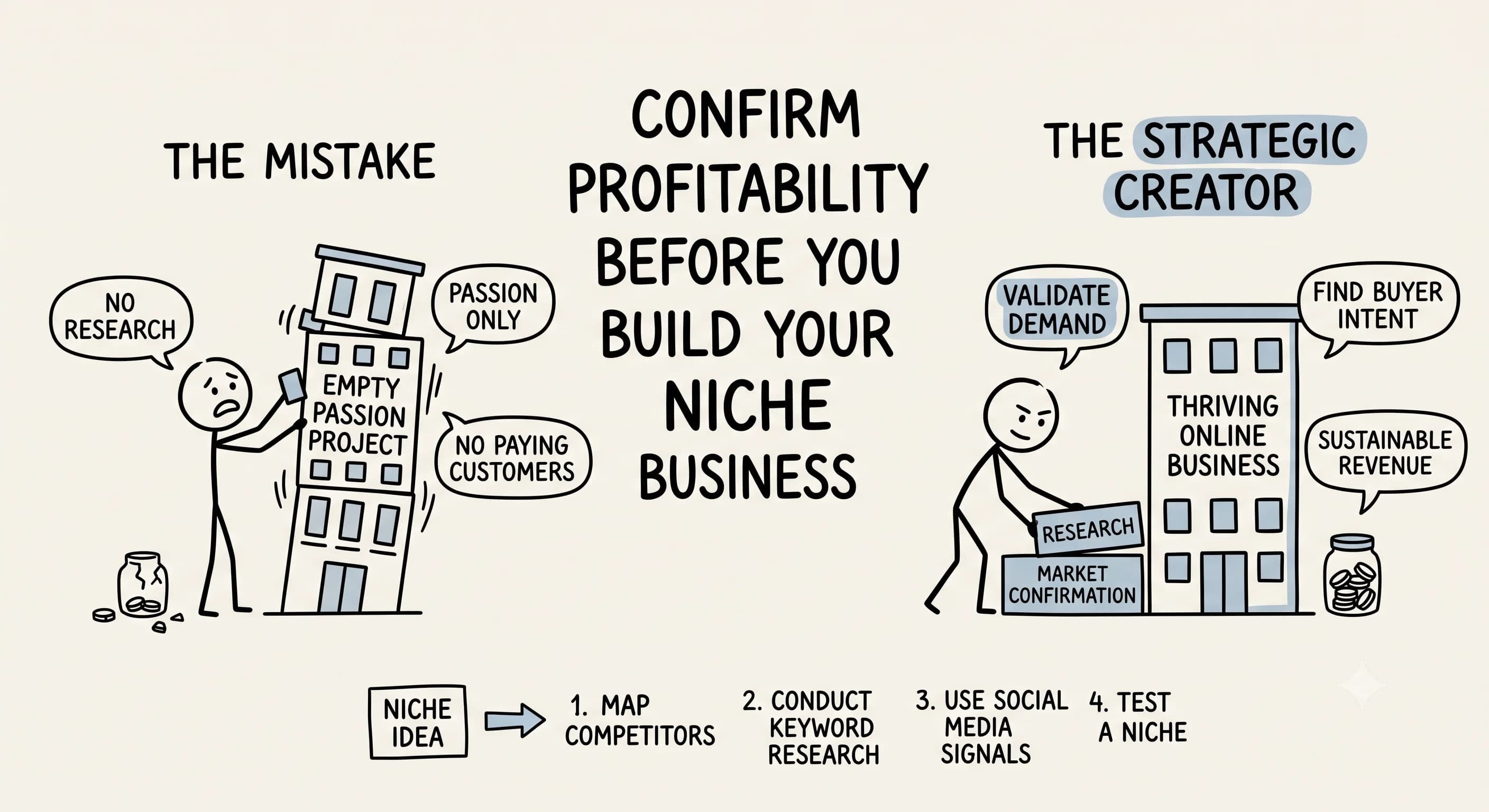
How to Research a Niche Before You Build Your Entire Business Around It
Imagine spending six months building a content platform, creating products, and investing your energy into a niche only to discover that no one is actually paying for what you offer. It happens more often than most creators want to admit. The difference between a thriving online business and a passion project that never pays the bills often comes down to one critical step most people skip: confirming niche profitability before going all in.
There is a market for almost anything. There is literally a man making six figures writing funny quotes on potatoes and mailing them to people. If that niche can generate serious revenue, yours probably can too but only if you do the work to confirm demand exists before you build. That validation process is not complicated, but it is non-negotiable if you want your content business to scale into something sustainable.
This guide walks you through a proven research framework that uses competitor analysis, Google Trends, and social media platforms to confirm your potential niche before you commit your time, money, or creative energy. Avoiding costly mistakes starts here.
What Is a Niche Market and Why Does It Matter?
A niche market is a focused segment of a larger market defined by the specific needs, preferences, or identity of a particular group. Rather than trying to serve everyone, a niche business chooses to cater to a well-defined audience with targeted solutions. A fitness brand that serves postpartum mothers is a niche within the broader fitness market. A finance blog focused on freelancers is a niche within personal finance.
What makes a good niche? Three things: people in it are actively spending money, the audience has real pain points they are motivated to solve, and the segment is large enough to build a loyal customer base but focused enough to stand out from a crowded broader market.
Identifying a niche that hits all three markers is the foundation of any sustainable content or product business. A specific niche lets you speak directly to the needs of your audience in ways that general content never can, which builds trust and drives purchases faster.
Why Niche Market Research Is the Most Important Step in Your Operations System
Most creators treat niche selection as an instinct-driven decision. They pick something they love, something they are good at, or something they have seen someone else do successfully. Then they start creating. This approach skips the operational foundation that every profitable niche business needs: market confirmation.
Researching your niche market is not about doubting your idea. It is about protecting your investment of time and resources. Some niches exist where people talk about them, search for them, and consume content about them but they do not generate meaningful revenue. Audiences in those spaces might love free content but never open their wallets. Knowing the difference before you build is what separates strategic creators from frustrated ones.
A profitable niche has three core characteristics. First, people are actively spending money in it, not just browsing. Second, competitors are successfully charging for products or services, which confirms payment willingness. Third, the market has enough scale and growth potential to sustain a business long-term, not just a few early sales.
Your goal during market research is to confirm all three of these factors exist before you commit. According to expert consensus across niche research, the most reliable framework combines demand trajectory analysis, competition mapping, and profitability signals across all three dimensions before you make a final call.
How to Research a Niche: The Step-by-Step Framework
Step One: Find a Niche and Map Your Competitors
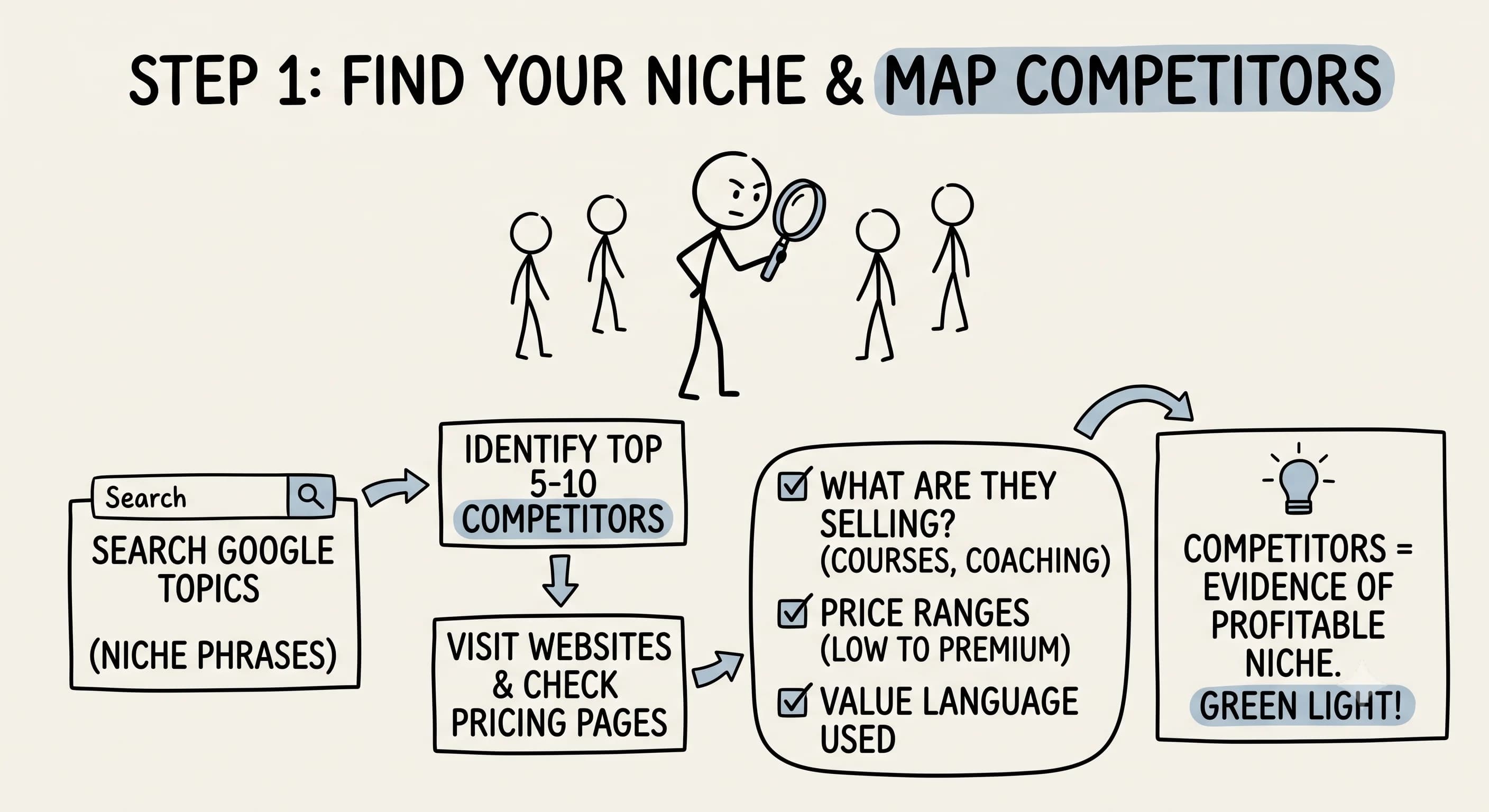 The first move in your niche research process is searching for competitors. This is not a discouraging step. Competitors are actually your best evidence that a profitable niche exists. If other people are building businesses around your idea, charging for their product or service, and maintaining an audience, that is a green light, not a red flag.
Start with a simple Google search of your niche topic. Type in descriptive phrases someone would use to find your type of content or offer. Look at who appears on the first few pages of search results. Visit their websites, check their pricing pages, and observe how they present their offers. Are they selling courses, memberships, coaching, digital downloads, or physical products? What is the price range? What language do they use to describe the value they provide?
This competitor mapping process gives you two critical pieces of information. First, it confirms that your niche market exists and that others have built businesses around it. Second, it shows you how to price and position your own offers when you are ready to launch.
Do not just look at one or two competitors. Aim for at least five to ten, including both small creators and established brands. According to Pravin Zende, identifying and mapping at least ten competitors and then evaluating their monetization models and pricing confirms that a niche generates real revenue and not just traffic. That range gives you a realistic picture of the market from entry level to premium positioning.
One practical move that gets overlooked: Angelina Mihaylov recommends systematically listing top competitors with their URLs and capturing screenshots of their pricing pages as a concrete method for documenting evidence of real revenue in a niche. Treat it like building a research file, not just casual browsing. When you can see pricing side by side, patterns become obvious fast.
Checking marketplace listings and review sites alongside competitor websites is also worth your time. Sites like Amazon are especially useful here: browse bestseller lists in your category to confirm that products in your particular niche are actually selling. According to BigIdeasDB, checking competitor pricing pages, marketplace listings, and SaaS review sites to confirm people are already paying for solutions in a niche is a direct method of verifying spending behavior before you build.
Step Two: Conduct Keyword Research to Validate Demand
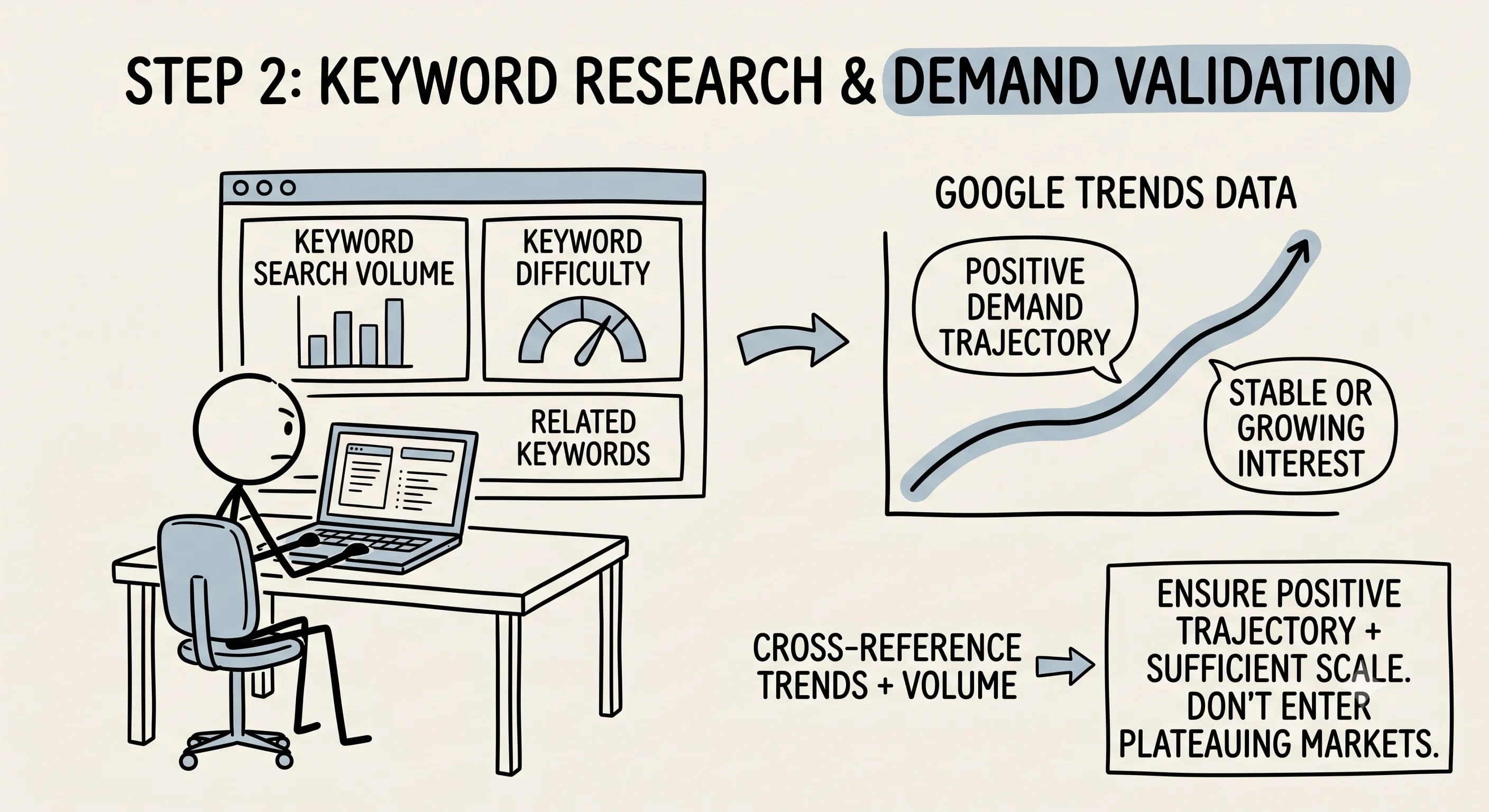 Once you have identified your potential niche and found some competitors, the next step is keyword research. Understanding what search terms people are typing into search engines tells you whether genuine demand exists and how competitive it is to rank for those terms.
A keyword research tool such as Ahrefs or SEMrush gives you data on search volume, keyword difficulty, and related keyword ideas all in one place. These tools help you find search terms related to your niche and assess whether you can realistically appear in search results for them. Keyword difficulty tells you how hard it is to rank for a given term, which helps you find a niche angle with less competition and real traffic potential.
Search engine optimization depends on targeting the right keywords, so this step directly affects your long-term visibility. Use your keyword research tool to look up your main niche topic, then explore subcategories and related phrases. Look for niche keywords with meaningful monthly searches but manageable competition. You want search terms that show people are actively looking for solutions in your space.
For general research into market size and trends, Statista is a useful resource that provides industry data and consumer statistics across hundreds of sectors. It can help you confirm whether a niche market is growing or shrinking at a macro level before you invest in content or product development.
Remember Google Trends from our market research step earlier? Cross-reference what you find in your keyword research tool with Google Trends data to confirm that interest is stable or growing over time. According to Abuqasimbaig, cross-referencing Google Trends data with keyword search volume ensures that a niche has both a positive demand trajectory and sufficient scale to sustain a business long-term. Trends without volume means a shrinking situation. Volume without positive trajectory means you may be entering a market that is plateauing. You want both.
When using Google Trends to search for niche ideas, type your main topic and related keywords that reflect what your audience is searching for. Look at regional data to see where your target market is most concentrated. Compare your niche keyword against similar terms to understand which angle of the market has the strongest momentum. According to RisingTrends, comparing multiple niche ideas or keywords side by side in Google Trends helps identify which angle of a market has the strongest growth momentum.
Step Three: Use Social Media and Communities to Find Your Niche Audience
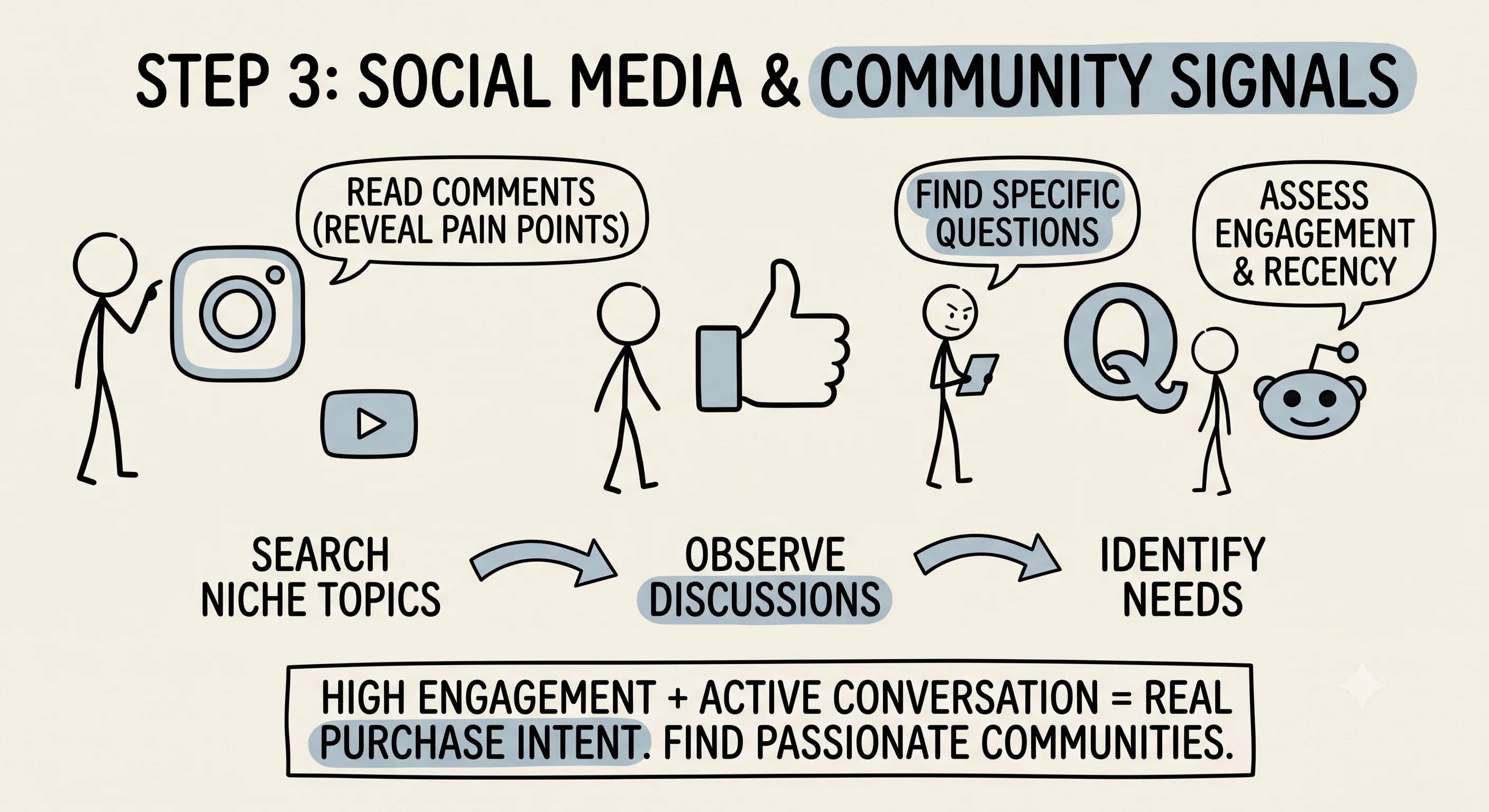 Google Trends and keyword data tell you what people are searching. Social media platforms tell you what people are actively engaged with, talking about, and buying from right now. These are two different types of demand signals, and both matter.
Search your niche topic on Instagram, TikTok, YouTube, Pinterest, Facebook, and LinkedIn depending on where your audience is most likely to spend time. Look at the accounts that come up. How large are their followings? How much engagement do their posts get? Are they promoting products or services, and do those promotions appear to be successful based on comments and interaction?
Pravin Zende specifically points to searching YouTube for niche content and assessing engagement and recency of top videos as a demand signal that goes beyond search volume alone, confirming active audience interest in real time.
Platforms like Quora are also valuable here. Search your niche topic on Quora and read the questions people are asking. The volume and specificity of questions reveal the pain points your potential customers are trying to solve and whether they are actively seeking answers. When the same problems appear repeatedly, that is a signal that demand is real.
Pay attention to what creators in your niche are selling and how their audience responds. Comments and questions from followers reveal the needs of your audience in their own words. This is research gold. When you identify pain points directly from real conversations, you understand exactly what problems people need solved badly enough to pay for a solution.
Look for active communities around your niche idea. Facebook groups, Reddit threads, Discord servers, and online forums all show you whether an audience is engaged and invested in the topic. According to BigIdeasDB, searching Reddit threads and community forums for active discussions and complaint patterns confirms whether an audience is genuinely engaged and signals buyer intent in a niche. A niche with passionate, active community members is a niche with buyers.
According to Emmanuel Akpabio, social media engagement signals such as active groups, comments, and discussions should be treated as indicators of real purchase intent and demand, not just passive interest. High engagement with active conversation signals a community that invests.
Identifying a Niche Market That Actually Generates Revenue
What Separates a Profitable Niche from a Popular Topic
A popular topic and a profitable niche are not the same thing. Plenty of niches have massive audiences who love consuming free content but never spend money on products or services in that space. Identifying a niche with genuine revenue potential requires looking beyond follower counts and view numbers.
When you are doing your research, look specifically for evidence of transactions. Are creators in this space running paid memberships, selling digital courses, offering coaching programs, or promoting physical products? Are sponsored brand deals visible, which indicates advertisers believe the audience buys things? Are there multiple businesses at different price points competing for the same customer?
Multiple competitors at multiple price points is one of the strongest signals of a best niche for profitability. It means the market is large enough to sustain more than one business and that customers have buying habits around this topic. An oversaturated market with dozens of established players is actually less concerning than a space where no one appears to be selling anything.
A valuable niche is one where the audience has both the problem and the budget to solve it. Ask yourself: do the people in this space have enough financial motivation to buy a product or service? Can you price your product or service at a point where customers see value and you can still maintain healthy profit margins? If you cannot answer yes to both, the ideal niche for you may be a different segment of the same broader market.
According to Auto-Blogging, confirming niche profitability requires analyzing search volume trends over time, assessing competition levels, evaluating community engagement, and exploring monetization options before committing. That combination of signals, not any single one on its own, is what gives you real confidence.
How to Identify Pain Points and Confirm Buyer Intent
Every profitable niche is built around solving real problems. To confirm that your niche has buyer intent and not just casual interest, you need to identify the specific problem your target audience faces and understand how your product or service uniquely solves that problem.
Conduct interviews with potential customers if you can. Even a handful of conversations reveal more than hours of passive research. Ask people what frustrates them, what they have already tried, and what they wish existed. These conversations surface the gaps in the market that no competitor has filled yet.
Read the comments on competitor content. Search Amazon reviews for books or products in your niche and read what problems people mention in their feedback. These real-world reactions tell you what people are willing to invest money to fix.
When people are experiencing a problem that costs them time, money, health, relationships, or opportunity, they become motivated buyers. Your offer needs to connect directly to one of those high-stakes concerns. If you can clearly describe how you solve an urgent problem your audience is already spending money to address, you have confirmed niche profitability.
According to Upskillist, using Google Trends alongside social media analytics to explore engagement patterns and gauge demand is recommended practice for identifying profitable niche markets before building a business. Combining both tools gives you a fuller picture than either one alone.
How to Find a Unique Niche: Passion vs. Profit
Should you follow your passion or pick a money niche? The honest answer is: both matter, and the best niche usually sits at the intersection of genuine interest, demonstrable expertise, and confirmed market demand.
Passion without profitability leads to a hobby. Profit focus without interest leads to burnout. When you leverage your existing knowledge in a space you genuinely enjoy, you produce better content, sustain the effort longer, and build credibility faster. The research process described in this guide is how you confirm whether that intersection exists in the market before you build a business around it.
To find a unique niche, start broad and narrow down. Pick a larger market you care about, then look at its subcategories. Each layer of specificity reduces direct competition and helps you resonate more deeply with a smaller, more defined audience. A smaller audience that converts is more valuable than a massive audience that scrolls past.
Is the niche sustainable? Ask whether you can introduce new products or services as your audience grows, whether the niche market is expanding or contracting, and whether there is a second or third offer you could build once you have established your initial product. Niches that allow for product expansion build a business. Niches with only one logical offer build a campaign.
Is it better to create a specific or broad niche site? Specific almost always wins at the start. A specific niche gives you clearer messaging, easier SEO targeting, and a faster path to building authority. Once you have established trust and traffic, expanding into adjacent areas becomes much simpler.
How to Test a Niche Before You Fully Commit
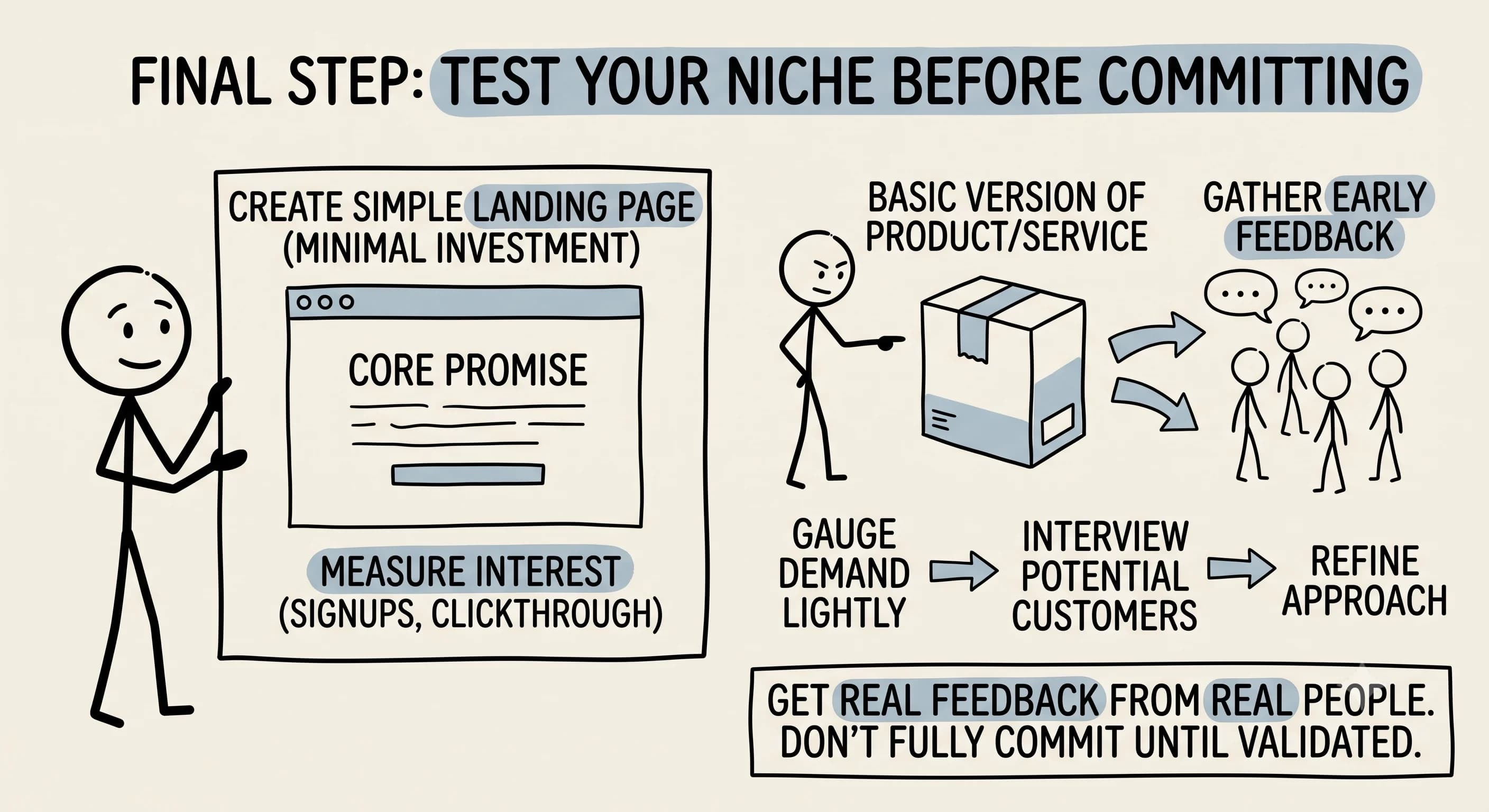 Before you build a business around an idea, test it with minimal investment. Create a simple landing page outlining the core promise of your offer and measure whether people sign up, click through, or express interest. You do not need a finished product to gauge demand.
You can also create a basic version of your product or service, share it with a small group, and use their feedback to refine your approach. Conduct interviews with potential customers to understand what they would actually pay for and what language they use to describe their problem. That language should feed directly into your content and offer copy.
If you are trying to make money from a niche and want to confirm real intent before investing months of work, this lightweight testing approach surfaces demand signals faster than any amount of passive research. Real feedback from real people is the most reliable data point you can collect.
Building Your Online Business on a Foundation of Research
Skipping research is one of the most expensive steps a content creator can take. Not because the process is complicated, but because going headfirst into building a business without it means you might build something no one is willing to pay for.
The framework is straightforward. Search for competitors and study how they price and present their offers. Use a keyword research tool to find the search terms people are using and assess keyword difficulty. Use Google Trends to confirm that interest in your niche is growing or stable. Search social media and platforms like Quora to find your audience actively engaging with and spending money in your space. Look for evidence of transactions, not just traffic. Identify the pain points your audience is motivated to solve. Assess whether the market can support your revenue goals over time.
This process does not need to take weeks. A focused weekend of research can give you enough data to make a confident decision about whether to move forward or pivot to a stronger direction. Choosing the right niche from the start saves you months of wasted effort.
The man making six figures writing funny phrases on potatoes did not stumble into that business accidentally. Someone confirmed people would pay for it and built an offer around genuine demand. Your niche might be completely different, but the research process that leads to profitability looks exactly the same.
Do the research first. Build the business second. That sequence is what turns a content creator into a sustainable business owner.
Read more about Systems, Workflows & Operations for Content Creators
📚 Complete Guides
⚡ Tactics & Strategies
- 30 Daily Outbound Pitches for UGC Deal Generation
- 50% Retention Rate Optimization for YouTube Algorithm Success
- AI Workflow Integration for Content Reduction
- Audience Consistency Strategy to Avoid Algorithm Penalties
- Audience Poll on Instagram to Source Q&A Content in Advance of Recording
📄 Related Articles
- Content Creator Burnout: Signs, Prevention, and the Mindset That Fixes It
- Influencer Authenticity: How Honest Product Reviews Drive Real Influence
- TikTok Creator Search Insights: How to Find Content Gaps That Guarantee Views
- The AI Content Creation Workflow: Turn 37 Seconds Into 1,200 Words
- The AI Content Workflow That Cuts Production Time by 70%
- Influencer Campaign Report: How Smart Reporting Systems Build Stronger Brand Relationships
- How to Get Traffic From Pinterest: Pins That Compound for Years
- Street Interviews: The LinkedIn Strategy That Went Viral

Alex Kirillov
Details
One link. Every channel, rate, and piece of work brands need to evaluate you. Built for how creators actually get hired.
Claim your profile
Live creator, content, and marketing roles from real companies, with the pay, market, and context the raw job page never gives you.
Browse jobs