
Influencer Campaign Report: How Smart Reporting Systems Build Stronger Brand Relationships
Transform brand relationships with comprehensive campaign reporting systems. Learn how smart creators use data to prove value beyond sales and secure premium partnerships.
Details
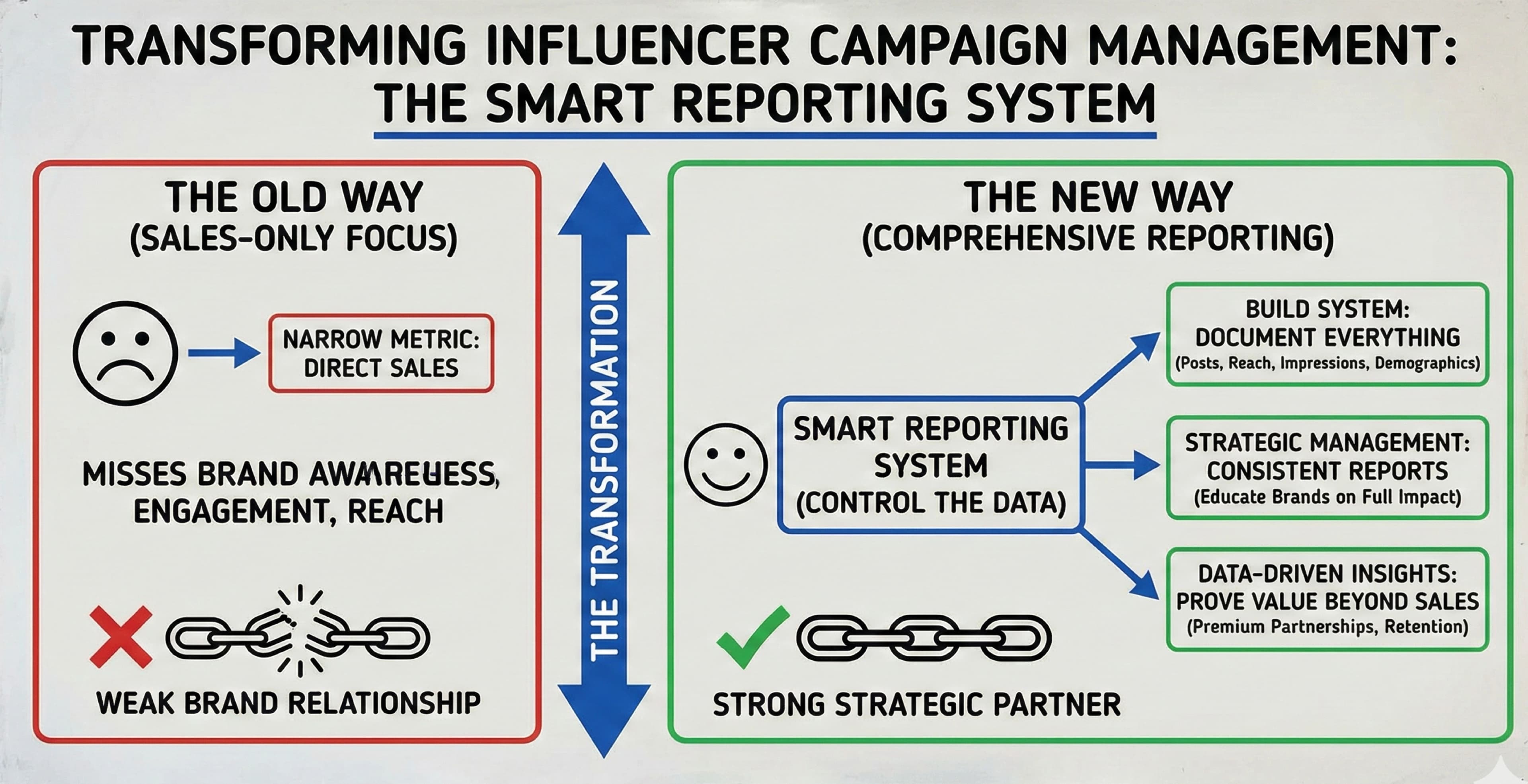
You've been there: you create killer content for a brand collaboration, your audience loves it, but then comes the disappointing response: "We didn't see direct sales from your posts." This narrow focus on immediate conversions completely misses the bigger picture of what you're actually delivering as a creator.
The solution? Taking control of your campaign data through a complete influencer campaign report that proves your worth beyond just sales numbers.
Why Traditional Influencer Campaign Reporting Completely Misses the Mark
Most brands focus solely on direct sales attribution, completely ignoring crucial metrics like brand visibility, engagement rate, and audience reach. This shortsighted approach undermines the true value of influencer marketing efforts and creates unnecessary tension in creator relationships.
Smart creators are flipping this script by implementing detailed influencer campaign reporting systems that capture the full impact of their work. When you control the data, you control the narrative about your value. One of the biggest challenges influencer marketers face today is exactly this: how do you measure tangible results and communicate them clearly to a stakeholder who only sees a sales dashboard?
Every metric in your report should pass a simple test: does this number change how we make decisions? If a number doesn't inform your influencer marketing strategy going forward, it probably doesn't belong in the report.
Building Your Comprehensive Influencer Marketing Report System
 A robust influencer campaign reporting system becomes your most powerful management tool. Every piece of content from your influencer collaborations needs documentation: video links, post URLs, stories, cross-platform content, everything. Think of it as a complete influencer record that travels with every campaign.
Your system should track key metrics including total posts created, follower reach across all platforms, total impressions generated, detailed audience demographics, and individual content performance. This transforms you from just another creator into a strategic partner who understands campaign effectiveness.
Creators using platforms like Sprout Social have reported increased brand retention and faster contract renewals after implementing automated, detailed reports showing comprehensive impact beyond sales. These reports showcase reach, impressions, engagement, and demographics that brands desperately need but often don't know how to measure themselves.
A solid report template keeps this consistent. Whether you're producing monthly or quarterly reports for a long-term partner or a one-off wrap-up, the same structure means brands can compare results across campaigns without having to re-learn your format each time.
Implementing Strategic Influencer Relationship Management
Start establishing clear performance tracking protocols before any content goes live. Document everything: all content creation, engagement across your creator network touchpoints, and platform-specific analytics.
The key is consistency. Whether you're working solo or managing multiple brand partnerships, systematic data collection elevates your professionalism and positions you as someone who understands business impact.
Use UTM parameters on any links you share so you can pull accurate website traffic and conversion rate data from Google Analytics. This matters more than most creators realize: it's how you move from "here are my impressions" to "here's the click-through traffic your site actually received." Real-time tracking with UTM parameters also means you catch problems early, before a post that's underperforming quietly drains budget with nothing to show for it.
Create comprehensive reports that show how your influencer content performed across multiple dimensions. Include reach demographics, engagement patterns, and platform-by-platform breakdowns. Platform trends are worth calling out explicitly: did Instagram drive the most mentions but TikTok led in engagement? That kind of insight shapes future campaigns in ways a raw number never could.
Transforming Brand Relationships Through Data-Driven Analytics
 When you deliver a detailed influencer marketing campaign report to brands, you're not just sharing numbers: you're educating marketing teams about real influencer marketing impact. These reports demonstrate that your creator network generates measurable value through impressions, reach, and engagement, even when direct sales aren't immediately trackable.
These skills are crucial for relationship management to position yourself as a strategic partner rather than just a content creator. Brands start seeing you as someone who understands their campaign objective and can provide actionable insights into influencer performance across multiple touchpoints.
Many successful creators now use analytics tools like Google Data Studio or Camphouse to create centralized tracking systems that reduce manual work while improving report clarity. The goal isn't just data collection: it's presenting that data in ways that clearly communicate your value. A well-organized influencer marketing report answers the questions a brand's leadership will actually ask: what did we get for our spend, which creators drove the most value, and what do we do differently next time?
For any marketer reviewing results with a client, cost per engagement and CPM are two numbers worth including alongside reach. They give a brand an honest read on efficiency: cost per action tells you whether the audience was genuinely responsive, and CPM contextualizes your reach against what paid media would have cost for the same exposure.
Advanced Influencer Marketing Campaign Strategies That Set You Apart
 Take your influencer marketing campaign management to the next level by incorporating attribution models that tie your content performance directly to business results, including ROI. This strategic approach increases your value proposition significantly.
Consider adding sentiment analysis to your reports: tracking not just engagement numbers but how audiences actually feel about the brand after seeing your content. Tools like Sprinklr offer AI-powered sentiment tracking that can differentiate your reporting from other creators. It also helps answer a question brands often ask: how do you measure the long-term impact of influencer marketing beyond a single campaign window?
Implement bulk tagging and retroactive data inclusion in your system. This ensures comprehensive coverage even if you miss tracking some posts initially. The more complete your data, the stronger your case for campaign effectiveness. And when you can show top-performing content side by side with content that didn't land, you give brands something genuinely useful: the insight to optimize spend on the next run. Doubling down on a content format that overperformed? That call only gets made when the data is clean and complete.
For quarterly reports especially, the ability to compare influencer performance across multiple campaigns is what moves the conversation from "did it work" to "here's what we should do more of."
Your Strategic Next Steps in Influencer Campaign Reporting Excellence
Ready to start measuring the success of your influencer marketing campaigns? Here's how to make it work.
Set clear campaign objectives first: is your goal brand awareness, website traffic, or conversions? Your KPIs should follow directly from that answer. Then implement a systematic approach to tracking all content immediately. Choose analytics tools that capture cross-platform data, including Instagram, TikTok, and YouTube, establish a consistent influencer marketing campaign template, and commit to delivering detailed performance reports after every single campaign.
This approach to influencer reporting will differentiate you in an increasingly crowded creator marketplace. You'll be able to explore a wider range of revenue streams, secure repeat partnerships, justify premium rates, and build lasting relationships with brands who value strategic influencer marketing over short-term sales metrics.
Start small: track one campaign completely using a free influencer marketing report template, create a comprehensive wrap-up, and watch how brands respond when they see the full scope of value you're delivering. This data-driven approach transforms you from someone asking for opportunities into a strategic partner brands actively seek out.
Read more about Systems, Workflows & Operations for Content Creators
📚 Complete Guides
⚡ Tactics & Strategies
- 30 Daily Outbound Pitches for UGC Deal Generation
- 50% Retention Rate Optimization for YouTube Algorithm Success
- AI Workflow Integration for Content Reduction
- Audience Consistency Strategy to Avoid Algorithm Penalties
- Audience Poll on Instagram to Source Q&A Content in Advance of Recording
📄 Related Articles
- How to Use the Instagram Question Sticker to Source Podcast Questions
- Influencer Ads: Turn Organic Content Into Winning Ads
- Facebook Group Research: How to Use Social Media Comment Sections to Uncover Content Gold
- How to Get More Reach on Instagram: The Email List Timing Trick
- Influencer Outreach: The DM-to-Email Method That Works
- Instagram Reels Strategy: The Feed Toggle Trick to Grow Faster
- Audience Research: Let Your Audience Guide Your Content
- How to Build a Data-Driven Content Strategy (Analytics to Predictions)
Free: The Influencer Campaign Reporting Kit
Get the interactive tool, downloadable PDF, and Notion template - all free.
No spam. Unsubscribe anytime.

Alex Kirillov
Details
One link. Every channel, rate, and piece of work brands need to evaluate you. Built for how creators actually get hired.
Claim your profile
Live creator, content, and marketing roles from real companies, with the pay, market, and context the raw job page never gives you.
Browse jobs