

Gridsome
Gridsome is a free, open-source Vue.js Jamstack framework for building static generated websites and apps that are fast by default, with built-in GraphQL data layer.
What is Gridsome? A Content Creator's Guide
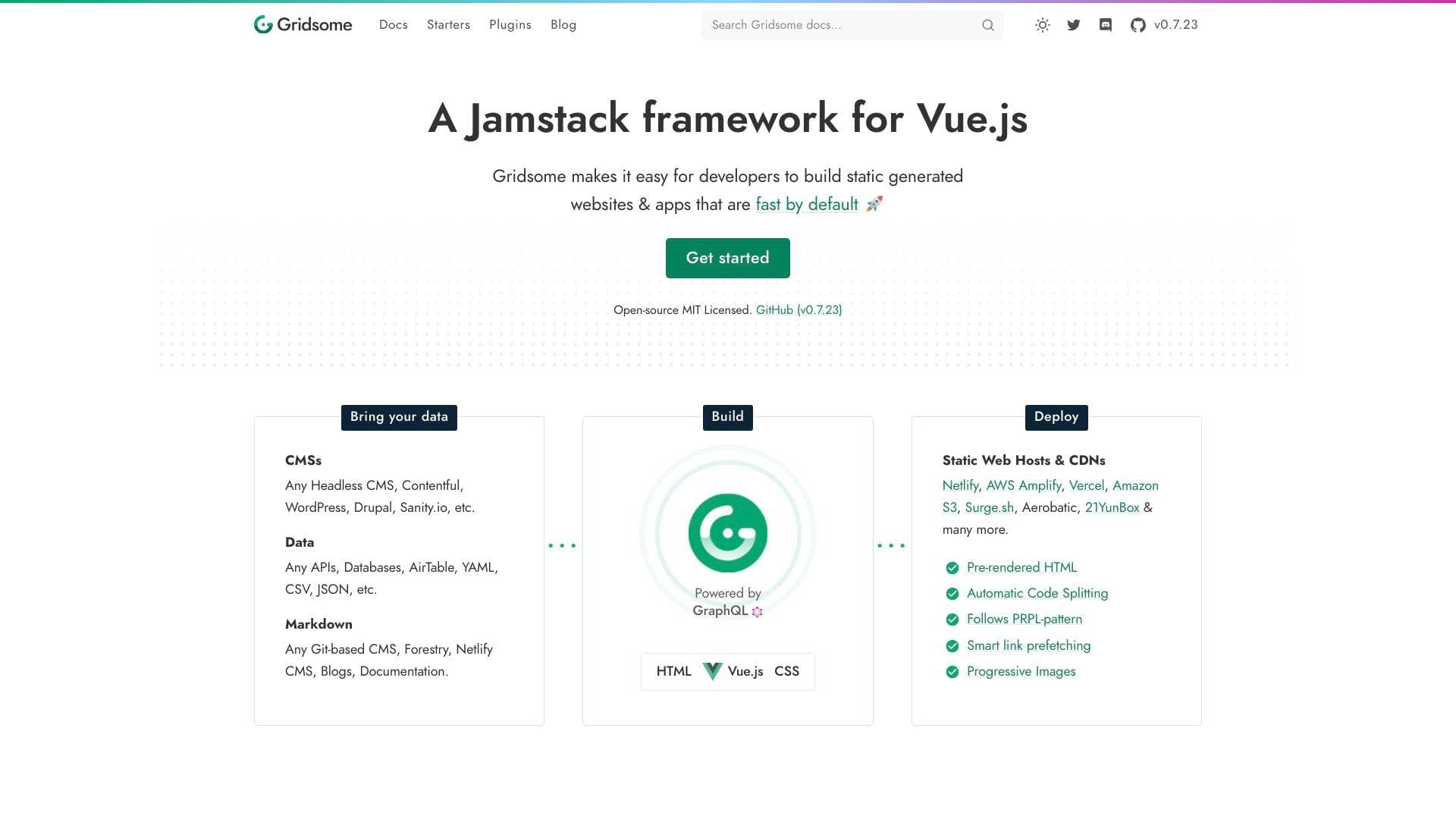
Gridsome is a free, open-source Vue.js-powered Jamstack framework built specifically for developers who want to create static generated websites and apps that are fast by default. For content creators who manage their own blogs, portfolio sites, documentation hubs, or personal brand websites, Gridsome solves a critical problem: delivering blazing-fast web experiences without complex server infrastructure. Built on the Jamstack philosophy (JavaScript, APIs, and Markup), it pre-renders every page as static HTML at build time, then hydrates into a fully Vue.js-powered single-page application once loaded in the browser. This means creator-focused sites can handle thousands to millions of visitors without expensive server costs or performance bottlenecks. Gridsome pulls content from virtually any source, including headless CMSs, WordPress, Markdown files, APIs, and databases, making it a genuinely flexible static site generator for creators who want full control over their content pipeline. Released under the MIT license and available on GitHub at version 0.7.23, it represents a mature, community-supported tool for technically inclined creators.
Gridsome Features That Matter for Content Creators
-
GraphQL Data Layer: Gridsome uses a centralized GraphQL data layer to manage all content sources in one place. Bloggers and portfolio creators can query posts, pages, and metadata from a single unified interface, making it simpler to combine content from multiple platforms like WordPress, Contentful, and Markdown files simultaneously.
-
Fast by Default with PRPL Pattern: Every page Gridsome builds follows the PRPL pattern (Push, Render, Pre-cache, Lazy-load), delivering almost perfect page speed scores automatically. Creators benefit directly from better SEO rankings and lower bounce rates without manually optimizing performance.
-
Automatic Code Splitting: Every page only loads the JavaScript it actually needs. Visitors browsing a creator's blog or portfolio never download unnecessary code, which keeps load times minimal on every page transition.
-
Progressive Images with g-image: The built-in
<g-image>component handles automatic image compression, resizing, cropping, and lazy loading using Intersection Observer. For photographers, designers, and visual content creators, this means high-quality images that load progressively without slowing down the site. -
Smart Link Prefetching: Gridsome prefetches internal page links in the background when they enter the viewport, using the built-in
<g-link>component and Intersection Observer. Readers clicking through a creator's blog or portfolio experience near-instant page transitions without full reloads. -
PWA-Ready Static Generation: Gridsome generates static Progressive Web Apps out of the box. Only critical HTML, CSS, and JavaScript load first, with remaining pages prefetched so visitors can browse content even when offline.
-
File-Based Page Routing: Any
.vuefile placed in thesrc/pagesdirectory automatically becomes a static route. Dynamic routes work the same way using[param].vuefile naming, giving creators a simple, intuitive way to structure blog posts, portfolio entries, or documentation pages. -
Multi-Source Data Integration: Content can be pulled from any headless CMS (Contentful, Sanity.io, Drupal, Storyblok), WordPress, Git-based CMSs like Forestry and Netlify CMS, Markdown files, AirTable, CSV, JSON, YAML, or any REST API. Creators are never locked into a single content management system.
-
SEO-Friendly HTML Generation: Gridsome sites load as static HTML before hydrating into Vue.js SPAs, which means search engine crawlers can index all content effectively. This gives creator websites a significant advantage in organic search visibility compared to client-side-only rendered apps.
-
Simple CDN Deployment: With no servers or databases required, a Gridsome site deploys as static files to any CDN or static web host, including Netlify, Vercel, AWS Amplify, Amazon S3, and more. Creators get reliable, scalable hosting without managing backend infrastructure.
Which Content Creators Should Use Gridsome?
Gridsome is best suited for technically confident creators who are comfortable with Vue.js, HTML, CSS, and basic command-line usage. Knowledge of GraphQL is helpful but not required. Solo creators and small creator teams who want complete ownership of their website stack will find the most value here.
Primary creator types:
- Bloggers and writers who want a fast, SEO-optimized blog powered by Markdown or a headless CMS
- Photographers and visual artists who need progressive image loading and portfolio-style layouts
- Developers and technical creators building documentation sites, tutorials, or personal brand sites
- Podcasters who want a custom landing page pulling episode data from an API or CMS
- Newsletter writers looking to build a public archive or subscriber-facing content hub
Experience level: Intermediate to advanced. Basic Vue.js knowledge is required, and creators should be comfortable with Node.js (v8.3+) and terminal commands.
Team size: Works well for solo creators and small teams. The file-based routing and plugin ecosystem make it manageable without a large development team.
Specific use cases for content creators:
- Building a Markdown-powered blog with taxonomy pages for categories and tags
- Creating a portfolio site that pulls project data from Airtable or a headless CMS
- Launching a documentation site for a creator tool or course curriculum
- Setting up a fast-loading landing page for a newsletter or digital product
- Building a photography portfolio with automatic image optimization
- Creating a blog connected to WordPress as a headless CMS backend
- Developing an ecommerce storefront using Shopify's API as a data source
- Building a multilingual content site using internationalization starters
Content types supported: Blog posts, portfolio pages, documentation, taxonomy/category pages, dynamic content pages, and programmatically generated pages.
Getting Started with Gridsome
-
Install the Gridsome CLI tool using either Yarn (
yarn global add @gridsome/cli) or NPM (npm install --global @gridsome/cli). Node.js v8.3 or higher is required, and Yarn is recommended. -
Create a new project by running
gridsome create my-gridsome-sitein the terminal, then navigate into the project directory withcd my-gridsome-site. -
Start the local development server with
gridsome develop, which launches the site athttp://localhost:8080with hot-reloading enabled so every code change appears in real time. -
Build and deploy by running
gridsome build, which generates all static files in a/distfolder ready to upload to Netlify, Vercel, Amazon S3, AWS Amplify, or any other CDN host.
Gridsome FAQ for Content Creators
Is Gridsome free to use? Gridsome is completely free and open source, released under the MIT license. There are no usage fees, subscription costs, or watermarks. The only costs involved are optional hosting fees depending on which CDN or static host a creator chooses to deploy to.
What content management systems does Gridsome support? Gridsome supports virtually any headless CMS, including Contentful, WordPress, Drupal, Sanity.io, Storyblok, Forestry, Netlify CMS, and Kentico Kontent. It also works with Markdown files, AirTable, CSV, JSON, YAML, and any REST API, giving creators complete flexibility in how they manage their content.
Do I need to know GraphQL to use Gridsome? GraphQL knowledge is helpful but not required to get started. Gridsome uses GraphQL as its internal data layer, and basic understanding of how queries work makes the development experience smoother. Gridsome is described as a great way to learn GraphQL for those new to it.
How does Gridsome handle SEO for creator websites?
Gridsome generates static HTML files at build time that search engine crawlers can fully index, then hydrates those files into Vue.js SPAs in the browser. It uses vue-meta for managing page <head> tags including titles and meta descriptions. This approach gives creator sites strong SEO foundations compared to purely client-side rendered applications.
What hosting platforms work with Gridsome sites? Gridsome sites deploy as static files to any CDN or static web host. Officially documented deployment targets include Netlify, Vercel, AWS Amplify, Amazon S3, Surge.sh, Aerobatic, and 21YunBox, among others. Since there are no servers or databases required, hosting is typically inexpensive and highly scalable.
Are there pre-built starter templates available? Gridsome offers a large library of community-built starter templates covering blogs, portfolios, documentation sites, ecommerce stores, and more. Starters exist for popular integrations including WordPress, Contentful, Strapi, Shopify, Storyblok, Sanity.io, and Tailwind CSS, allowing creators to launch quickly without building from scratch.
The Verdict: Is Gridsome Worth It for Content Creators?
Gridsome is a strong choice for technically capable content creators who want complete control over a fast, SEO-optimized website without ongoing server management costs. The combination of automatic performance optimization, flexible multi-source data integration, and simple CDN deployment makes it particularly well-suited for bloggers, portfolio creators, and developers building content-heavy sites.
The main limitation is the technical barrier to entry. Creators without Vue.js experience or comfort with the command line will face a steep learning curve before getting productive. It is not a drag-and-drop website builder, and content updates typically require familiarity with the development workflow unless paired with a headless CMS that has its own editing interface.
For creators who clear that technical bar, Gridsome delivers genuinely impressive results: near-perfect page speed scores by default, built-in progressive image handling, PWA capabilities, and the freedom to pull content from virtually any source. The free, open-source licensing and active plugin ecosystem add further long-term value for creators who want to own their platform entirely.
Details
One link. Every channel, rate, and piece of work brands need to evaluate you. Built for how creators actually get hired.
Claim your profile
Live creator, content, and marketing roles from real companies, with the pay, market, and context the raw job page never gives you.
Browse jobs

 Post Bridge