Should I Have Separate Portfolios for Each Niche When Pitching Brands? Yes, and Here's the Strategy
Should I have separate portfolios for each niche when pitching brands? Yes. Here's the exact strategy to build focused niche portfolios that win more brand deals.
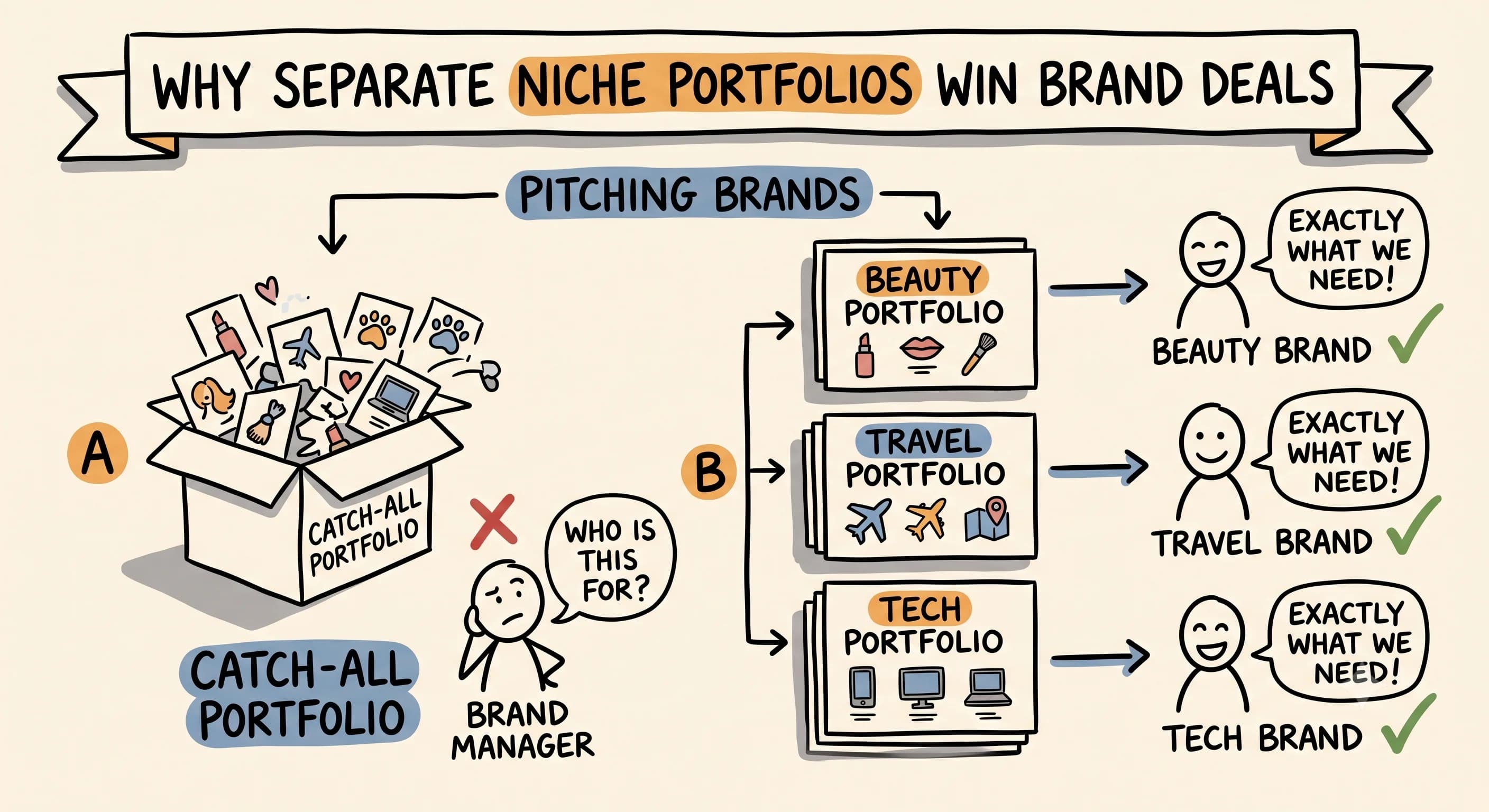
Should I Have Separate Portfolios for Each Niche When Pitching Brands? Yes — Here's Why
Imagine you're a brand manager scrolling through dozens of pitch emails. One creator sends a portfolio packed with beauty tutorials, travel vlogs, pet content, and tech reviews all jumbled together. Another sends a clean, focused portfolio with five videos all perfectly aligned with your skincare brand's aesthetic and audience. Which creator gets the callback?
This is the core principle behind the focused niche portfolio strategy — and it's one of the most powerful monetization moves content creators can make when trying to land brand deals. If you've been wondering whether to separate your work by category or keep everything in one place, the answer is a resounding yes. Here's how to do it strategically.
Why a Focused Niche Portfolio Wins More Brand Deals
 Most content creators make the mistake of building one massive catch-all portfolio and sending the same link to every brand they pitch. It feels efficient, but it actually works against you. Brands don't want a generalist — they want a creator who speaks directly to their target customer.
When your portfolio is niche-specific, it signals to the brand that you understand their world, their audience, and their marketing goals. A focused portfolio creates an immediate sense of relevance and trust. The brand isn't left wondering whether you can actually create content that fits their product — your portfolio proves it before you even hop on a call.
According to Lovable, relevance to the target client type and industry should take priority over breadth when selecting portfolio pieces. That means a tightly curated portfolio built around one niche will almost always outperform a sprawling collection of mixed content. The math is simple: a more focused pitch equals higher response rates, which means more opportunities to close paid deals and grow your income as a creator.
What Are the 4 Types of Portfolios for Content Creators?
 For creators on multi-platform channels like Instagram, TikTok, and YouTube, think of your portfolios in four practical categories:
1. UGC-Style Product Portfolios — Videos showing product demonstrations, unboxings, and lifestyle integrations. These are high-demand for e-commerce brands running paid ads.
2. Niche Influencer Portfolios — Content tied to a specific vertical like fitness, beauty, home decor, or parenting. These showcase your expertise and community connection in one area.
3. Platform-Specific Portfolios — Reels for Instagram, short-form for TikTok, or long-form for YouTube. Some brands want to see you thrive on their preferred platform before committing.
4. Campaign-Based Portfolios — Built around a type of deliverable, such as tutorials, testimonials, or seasonal content. These show versatility within a structured format.
For most creators getting started with brand partnerships, focusing on two to four niche influencer or UGC portfolios is the most effective path forward.
How to Build Your Niche Portfolio Strategy Step by Step
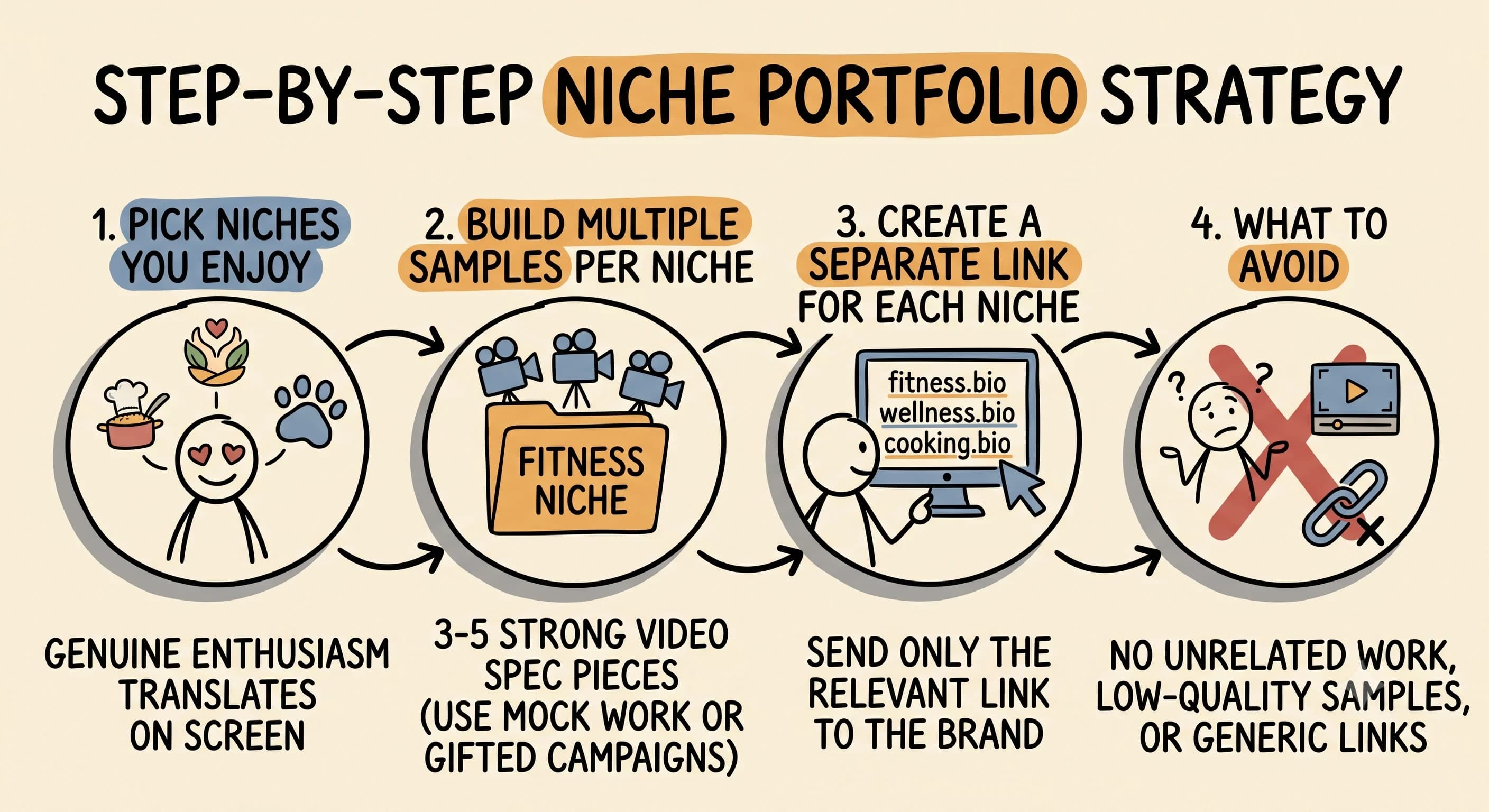
Step 1: Pick Niches You Actually Enjoy
This is where most creators go wrong. You've probably seen it happen — creators chase the dream niche like travel or luxury fashion, instead of building in areas where their content naturally thrives. If you genuinely love creating content in a specific category, that enthusiasm translates on screen. Brands can feel it, audiences respond to it, and your reel will look noticeably better than content you forced yourself to make.
Start by identifying three to four niches that excite you. Maybe it's home organization, wellness, budget cooking, or fitness. These don't have to be glamorous — they have to be genuine. The content you enjoy making most is almost always the content that performs best, and that's what your portfolio should reflect.
Step 2: Build Multiple Samples Per Niche
Each portfolio should have several strong video samples specific to that niche. Don't just repurpose one reel across every pitch. Brands want to see range within their category — an Instagram lifestyle brand might want to see how you handle product integrations, storytelling, and tutorial formats all within the same niche.
According to YoCreate, UGC creators should build a portfolio with three to five spec pieces organized clearly in a folder or site. That's a realistic and achievable starting point. You don't need 20 samples to make an impression — you need three to five strong ones that are directly relevant to the brand you're pitching.
A YouTube portfolio-building resource backs this up, noting that starting with three to five key pieces is sufficient initially, and that creators should identify three ideal clients in the same space and create intentional work that moves the portfolio toward those targets. This is a practical way to think about it: build with a specific brand type in mind, not just a vague category.
If you don't have samples yet in a niche you want to pitch, run gifted campaigns first. Accepting free product in exchange for content is a legitimate way to build your portfolio before chasing paid brand deals. YoCreate confirms that starting with mock or spec work to create proof in a niche is a solid strategy before pursuing paid work.
Step 3: Create a Separate Link or Website Page for Each Niche
Once your samples are ready, organize them into separate portfolio pages. Whether you use a personal website, a media kit tool, or a link-in-bio platform, make sure each niche has its own dedicated link. When you pitch a beauty brand, you send the beauty portfolio link. When you pitch a fitness brand, you send the fitness link. Simple, clean, and relevant every time.
UGC Roster recommends separate sections or tabs for each niche in a UGC creator portfolio, specifically to support the practice of sending only the relevant niche portfolio to each brand. This is the detail most creators skip, and it's the one that makes the biggest difference in how professional and intentional your pitch feels.
For organizing your work across multiple niches, tools like Authory support portfolio organization through collections, which can be used to group work by niche and present different portfolios to different buyers. You don't need an elaborate custom website to pull this off — the key is clarity, not complexity.
Step 4: What to Avoid in a Portfolio
Avoid including content that doesn't align with the niche you're pitching. Including unrelated work dilutes your unique value and confuses the brand. Also avoid low-quality samples just to fill space — three strong videos outperform ten mediocre ones every time. And never send the same generic portfolio link to every brand on your pitch list. That approach is the fastest way to get ignored.
Quality beats quantity here without exception. A focused, polished niche portfolio tells the brand exactly what they need to know: that you create great content for their specific audience.
What Is the Difference Between a Media Kit and a Portfolio?
 A media kit is a one-page document that summarizes who you are — your platforms, follower counts, engagement rates, demographics, and past partnerships. A portfolio is the proof of your work — the actual content samples that show brands what they're buying. You need both. Your media kit gets their attention; your niche-specific portfolio closes the deal.
Think of it this way: the media kit is your resume, and the portfolio is your work samples. Neither one alone is enough to land a paid brand deal consistently.
Scale Up as You Grow
In an ideal world with unlimited time and resources, you'd build a dedicated portfolio for every niche you want to pitch — ten niches, ten portfolios. But when you're starting out, three to four focused portfolios is the practical sweet spot. As you land more brand deals and create more content, you can expand your portfolio library and pitch into new categories with confidence.
The focused niche portfolio strategy isn't just an organizational tip — it's a fundamental shift in how you show up for brands. Stop trying to be everything to every brand and start being exactly what the right brands are looking for. Build the portfolios, send the right pitch, and watch your response rates climb.
Read more about Becoming a Content Creator
📚 Complete Guides
- How to Become a Content Creator: Complete Beginner's Guide
- Content Creator Platform Guide: Choose the Right Platform to Start Your Creator Journey
⚡ Tactics & Strategies
- 50% Retention Rate Optimization for YouTube Algorithm Success
- Age Bracket as Superpower Strategy for Older UGC Creators
- AI Workflow Integration for Content Reduction
- Audience Consistency Strategy to Avoid Algorithm Penalties
- Audience Poll on Instagram to Source Q&A Content in Advance of Recording
📄 Related Articles
- Voice of the Customer: A Creator's Guide to Magnetic Messaging
- Content Creator Burnout: Signs, Prevention, and the Mindset That Fixes It
- Influencer Authenticity: How Honest Product Reviews Drive Real Influence
- TikTok Creator Search Insights: How to Find Content Gaps That Guarantee Views
- The AI Content Creation Workflow: Turn 37 Seconds Into 1,200 Words
- The AI Content Workflow That Cuts Production Time by 70%
- How to Ask Someone to Be on Your Podcast (And Actually Get a Yes)
- UGC Usage Rights Explained: What to Charge and How to License
Read more about Monetization & Business Models for Content Creators
📚 Complete Guides
- Content Creator Monetization: Proven Revenue Streams
- Content Creator Income Streams: 7 Ways to Build Financial Stability
⚡ Tactics & Strategies
- 30 Daily Outbound Pitches for UGC Deal Generation
- Affiliate Code Negotiation Using Membership Audience Influence
- Age Bracket as Superpower Strategy for Older UGC Creators
- B2B Merchandise Bulk Sales to Industry Professionals- Packaging Products as Client Gifts for Lawyers and Service Providers
- Becoming Your Own Sponsor by Plugging Your Offer Within Episodes
🧮 Calculators

Alex Kirillov
One link. Every channel, rate, and piece of work brands need to evaluate you. Built for how creators actually get hired.
Claim your profile
Live creator, content, and marketing roles from real companies, with the pay, market, and context the raw job page never gives you.
Browse jobs