
Followers vs Engagement: Which Matters More For Your Business?
Follower count vs engagement rate: which matters more for real business growth? Learn why highly engaged audiences drive more revenue and conversion than large passive followings.
Details
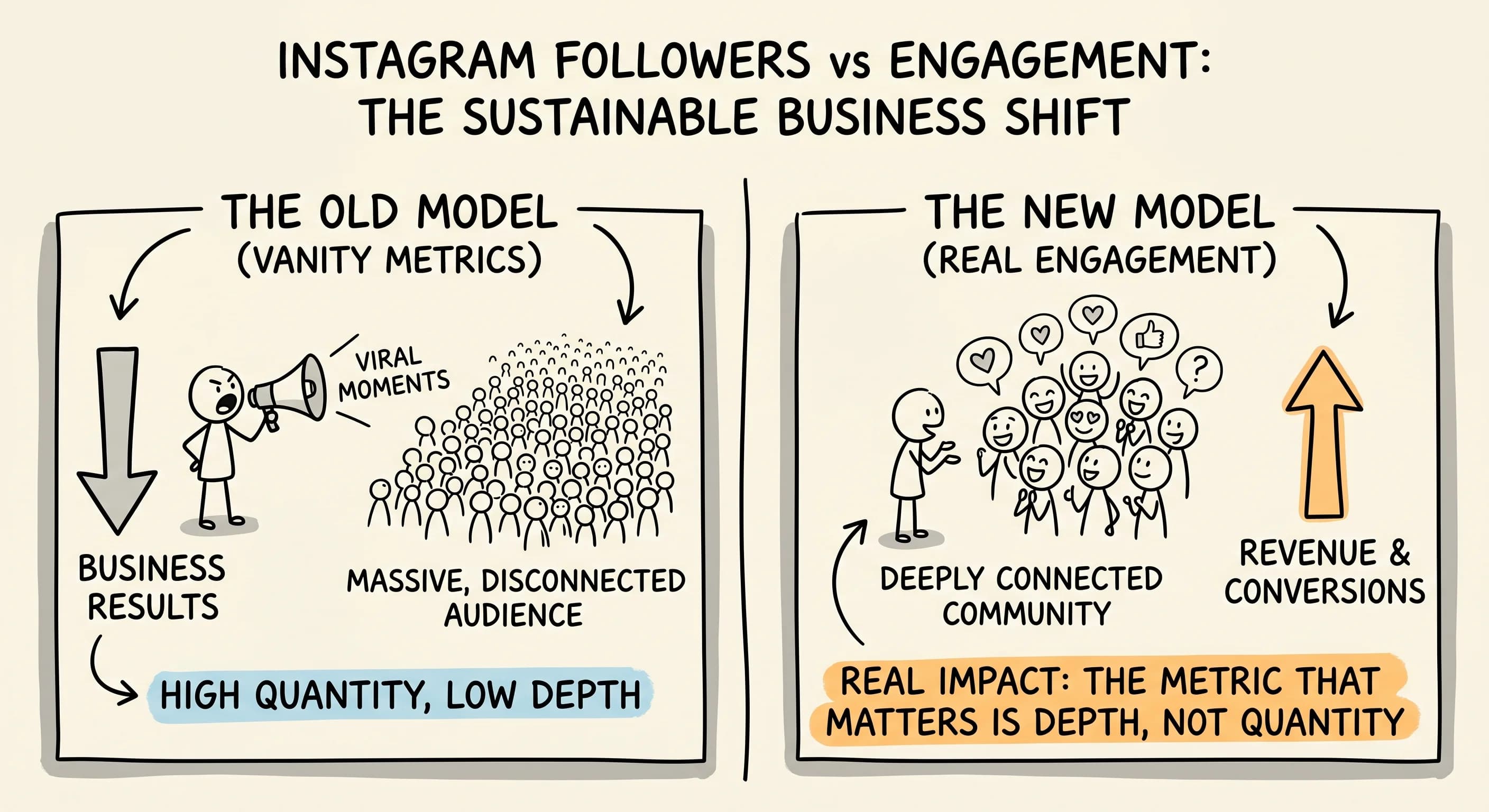
Chasing viral moments and growing your follower count may be the least effective strategy for building a sustainable business right now. That's not a comfortable thing to hear, but it's worth sitting with.
The old model made sense: go viral on Instagram, gain followers, enjoy increased baseline reach. But that model is broken, and the data is starting to catch up with what smart creators have quietly known for years.
Followers vs Engagement: What Actually Matters?
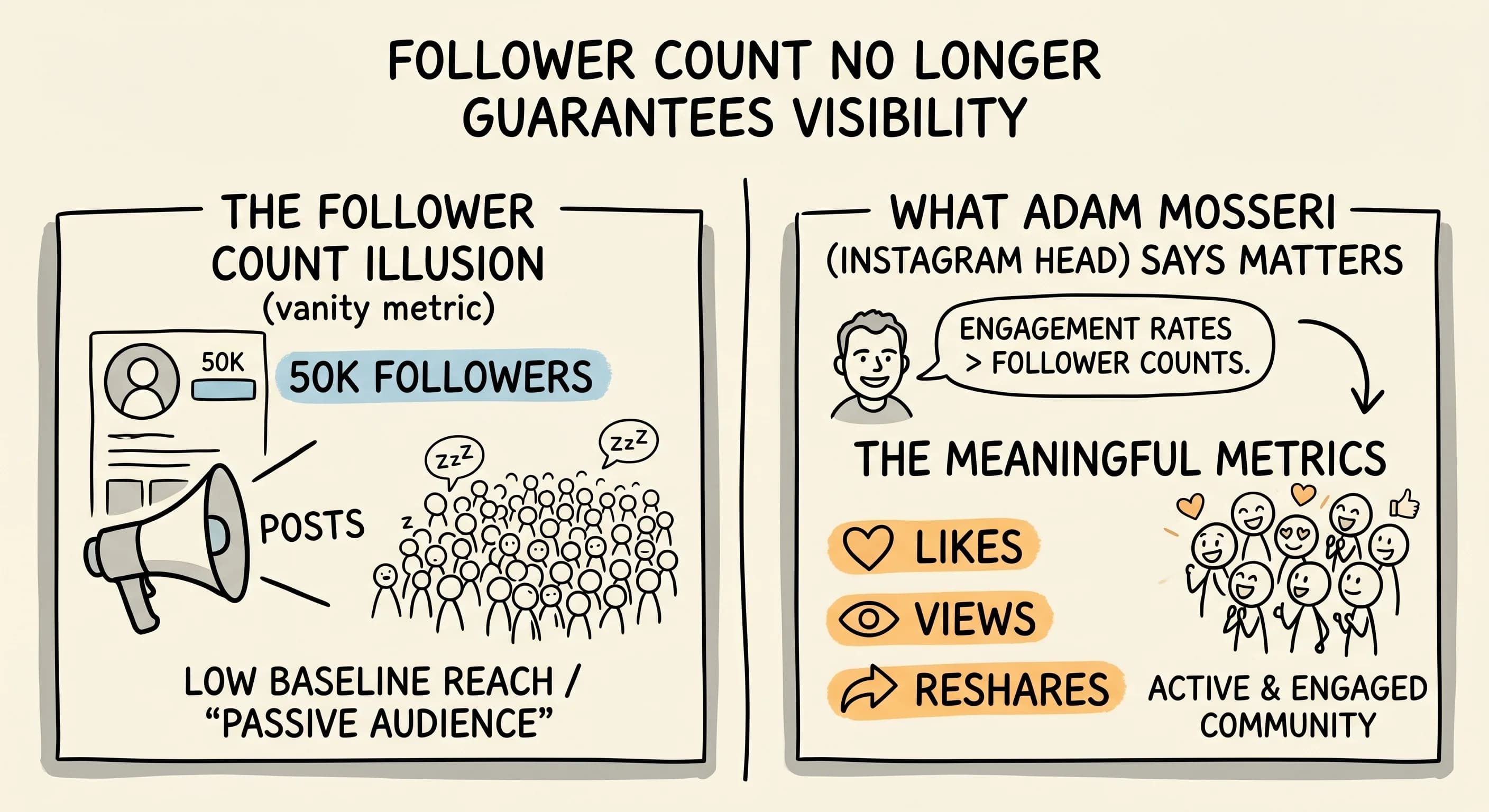
So what matters more in digital marketing: the number of followers you have or your engagement rates? Does a higher follower count mean higher engagement? Not anymore. On social media platforms like Instagram and TikTok, as feeds shift to for-you-page algorithm recommendations, your follower count no longer guarantees your audience sees your content. Algorithms reward active engagement over passive audiences and sheer numbers.
Instagram's own head, Adam Mosseri, said it plainly in April 2024: engagement rates are more important than follower counts. He pointed to likes, views, and reshares as better indicators of real performance than the number of people who follow you.
What's the point of having thousands of followers if none of them engage with your content or take action based on what you post? A brand with 10,000 deeply connected followers will generate better results than one with hundreds of thousands of followers who feel no connection. When choosing the right influencer or measuring your own impact, a high follower count is far less important than higher engagement rates. The metric that matters is depth, not quantity.
Is the audience real, or is it simply a vanity metric? Accounts that buy followers inflate their numbers without attracting engaged followers. Those passive audiences scroll past your posts and never interact, which signals to the algorithm that your content is not worth amplifying.
Is Engagement More Important Than Follower Count for Real Business Growth?
Engagement matters more than most brands realise, and here's why. Do all the people who follow you or your business make you more successful? Not automatically. A community built on follower engagement, even a few thousand people who trust you, will drive more ROI and conversion than a vast following that feels no connection to what you do.
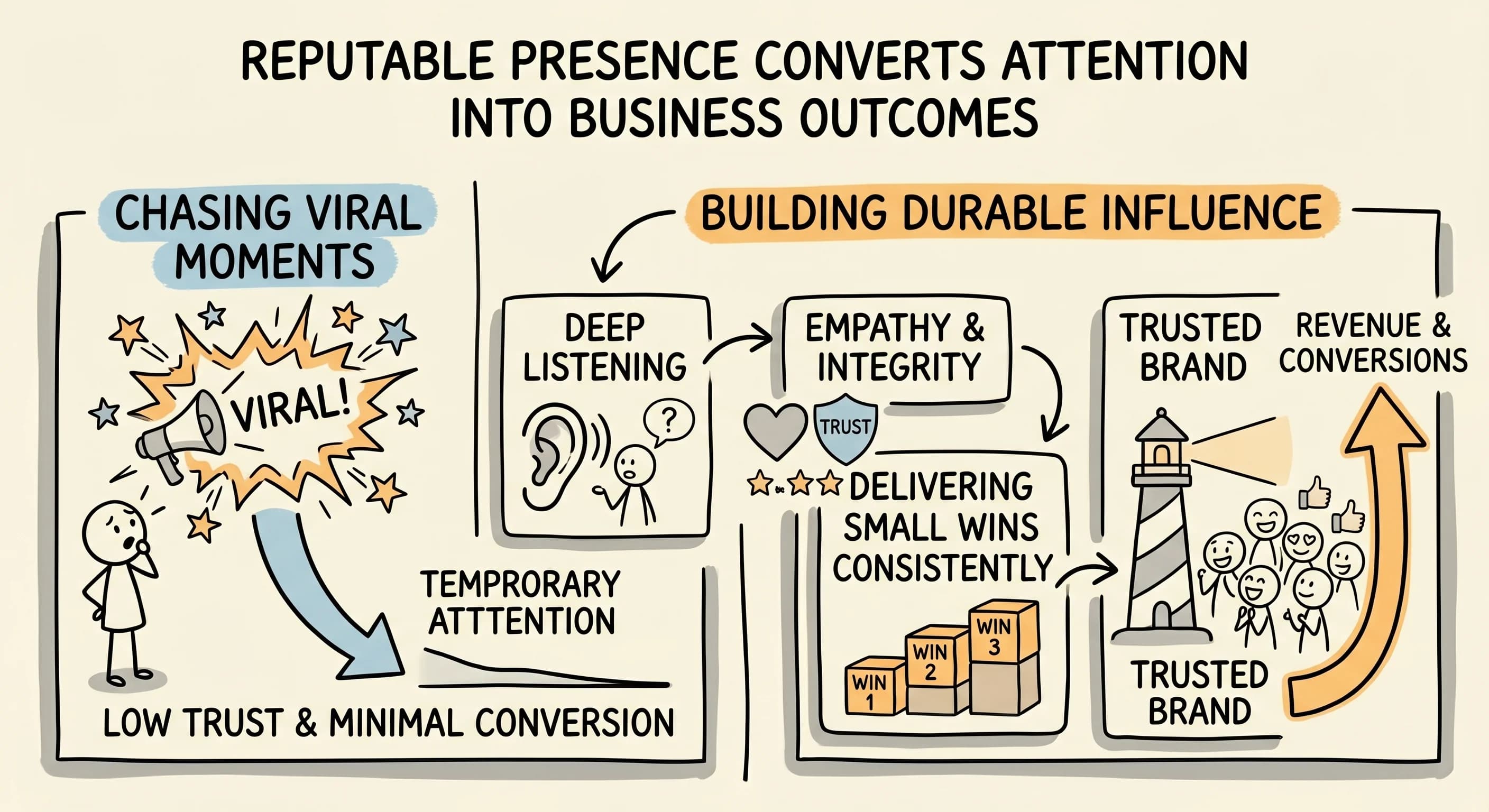
Research on trust-based influence consistently shows that what moves people is not visibility alone, but deep listening, empathy, and integrity over time. The Change Management Review frames this through what's called "idiosyncrasy credits": you build influence by meeting expectations reliably and delivering small wins consistently before you make a larger ask.
You've probably experienced this yourself. The creators you actually buy from aren't necessarily the biggest ones in your feed. They're the ones who made you feel seen, genuinely answered a real question, or showed up so consistently that you started to trust them before you even realised it. That kind of social proof is what converts attention into real business outcomes and builds the loyalty that keeps customers coming back.
What's Your Brand About?
Before you can build a loyal following, it helps to get clear on what your brand stands for. Are you a countertop company sharing installation expertise? A fitness coach helping beginners? A local bakery with a story worth telling? The more precisely you define your purpose, the easier it becomes to attract a target audience who are genuinely interested in what you create.
Using relevant hashtags aligned to your content helps new people discover what you post, but discoverability only works when the content itself is high-quality and worth their time. Breadth of relevance matters more than keyword stuffing.
How to Build an Engaged Follower Base
 Creators who've built durable audiences share a few common moves. They stopped trying to go broad and started going deep. Here's how to shift your strategy and prioritize content that drives meaningful interactions:
- Spark genuine conversation: Ask questions that invite people to respond to comments and share their perspective, not just react. When you answer questions from your community openly, trust compounds quickly
- Use interactive features: Instagram Stories with a poll or a question sticker, or a Reel that poses a real dilemma, give your community a reason to respond rather than scroll. These formats are purpose-built for community building
- Know your type of content: Do your followers prefer behind-the-scenes installation videos, before-and-after transformations, or material comparisons? Use analytics to find out what makes content resonate with your specific community
- Track the right KPIs: Engagement metrics like saves, comments, CTR, and conversion rates tell you far more than views or raw counts alone. A data-driven approach lets you optimize over time rather than guess
- Build your email list: Own the channel where trust grows fastest and no platform can cut off your access
- Use trust proxies: Replies, repeat purchases, referrals, and direct messages give you insight into audience health that surface-level numbers never will
Is it bad for your reach if you remove followers you think are not interested in your content? Generally, removing disengaged accounts improves your engagement percentage and sends a healthier signal to the platform, so it can be worth doing. As your follower base increases in quality rather than just quantity, your content reaches a wider audience organically because the algorithm responds to real interaction.
The question isn't really followers or engagement in isolation. It's followers and engagement together, growing at equal pace, that signals a genuinely healthy account.
Influencer Marketing: Followers vs Engagement
A critical challenge in influencer marketing persists: should companies invest in influencers with vast followings, or partner with those who have smaller but highly engaged audiences? The answer depends on your goal.
If you want impression volume, a creator with a million followers may help. But if you want conversion from a campaign that delivers measurable returns, a micro-influencer with a high engagement rate will often outperform a larger account. Counting followers alone when you allocate influencer marketing budget is a mistake smart brands are moving away from. The interaction between a creator and their audience matters far more than raw reach, and an engagement-focused strategy consistently outperforms one built on follower growth alone.
How to Calculate Engagement Rate on Instagram
To calculate engagement rate, divide total engagements (likes, comments, shares, saves) by your total follower count, then multiply by 100. This gives you a percentage you can use to compare your account against others and track progress over time. Attracting new followers matters less if those people never click, comment, or take action on what you post.
The Bottom Line
Stop letting follower count define your success. The metric worth caring about is not how many people followed you after a viral moment. It's how many of your current followers would actually miss you if you stopped showing up.
The creators who thrive are those who prioritize building audiences that trust them and focus on what their brand stands for at every step, rather than chasing numbers that don't translate into growth.
Read more about Audience Building & Growth for Content Creators
📚 Complete Guides
- How to Build an Audience as a Content Creator
- How to Find Your Target Audience (Start With One Person)
⚡ Tactics & Strategies
- 30 Daily Outbound Pitches for UGC Deal Generation
- 50% Retention Rate Optimization for YouTube Algorithm Success
- Age Bracket as Superpower Strategy for Older UGC Creators
- Audience Consistency Strategy to Avoid Algorithm Penalties
- Audience Psychology Over Algorithm Optimization, Focusing on Human Pain Points and Goals Instead of Platform Tactics
📄 Related Articles
- Usage Rights Pricing: How Content Creators Can Maximize Revenue from Brand Partnerships
- Brand Differentiation: The Three Circles Framework
- Street Interviews: The LinkedIn Strategy That Went Viral
- Business Vlog Ideas: How to Find Your Niche While Satisfying Your Creative Passion
- Authentic Content: Why It Beats Polished Perfection
- How to Create Authentic Social Media Content That Boosts Engagement
- How to Grow on Social Media (Ignore the Algorithm)
- Long-Form Content: Why It Works and How to Use It
Read more Instagram Resources for Content Creators
📚 Complete Guides
⚡ Tactics & Strategies
- Audience Poll on Instagram to Source Q&A Content in Advance of Recording
- Community-First Creator Sourcing to Maximize Small Influencer Budgets
- Consistent Aesthetic Elements Strategy
- Creating Viral Content Through Polarizing and Educational Hooks
- Earning Influence Through Trust Rather Than Attention Spikes
🧮 Calculators

Alex Kirillov
Details
One link. Every channel, rate, and piece of work brands need to evaluate you. Built for how creators actually get hired.
Claim your profile
Live creator, content, and marketing roles from real companies, with the pay, market, and context the raw job page never gives you.
Browse jobs