
Growing an Online Community: How to Scale While Preserving the Magic of Micro-Communities
Learn how to scale your online community from 50 to 500+ members while preserving the intimate, personal experience that made it successful. Proven strategies from top creators.
Details
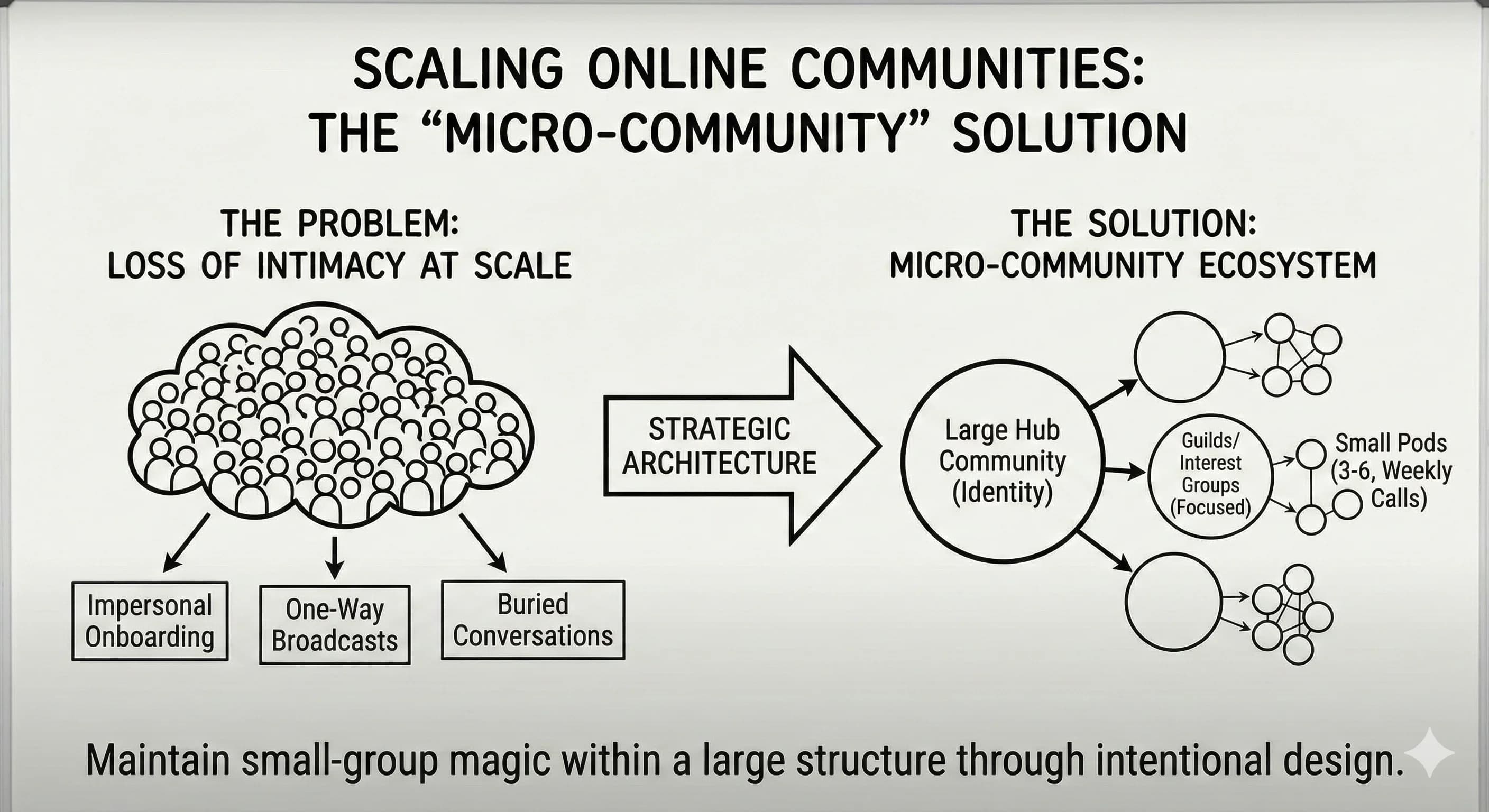
Content creators face a cruel irony: the intimate experiences that make online communities successful start disappearing the moment those communities grow. When you first build an online community from scratch, every new member feels special, receives personal attention, and experiences genuine connection. An online community is a group of people brought together by a shared interest or goal, and that sense of belonging is exactly what keeps it alive. But as numbers increase from 50 to 500 members, that magic often fades, leaving you wondering how to build a community that scales without losing its soul.
So, what makes an online community truly valuable? And more importantly, how do you grow one into a thriving online space people actually want to engage in?
Why Build an Online Community?
A strong online community does more than create a warm, fuzzy feeling. It builds brand loyalty, turns casual followers into brand advocates, and gives your product or service a human face that no ad campaign can replicate. Think about the difference between a generic social media page and a private Facebook group where customers share tips, ask for advice, and interact with the brand meaningfully. The community also becomes a source of user-generated content that adds ongoing value for everyone involved.
That's why community building is worth the investment. A thriving online community around your brand can significantly boost word-of-mouth, retention, and trust, all at once.
What Is an Online Community?
An online community is a group of people who gather in an online space, whether that's an online forum, a social media group, a Discord server, or a dedicated platform, united by a shared interest, goal, or identity. Virtual community and online community are often used interchangeably, and the practical difference is minimal: both describe people coming together digitally rather than physically. The community you want to build might be tightly focused around a niche topic, or it might be a broad community around your brand. Either way, the principles for growing an online community are largely the same.
Understanding Your Audience Before You Start
Before you choose a platform or post a single piece of content, spend time understanding your audience. Who are you trying to bring together? What do they care about? What keeps them up at night? When you tailor your community's purpose, tone, and content to the people you actually want to attract, everything else becomes easier. Choosing the right community structure starts with knowing your members, not guessing.
On its first page, HP offers a warm welcome to new members in a memorable post titled "First Time Here?" It's a small touch, but it signals immediately that the space was built with real people in mind.
Why Traditional Communities Lose Their Appeal at Scale
The main purpose of content communities lies in creating meaningful connections and delivering personalized value. Early success typically stems from small group dynamics where members can collaborate in real time, receive immediate feedback, and build trust with both you and their peers.
But here's what happens when communities grow beyond that sweet spot: new member onboarding becomes impersonal. Your once-intimate webinars turn into one-way broadcasts where genuine conversation gets buried. The personal insights that members used to share freely get lost in crowded platforms like Discord or Facebook groups. Testimonial exchanges become rare, and the user-generated content that adds value to everyone's experience starts to diminish.
David Perell faced exactly this challenge with Write of Passage. His early cohorts were small and high-touch, but as they grew to hundreds of students, he had to completely redesign the experience. Rather than accepting the loss of intimacy, he introduced "homerooms," small mentor groups of around 10 students meeting weekly, to preserve "the magic of a small seminar" even within large global cohorts.
Community Building from Scratch: The Micro-Communities Solution
The solution isn't limiting growth. It's creating multiple small experiences within your larger community ecosystem. This approach to community building maintains the benefits that attracted people initially while accommodating scale. When you've built a community this way, you're not just managing a headcount, you're designing an architecture of belonging.
Strategies for building this kind of layered community start with one honest question: what created the sense of community in the first place? Identify that, and you can multiply it intentionally.
Increase Programming Frequency
 Instead of hosting one monthly call for 200 members, create four weekly sessions for 50 participants each. This strategy naturally reduces group size while providing more touchpoints. Each session becomes more interactive, allowing for genuine collaboration and personalized attention.
Indie Hackers discovered this when their main online forum became overwhelming. They created hundreds of local meetups with 5 to 20 people each, maintaining that original "few people in a cafe" vibe by reproducing it in many places rather than trying to scale a single large discussion.
Implement Smart Matching Systems
 Develop systems that cater to specific interests, experience levels, or goals. Create small masterminds of 6 to 8 members who meet regularly. Use your newsletter to facilitate these connections, highlighting successful partnerships and encouraging co-creation projects between matched members.
On Deck's fellowship program mastered this approach. As their founder cohorts grew, they increased the number of cohorts while using matching to form small "pods" within large fellowships for weekly calls and accountability. The unit of experience stayed small while the organization scaled massively.
Geographic and Interest-Based Segmentation
Organize local meetups where possible, or create virtual micro-communities built around specific topics within your broader community. Choosing the right platform matters here too: look for features like sub-groups, topic channels, and event tools that make segmentation easy. LinkedIn can be particularly effective for professional communities, while platforms with features like threaded discussions and role-based access give you more control over how people to join your community actually experience it.
Many successful creator communities report that members stay not for the brand but for "my weekly mastermind" or "my local meetup," even when the main Slack or Discord feels huge and impersonal.
Build an Online Community People Come Back To: Engaging Content and Engagement Strategies
So what sort of content makes members come back and want to engage further? Content that's useful, specific, and built around them rather than around you. Polls, challenges, behind-the-scenes looks, and Q and A sessions all invite people to share content and participate rather than just consume.
Offer exclusive content for your most active members, giving members access to premium resources, early releases, or direct conversations with you. This creates a create a loyal inner circle that pulls the wider community forward. It also helps you create a sense of being valued, which keeps the community healthy long after the novelty wears off.
Successful engagement strategies also involve giving people roles. Rotate leadership opportunities, host contests that encourage collaboration, and create actionable challenges that small groups can tackle together. A buddy system during onboarding, where experienced members guide new members, not only preserves the personal touch but strengthens existing member investment in your community's growth.
Y Combinator exemplifies this perfectly. As their batch sizes grew, they didn't abandon their small-group magic. They increased the number of group office hours and dinners so each founder still had intimate contact with partners. They structured sub-groups by stage and sector, creating frequent, smaller events rather than a few massive ones.
Advanced Strategies for Sustainable Growth
 The most successful community builders go beyond basic segmentation. They create multi-layer structures: a large hub community for announcements and identity, guilds or interest groups for focused discussions, and within each guild, 3 to 6 person pods meeting weekly. This preserves intimacy while providing clear progression and belonging.
Some creators use rotating pods to balance depth with network breadth. Keep pods stable long enough to build trust, around 6 to 8 weeks, then rotate members into new pods so they gradually know many people, but always within small groups. This prevents cliques while creating a dense network of strong ties.
You can also train community members to become small-group facilitators, city leads, pod hosts, or mastermind coordinators. This lets you multiply small experiences without burning out your core team. Many thriving online communities rely on volunteer or lightly compensated hosts to maintain that personal touch at scale.
Offer Exclusive Value and Use Analytics to Guide Growth
Once you've built a community around your niche, don't neglect the data. Analytics tell you which micro-communities are thriving, which are going quiet, and where people are dropping off. Track pod participation, small-group event attendance, and qualitative feedback rather than just total member count.
Pair that data with real incentives: offer exclusive perks to your most engaged members, whether that's access to premium resources, early content, or a direct line to you. Do you want to offer exclusive content or direct access to communication for premium members? If so, plan that into your community architecture from the start, not as an afterthought.
The right platform for all of this matters. Pick one with analytics built in, and features like member tagging, event scheduling, and direct messaging so you can actually act on what you learn.
Taking Action
Start by identifying what specifically made your early community experience special. Was it the immediate responses you gave to questions? The way members knew each other's names and projects? The collaborative problem-solving that happened naturally?
Then implement one strategy from above within the next two weeks. If you're running monthly calls for 100 or more people, try splitting into two smaller sessions. If onboarding feels impersonal, create a buddy system or small welcome groups. If conversations get lost in large channels, establish topic-specific micro-communities with clear purposes.
Your growing community doesn't have to lose its magic. It just needs thoughtful architecture to preserve what matters most. The creators who succeed at scale don't abandon what worked early on. They find ways to multiply those intimate experiences across their entire community ecosystem, bringing people together again and again in ways that feel personal even at size.
Read more about Systems, Workflows & Operations for Content Creators
📚 Complete Guides
⚡ Tactics & Strategies
- 30 Daily Outbound Pitches for UGC Deal Generation
- 50% Retention Rate Optimization for YouTube Algorithm Success
- AI Workflow Integration for Content Reduction
- Audience Consistency Strategy to Avoid Algorithm Penalties
- Audience Poll on Instagram to Source Q&A Content in Advance of Recording
📄 Related Articles
- Behind the Scenes Content: Turn Your Work Process Into Viral BTS Ideas
- Thought Leadership: Build It by Writing to Learn
- ChatGPT for Social Media: Prompts That Actually Work
- Content Creation Tools: The Ultimate Directory for Creators
- Emotional Storytelling: Turn Feelings Into Followers
- Relevant Content: A Two-Question Filter for Creators
- Content Inspiration: Where to Find Fresh Ideas Beyond Your Niche
- Customer Discovery Calls: Turn Free Consultations Into Content Gold and Audience Growth
Free: The Community Scale Blueprint
Get the interactive tool, downloadable PDF, and Notion template - all free.
No spam. Unsubscribe anytime.

Alex Kirillov
Details
One link. Every channel, rate, and piece of work brands need to evaluate you. Built for how creators actually get hired.
Claim your profile
Live creator, content, and marketing roles from real companies, with the pay, market, and context the raw job page never gives you.
Browse jobs