
The P2P Revolution: How Peer to Peer Community Building Is Transforming Influencer Marketing Strategies
Discover how peer-to-peer communities are revolutionizing influencer marketing. Learn proven P2P strategies that reduce content creation while multiplying community value.
Details
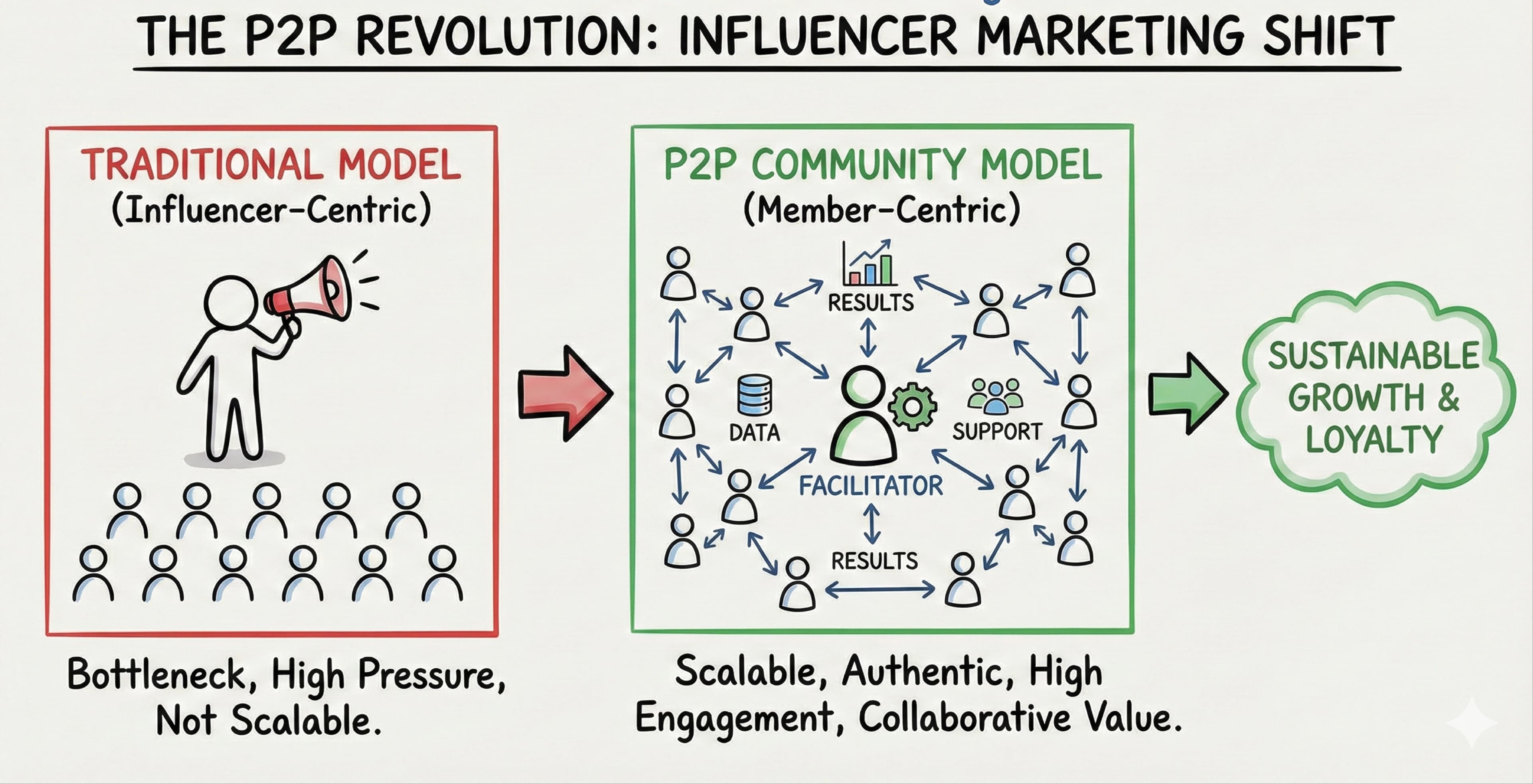
Here's what's happening in the creator economy right now: while most influencers are burning out trying to produce premium content constantly, smart creators are building communities where members create the value for each other. This shift from being the sole content source to facilitating peer-to-peer exchanges isn't just easier, it's more effective. And the same logic that makes a peer to peer community so powerful in creator spaces also shows up in mental health support, higher education, and scientific publishing. The underlying principle is the same: peers who understand your situation can connect with others in ways that no single authority figure can replicate.
Why a Peer-to-Peer Community Outperforms Traditional Influencer Marketing
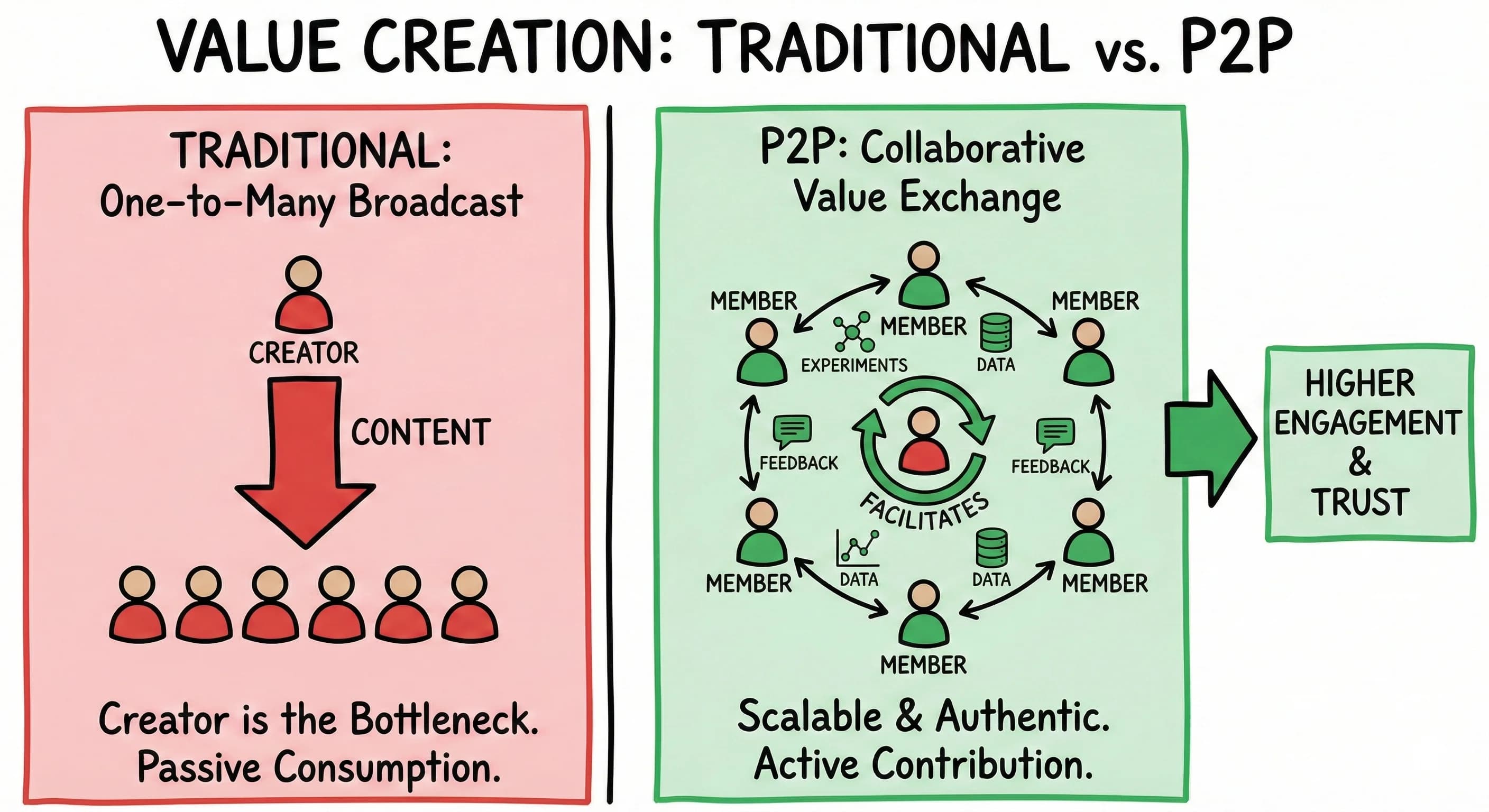
Traditional influencer marketing puts all the pressure on you to be brilliant every single day. You're the only source of value, which means you're also the bottleneck. Research shows that community-led growth creates collaborative value through member interactions and peer support, while traditional content marketing focuses on one-to-many broadcasts that don't scale sustainably.
Consider this: instead of you creating 30 pieces of content per month, what if 200 active community members each shared one experiment result? You'd have 200 data points, real case studies, and authentic user-generated content (UGC) flowing naturally. The math alone should convince you, but the quality difference is what really matters.
Creator communities that prioritize peer connection generate significantly higher engagement metrics than broadcast-style content. When members help each other solve problems and share real results, they develop stronger loyalty because they're not just consuming, they're contributing to something bigger.
Building Your Peer Community for Maximum Brand Growth
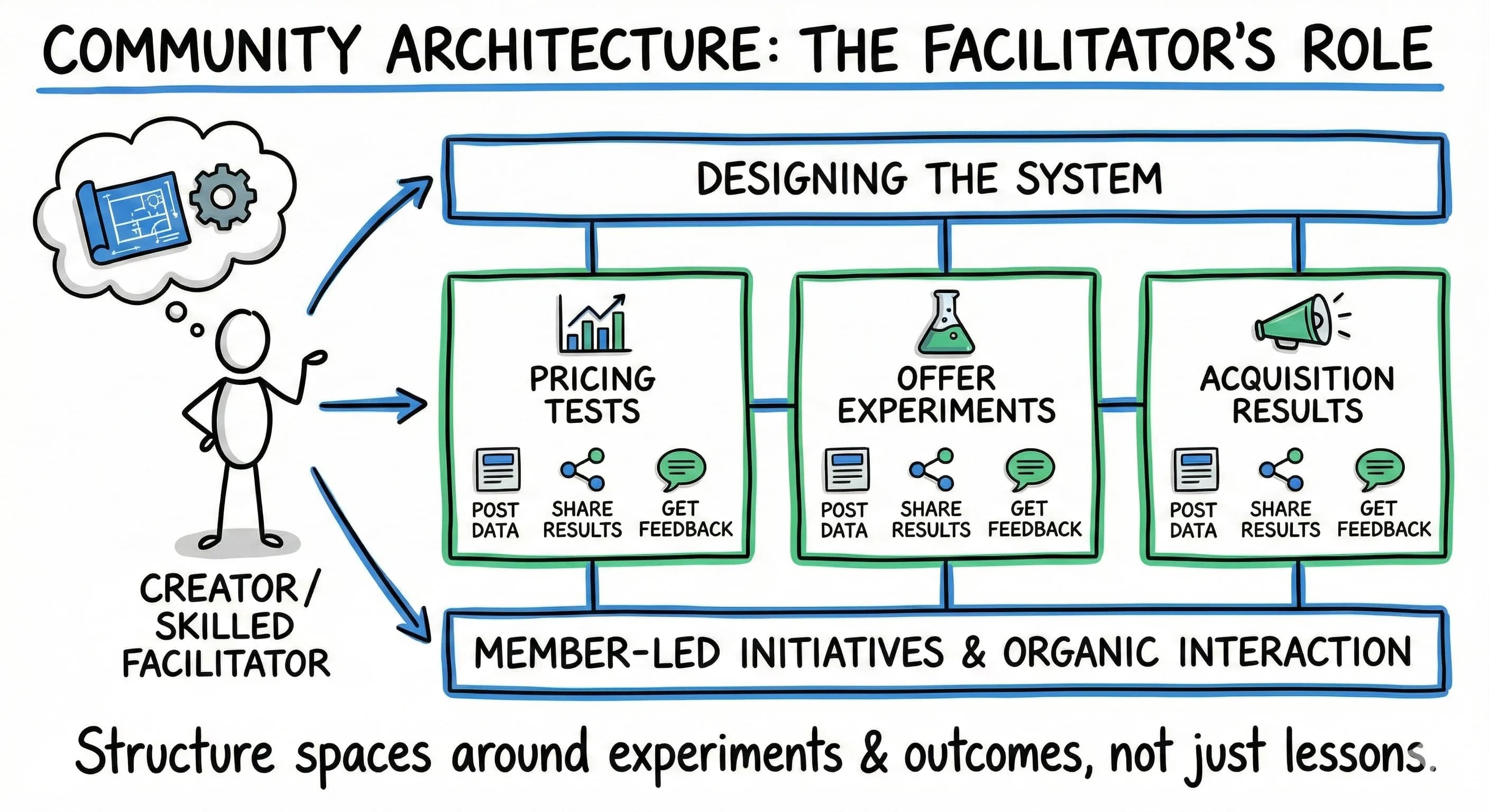
Your role shifts from being the primary content creator to becoming what community experts call a "skilled facilitator." You're designing systems for member interaction, not filling every conversation yourself.
Start by identifying 10-20 active experimenters in your target audience, people who are already running tests, tracking results, and willing to share what they learn. These become your founding members before you open doors to everyone else. Successful peer community architecture balances structure with space for organic interaction and member-led initiatives.
Here's your community structure: Instead of organizing around lessons or modules, create spaces around experiment types and outcomes. Think channels like "Pricing Tests," "Offer Experiments," and "Acquisition Results" where members post their data, not just opinions. A good moderator keeps those spaces focused without killing the casual energy that makes people want to show up.
On LinkedIn, this might mean curating business owners who test different lead generation strategies and share actual conversion numbers. On TikTok, it could involve creators experimenting with various content formats and posting their analytics screenshots alongside what they learned.
How to Connect and Moderate a Thriving Peer Support Community
The key to effective community building lies in creating structured spaces where peer learning happens naturally. Design specific threads where members can ask questions, share experiment results, and discuss what actually worked versus what they expected. That forum-style structure gives people a place to go instead of just a feed to scroll.
A good community manager appoints at least one moderator per topic area to keep discussions on track and make sure no one falls through the cracks. This is especially relevant if your community touches sensitive territory: support groups for isolation, addiction recovery, or mental health benefit enormously from clear moderation guidelines that keep the space safe and transparent.
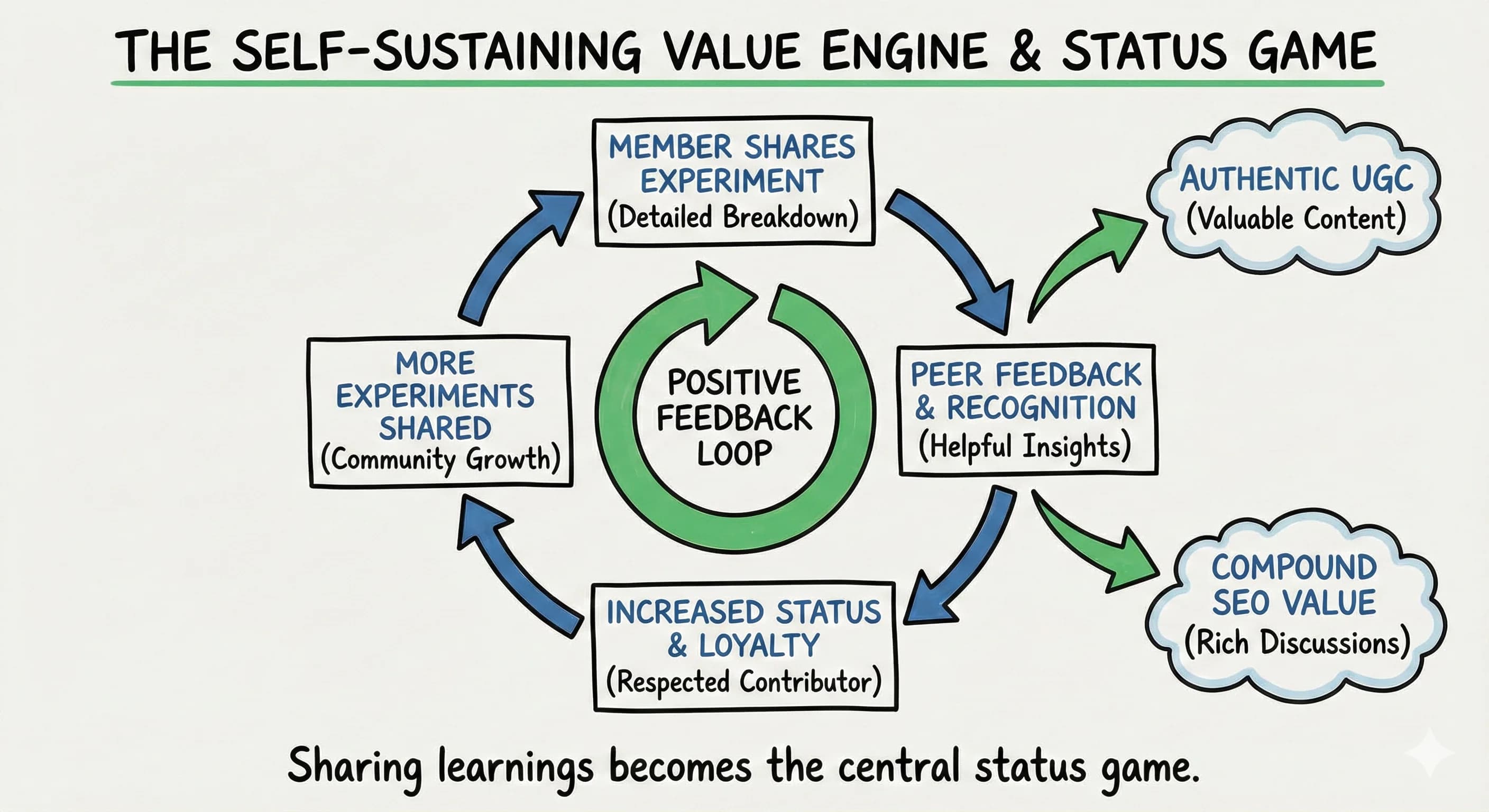
Make sharing experiments the central status game in your community. Implement recognition systems that highlight members who post detailed experiment breakdowns and those who give helpful input on others' tests. When helping peers and sharing learnings becomes how people gain respect in your space, you've created a self-sustaining value engine.
This approach generates authentic UGC that provides more value than any single creator could produce alone. Community members develop stronger brand loyalty because they're actively contributing to a shared knowledge library, not just passively consuming your content.
Communities that focus on peer-to-peer support and community-generated knowledge see reduced support costs and increased member retention. Your community becomes a collaborative marketplace of ideas where every member brings something to the table, and new participants can join anonymously at first before they feel confident enough to share experiences openly.
What an Online Peer-to-Peer Community Looks Like in Practice
The peer support community model shows up in some surprising places beyond creator marketing. Kids Help Phone offers young people a way to connect with others and share experiences privately, without judgment. University counseling programs use peer-led support groups to reach students who won't book a formal appointment but will open up to peers who understand what campus life actually feels like. These spaces reduce isolation without adding staffing burden because the community itself does much of the work.
In academic publishing, organizations like PCI (Peer Community In) operate as a non-profit scientific organization that lets researchers submit a preprint and receive open access peer review free of charge. Reviewers publish a transparent recommendation alongside their editorial assessment, and many journals accept manuscripts already validated through that process. It's accessible, thematic, and built on the same logic: people with shared expertise strengthen each other's work better than any single gatekeeper can. That's a journal-quality resource delivered through community.
Back in the creator economy, the inspiration here is real: whether you're helping entrepreneurs test pricing or helping a university inspire students to seek support, the peer community model scales in ways that solo content simply can't.
Measuring Success in Your Peer Community
To evaluate your peer-to-peer marketing success, focus on metrics that reflect member-to-member interactions rather than just follower counts. Track how frequently members share experiments, response rates to peer questions, and the quality of discussions generated.
Look for these specific indicators: How many members post experiment results monthly? What's the average response time when someone asks for input? How often do members reference each other's tests in their own work?
Dark social interactions, private conversations sparked by community discussions, often indicate deeper connection than public metrics reveal. You'll know you're succeeding when members start implementing ideas they learned from each other, not just from you.
Community-generated discussions create semantically rich content that search engines value, and members naturally share and link to useful threads.
Next Steps for Your Creator Economy Strategy
Transitioning to a peer-to-peer community model requires reimagining your role in the digital marketing landscape. Instead of being the primary content creator, become the architect of valuable peer connections. Design your membership around facilitating meaningful exchanges between active practitioners in your niche.
Start with this framework: Recruit 10-20 experimenters who already track their results. Create simple structures for them to share what they're testing, what worked, and what failed. Add light programming (monthly challenges, occasional AMAs) but keep most of your calendar focused on member posts and peer input.
This sustainable approach reduces your content creation burden while exponentially increasing the value your community provides. Members become both contributors and beneficiaries, creating a self-sustaining ecosystem that grows stronger with each new participant who brings fresh experiments and perspectives.
The shift isn't about eliminating your expertise, it's about multiplying it through peer connection. When 200 people are experimenting and sharing results, you're not just building a community. You're building a research lab where everyone learns faster together than they ever could alone.
Read more about Systems, Workflows & Operations for Content Creators
📚 Complete Guides
⚡ Tactics & Strategies
- 30 Daily Outbound Pitches for UGC Deal Generation
- 50% Retention Rate Optimization for YouTube Algorithm Success
- AI Workflow Integration for Content Reduction
- Audience Consistency Strategy to Avoid Algorithm Penalties
- Audience Poll on Instagram to Source Q&A Content in Advance of Recording
📄 Related Articles
- The LinkedIn Hook: Templates and Types to Stop the Scroll
- Content Strategy Framework: The REAL Method
- Viral Content: The Big Idea Formula for Content That Spreads
- Bucket Brigades: The Copywriting Technique That Keeps Readers Reading
- Content Batching: Turn One Video Into Weeks of Content
- Content Creator Burnout: Signs, Prevention, and the Mindset That Fixes It
- Influencer Authenticity: How Honest Product Reviews Drive Real Influence
- TikTok Creator Search Insights: How to Find Content Gaps That Guarantee Views
Free: The P2P Community Blueprint
Get the interactive tool, downloadable PDF, and Notion template - all free.
No spam. Unsubscribe anytime.

Alex Kirillov
Details
One link. Every channel, rate, and piece of work brands need to evaluate you. Built for how creators actually get hired.
Claim your profile
Live creator, content, and marketing roles from real companies, with the pay, market, and context the raw job page never gives you.
Browse jobs