How to Research Brand Ads Before Making UGC Videos (The Smart Creator's Playbook)
Learn how to research brand ads before making UGC videos using ad spy tools to find what converts, match proven formats, and get your content picked up consistently.
Details
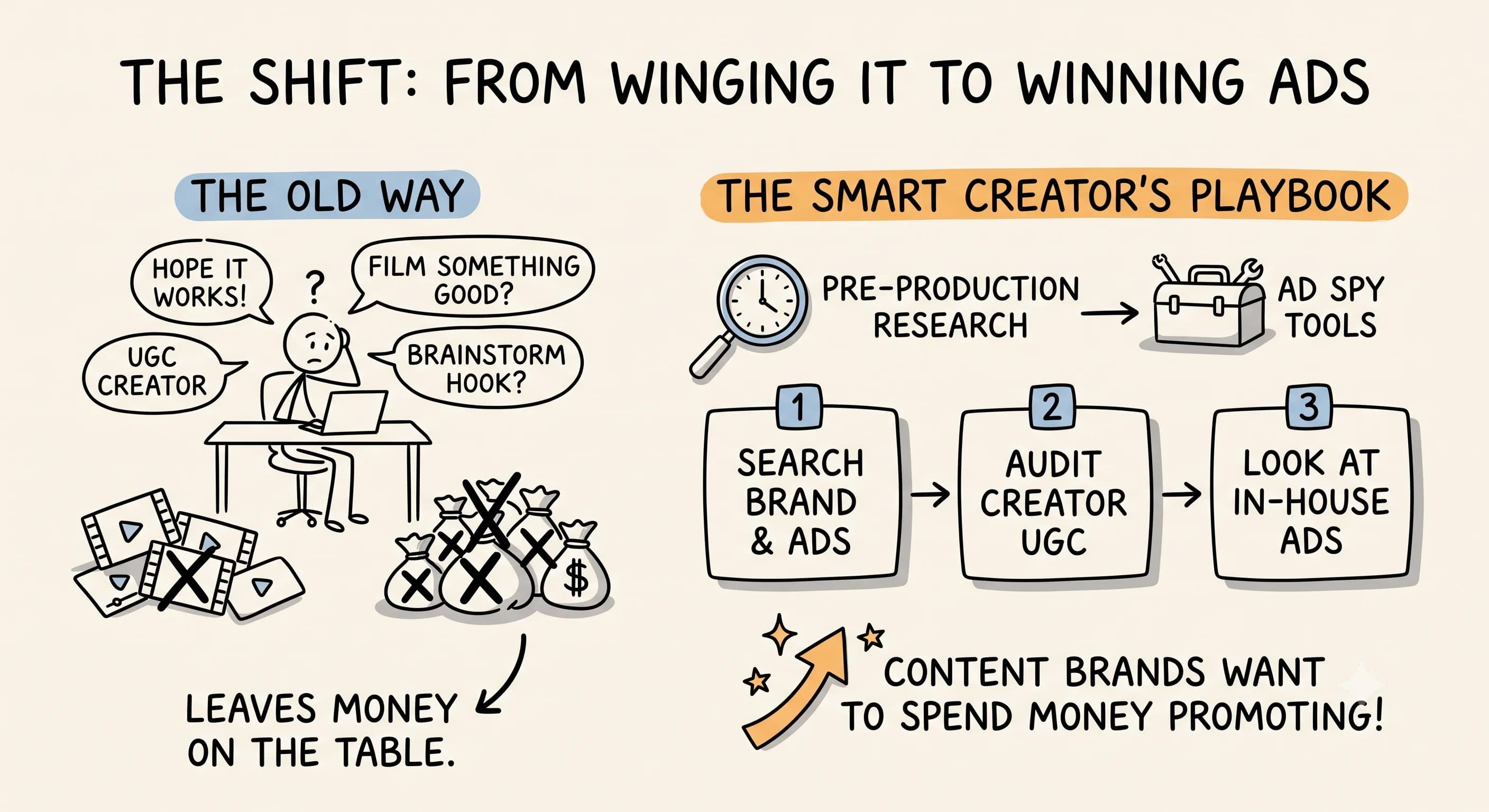
Most UGC creators sit down, brainstorm a hook, film something they think looks good, and send it off hoping for the best. And most of the time, that approach leaves money on the table.
The creators who consistently get their content picked up, promoted, and paid for at scale are doing something before they ever press record: they're researching. Specifically, they're using ad spy tools to study exactly what a brand is already running across TikTok, Facebook, and Meta platforms, and using that intelligence to create UGC ads that brands actually want to spend money promoting.
This one shift in your workflow can be the difference between a UGC video that gets ignored and one that becomes a brand's next top-performing creative. Here's exactly how to do it.
Why Pre-Production UGC Research Changes Everything
 As a UGC creator, your job isn't just to make content that looks good. Your job is to make content that converts, content a brand's marketing team will look at and immediately want to put ad spend behind. To do that, you need to understand the brand's current creative strategy before you shoot a single frame.
Think about it from the marketer's perspective. Brands are constantly testing creative. They know which filming styles are driving results for their target audience. They've already burned budget figuring out what doesn't work. When you walk in with a video that either replicates a proven format at a higher quality level or brings a fresh angle they haven't tested yet, you become infinitely more valuable than the creator who just winged it.
The big advantage of ad spy research is that you can see what a brand is already spending money on, which is a strong signal of what they believe is working. You stop guessing and start making informed creative decisions that align with what brands are already investing in. That's the shift.
How to Create UGC Content for Brands Using Competitor Intelligence
The process starts with a simple question: what is this brand running right now?
Tools like PP Ads allow you to search a brand name and immediately see every video ad they're currently running across TikTok, Facebook, and Meta placements. You can see UGC ads other creators have made for the brand, and you can see ads the brand's internal team has produced themselves.
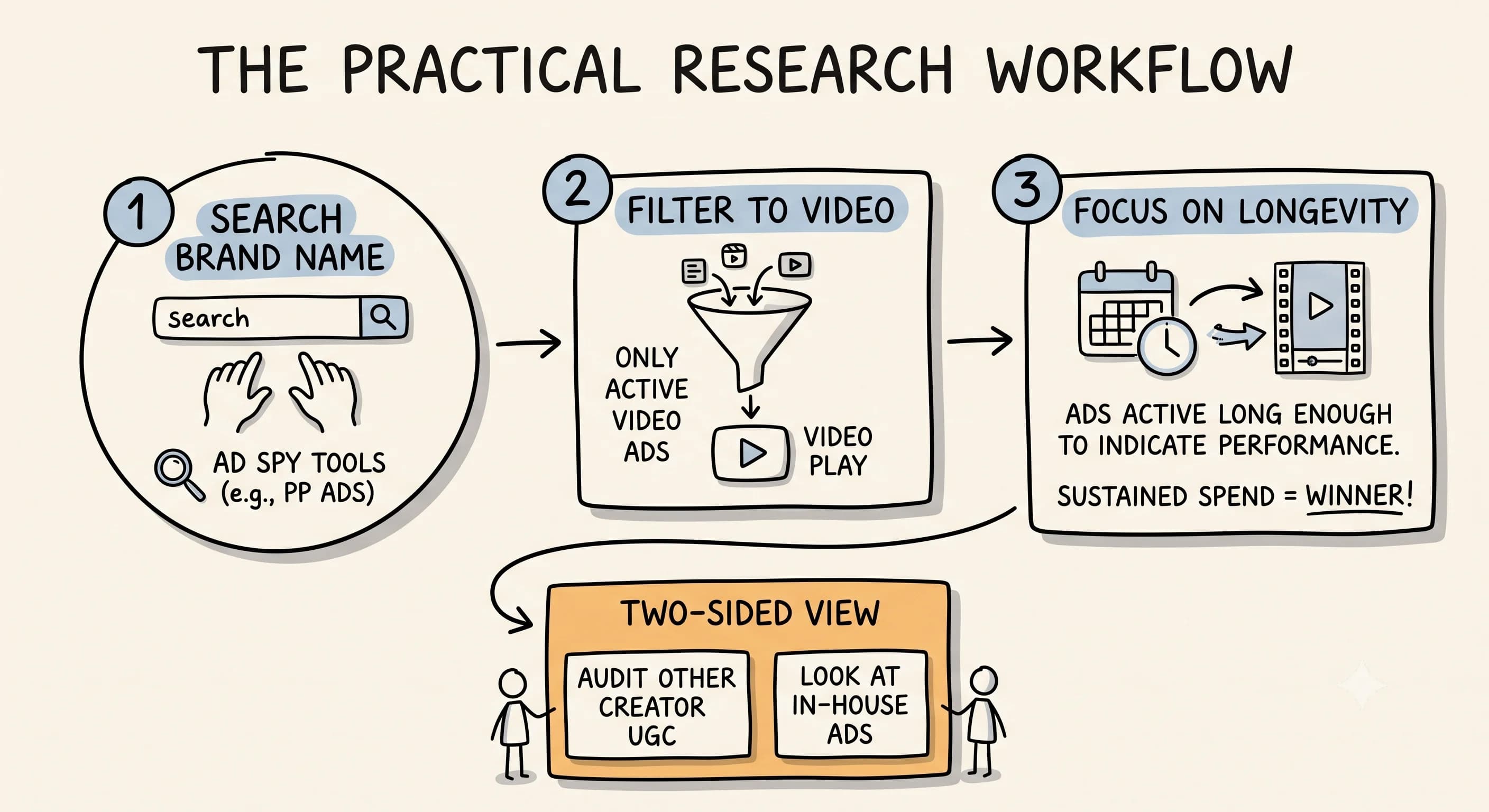
According to ad spy tool guides, a practical workflow is to search by brand name, filter to video, and focus on ads that have been active long enough to indicate performance. Longevity in an ad is a meaningful signal. If a brand is still spending money running a creative weeks after it launched, that's not an accident.
This two-sided view is incredibly valuable. Here's how to use it.
Step 1: Search the Brand Before You Script Anything
Before writing a single line of your script or thinking about your hook, open your ad spy tool and search the brand name. Look at everything currently active. Note how many ads are running. A brand running dozens of active creatives is investing heavily in paid social, and that's a brand worth creating for.
Step 2: Audit Other Creator UGC Ads
Study the UGC ads other creators have made for this brand. What filming styles are being used? Common formats include phone POV, desktop or webcam talking head, skit-style storytelling, walk-and-talk lifestyle content, and direct-to-camera testimonials. Make a note of which formats appear most frequently because frequency often signals what's converting.
Also pay close attention to hook structure. Experts recommend watching only the first three seconds of competitor ads first, because the hook is often the main variable determining whether the ad stops the scroll. Are the top-performing UGC ads starting with a bold claim, a relatable problem, a visual demonstration, or a trending audio moment? The hook is where most ad performance is won or lost, and this research tells you what has already resonated with that brand's audience.
Step 3: Look at What the Brand Is Running In-House
Here's where things get interesting. When you look at the ads the brand's own team is producing, you'll often find something surprising: the production quality is low. Flat lighting, shaky framing, mediocre editing, uninspired delivery.
You've probably noticed this yourself when scrolling through a brand's feed. This isn't uncommon because many brands produce quick in-house content to fill their creative pipeline without the resources or talent to make it shine.
If a brand is running low-quality in-house ads, that creates an opening for a creator to produce a more polished or more native-feeling version of the same winning structure. Same concept, same format, but executed at a level that makes their marketing team excited to promote it. That's a pitch that practically sells itself.
How to Do Research for Advertising: Identifying the Right Format for Each Brand
 Not every brand needs the same creative approach. Part of what makes this research so valuable is that it reveals the specific filming styles and content tones that work for each brand's unique target audience.
A wellness supplement brand might thrive with calm, conversational talking-head UGC videos that feel authentic and personal. A tech gadget brand might perform better with phone POV unboxing content or desktop demos that show the product in action. A fashion brand might lean into lifestyle walk-and-talk content that feels spontaneous and aspirational.
According to Adligator, the research helps you decide whether to match the format the brand already uses or differentiate with a fresher style such as phone POV, desktop or webcam, skit, talking head, or walk-and-talk. Both are valid strategies.
Replication with elevation is lower risk. You know the format works, and you're simply executing it better. Differentiation is higher risk but can open up new performance territory for the brand, making you a more valuable creative partner over time.
The goal isn't just to copy ads, though. As noted by Echai Ventures, the aim of competitor ad research is to identify the underlying mechanism behind what is working, the formula, and adapt it for your own offer and audience. You're looking for the pattern, not just the surface execution.
Applying This Research to TikTok and Facebook UGC Campaigns
 The platform matters when you apply your research findings. UGC-style ads that perform on TikTok often have a different energy than those that win on Facebook, even when they're for the same brand.
On TikTok, successful UGC campaigns tend to move fast. Hooks land in the first two seconds. Editing is snappy. Trending sounds and visual styles that feel native to the platform outperform polished ads that look like traditional commercials. When your research reveals that a brand is running skit-format UGC videos on TikTok, lean into that format's pacing, quick cuts, expressive delivery, humor or surprise in the opening moment.
On Facebook, UGC-style ads can breathe a little more. The target audience on Facebook often skews slightly older and responds to slightly longer-form storytelling. A 45-second testimonial-style UGC ad with a clear problem-solution structure can absolutely outperform a fast-cut TikTok-style edit on this platform. Your ad spy research will often show you whether a brand is running platform-specific creative or repurposing the same content across both, and that's another opportunity for you to add value as a creator who understands the nuance.
Are AI UGC Ads Legal and Where Does Real Creator Content Win?
As AI-generated UGC content enters the conversation, brands and marketers are increasingly asking about the legal and performance implications. AI UGC ads exist in a complicated space. Most platforms require disclosure of AI-generated content, and authenticity remains a key performance driver for user-generated content.
Real human creators who can convey genuine emotion, personal experience, and relatable storytelling continue to outperform AI alternatives in conversion-focused campaigns. Your research using ad spy tools will likely confirm this: the UGC ads with the most longevity and investment behind them are still human-created. Brands aren't putting sustained spend behind content that feels fabricated, because their audience can tell.
That's your edge as a creator. No AI tool replicates the specific energy of someone genuinely holding a product, talking about why it worked for them, and delivering that moment in a way that feels real.
What Are the Best Practices for Creating Effective UGC Ads?
Research before you script. Always. That's the non-negotiable that separates creators who get consistent work from those who are constantly pitching into silence.
Beyond that, here's what the full workflow looks like when it's working:
- Search the brand in your ad spy tool before you touch your camera or write a word
- Focus on ads with longevity because sustained spend indicates a winning creative
- Watch the first three seconds of every ad you study since the hook is where performance is made or lost
- Identify the filming format that appears most across successful UGC campaigns for that brand
- Decide whether you're elevating a proven format or introducing a fresh one the brand hasn't tested
- Match your energy and pacing to the platform where the brand is running its ads
- Lead with authenticity, not performance
The creators who use UGC as a sustainable income stream aren't winging it. They're treating every video as a strategic asset, built on data, executed with skill, and tailored to what a brand's marketing team already knows works.
Start Your Next UGC Video With Research, Not Guesswork
Before your next project, open an ad spy tool. Search the brand. Study what's running. Look at what's been active long enough to show real performance. Identify the gaps and opportunities. Then create a UGC ad that a marketer will immediately recognize as exactly what their creative strategy needs, only better.
That's how you go from a creator who hopes brands use their content to a creator brands consistently come back to.
Read more about Becoming a Content Creator
📚 Complete Guides
- How to Become a Content Creator: Complete Beginner's Guide
- Content Creator Platform Guide: Choose the Right Platform to Start Your Creator Journey
⚡ Tactics & Strategies
- 50% Retention Rate Optimization for YouTube Algorithm Success
- Age Bracket as Superpower Strategy for Older UGC Creators
- AI Workflow Integration for Content Reduction
- Audience Consistency Strategy to Avoid Algorithm Penalties
- Audience Poll on Instagram to Source Q&A Content in Advance of Recording
📄 Related Articles
- How to Get More Instagram Story Views: The STD Strategy
- Instagram Lead Generation: The Comment-to-Get Strategy
- Voice of the Customer: A Creator's Guide to Magnetic Messaging
- Content Creator Burnout: Signs, Prevention, and the Mindset That Fixes It
- Influencer Authenticity: How Honest Product Reviews Drive Real Influence
- TikTok Creator Search Insights: How to Find Content Gaps That Guarantee Views
- The AI Content Creation Workflow: Turn 37 Seconds Into 1,200 Words
- The AI Content Workflow That Cuts Production Time by 70%
Read more about Monetization & Business Models for Content Creators
📚 Complete Guides
- Content Creator Monetization: Proven Revenue Streams
- Content Creator Income Streams: 7 Ways to Build Financial Stability
⚡ Tactics & Strategies
- 30 Daily Outbound Pitches for UGC Deal Generation
- Affiliate Code Negotiation Using Membership Audience Influence
- Age Bracket as Superpower Strategy for Older UGC Creators
- B2B Merchandise Bulk Sales to Industry Professionals- Packaging Products as Client Gifts for Lawyers and Service Providers
- Becoming Your Own Sponsor by Plugging Your Offer Within Episodes
🧮 Calculators
Read more about Systems, Workflows & Operations for Content Creators
Read more Instagram Resources for Content Creators
📚 Complete Guides
⚡ Tactics & Strategies
- Audience Poll on Instagram to Source Q&A Content in Advance of Recording
- Community-First Creator Sourcing to Maximize Small Influencer Budgets
- Consistent Aesthetic Elements Strategy
- Creating Viral Content Through Polarizing and Educational Hooks
- Earning Influence Through Trust Rather Than Attention Spikes
🧮 Calculators
Read more TikTok Resources for Content Creators
📚 Complete Guides
⚡ Tactics & Strategies
- Creating Viral Content Through Polarizing and Educational Hooks
- Finding and Supporting Small Creator Communities
- Long-Form to Short-Form Content Batching System
- Matching Content Format (Shorts vs Long-Form) to Creator Motivation Type
- Monetizing Through Paid Sound Campaigns
🧮 Calculators

Alex Kirillov
Details
One link. Every channel, rate, and piece of work brands need to evaluate you. Built for how creators actually get hired.
Claim your profile
Live creator, content, and marketing roles from real companies, with the pay, market, and context the raw job page never gives you.
Browse jobs