How to Build a Niche Online Community Around a Specific Identity (The Strategy That Actually Works)
Learn how to build a niche online community around a specific identity, attract the right people, and grow genuine engagement without broadening your focus.
Details
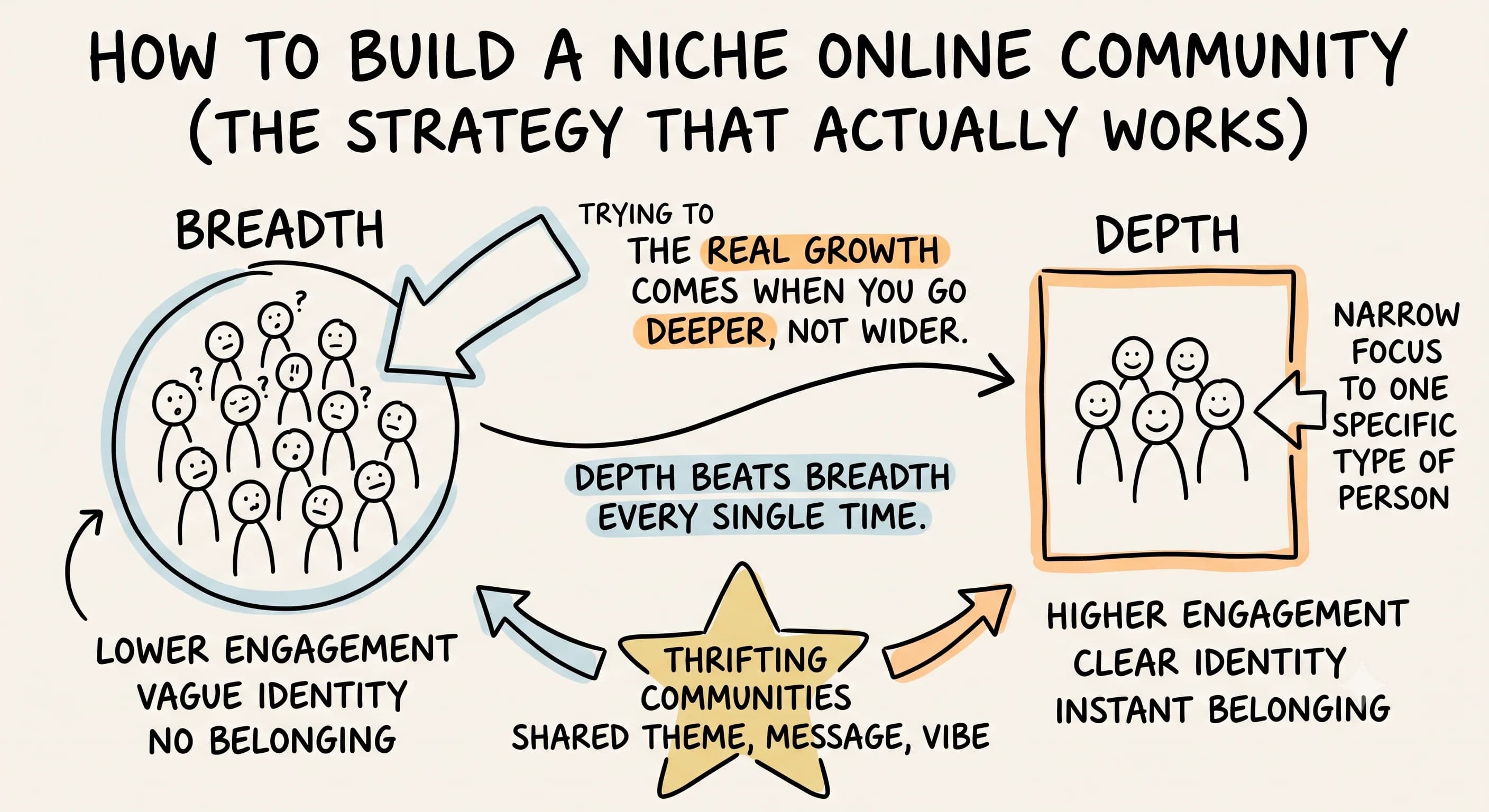
How to Build a Niche Online Community Around a Specific Identity (The Strategy That Actually Works)
Most content creators make the same mistake when they decide to build an online community: they try to include everyone. They create a broad, general-interest group hoping that a bigger tent means more members, more engagement, and more growth. The truth that experienced community builders have learned the hard way is that depth beats breadth every single time.
The real growth comes when you go deeper, not wider. When you narrow your focus to one specific type of person, something almost magnetic happens. Community members feel seen. They feel like they belong. And that sense of belonging is what drives genuine, lasting engagement.
This is not theory. It is a proven strategy used to build multiple thriving communities, from PodHouston, a community built specifically for local podcasters, to VidHouston, created exclusively for local video content creators. The results speak for themselves: niche communities outperform general ones because they are built around a common theme, a common message, and a common vibe.
If you are ready to stop building for everyone and start building for someone, this guide will show you exactly how.
Why Niche Online Communities Outperform General Ones
 Before diving into the how, it helps to understand the why. When you create a community around a single, clearly defined identity, you are essentially answering one of the most fundamental human questions: Do I belong here?
In a general community, that answer is murky. In a niche community built around one specific type of person, the answer is an immediate and enthusiastic yes.
According to Group.app, communities work better when members share a concrete identity because relevance is immediate and participation feels personally useful. That is not a small thing. When someone joins your group and every post, every conversation, and every resource speaks directly to their specific situation, they do not just lurk. They show up, contribute, and stay.
What are the 3 C's of community? Connection, contribution, and commitment. These three pillars are far easier to achieve when every single member shares a core identity. When a Houston podcaster joins PodHouston, they do not need to explain what they do or why it matters. Everyone in the room already gets it. That shared understanding accelerates trust, deepens relationships, and creates the kind of community engagement that general groups simply cannot replicate.
What are the 4 types of communities? Interest-based, action-based, place-based, and practice-based. The most powerful niche communities often combine two or more of these. PodHouston, for example, combines place (Houston) with practice (podcasting). That combination creates an incredibly specific identity that makes it easy to attract the right people and nearly impossible for the wrong people to feel like they belong.
According to Tchop, niche communities grow specifically by anchoring around a shared identity or situation rather than a broad interest category, because members immediately recognize "this is for people like me." That instant recognition is the engine behind everything else.
How to Build a Niche Online Community: Step One Is Radical Specificity
 The first and most important step when you decide to build online communities is to resist every urge to be broad. Ask yourself: Who is this community specifically for?
Not "content creators." Not "entrepreneurs." Not "people interested in marketing."
Think smaller. Think sharper. Think: Houston podcasters. Female fitness coaches under 35. Shopify store owners selling handmade goods.
The more specific your identity, the stronger the gravitational pull for the right people to join your community. According to Heartbeat, the niche should be narrow enough that the right member instantly recognizes the fit. Specificity signals that you understand your audience deeply, and that signal alone attracts like-minded members who feel this community was made for them, because it was.
Heartbeat also points out that a community's niche should be defined by the member's stage, constraints, and current decision, not just a loose shared interest. That distinction matters. "Content creators" is a loose shared interest. "First-year podcasters trying to land their first 10 sponsors" is a stage, a constraint, and a current decision all at once. That level of precision is what makes people stop scrolling and think, this is exactly for me.
When naming your community, lean hard into that identity. According to the AAMC Massachusetts affiliate, communities should be named around purpose, with examples like "Product Experimentation Guild," "Sustainable Fashion Advocates," and "Remote Work Parents Network." The same logic applies here. "For Houston Podcasters" is infinitely more compelling than "For Content Creators." The name itself becomes a filter, drawing in the right people and naturally screening out those who are not the ideal fit.
Choosing the Right Platform to Build Online Communities
Once you have defined your niche identity, choosing the right platform is your next critical decision. Your community platform should reflect where your specific audience already spends their time and what type of interaction your community requires.
For local, in-person-adjacent communities like PodHouston or VidHouston, platforms like Facebook Groups, Meetup, or Discord can work well because they support event organization and real-time discussion. For professional or business-focused communities, LinkedIn Groups, Slack, or dedicated platforms like Circle or Mighty Networks offer cleaner, more structured environments.
The key is not to choose the flashiest platform. It is to choose the platform where your right people already feel comfortable. A moderator's job becomes exponentially easier when community members are already familiar with the interface and communication norms.
What are the 5 C's of community engagement? Content, conversation, connection, collaboration, and consistency. Your chosen platform should support all five. If a platform makes it difficult to post content, spark conversation, or collaborate on projects, it will create friction that slows your growth no matter how niche and focused your identity is.
According to Tchop, the core elements of an effective niche-community framework include defining a specific audience, providing tailored content, and facilitating knowledge sharing through focused Q&As and workshops. Keep that framework in mind when evaluating any platform. If the platform makes it hard to run a focused Q&A or host a targeted workshop, it is working against you, not for you.
Attract the Right People With a Common Theme, Message, and Vibe
 Here is what separates a thriving niche community from a stagnant one: a common theme, a common message, and a common vibe working together in harmony.
Your common theme is the shared identity, whether that is podcasters, video creators, or digital marketers. Your common message is the value proposition, which is why being part of this community matters. Your common vibe is the culture, the tone, the energy, and the unspoken rules that make members feel at home.
When all three are aligned, you do not have to chase community members. They find you, and they bring others like them.
According to the AAMC Massachusetts affiliate, the strongest communities are shaped by a common purpose and rituals, not just by collecting people with a loose interest in the same topic. That is a meaningful distinction. Rituals could be a weekly wins post, a monthly live Q&A, a recurring challenge. These repeatable touchpoints reinforce identity and keep members coming back.
You've probably experienced this yourself as a member of some group online. The ones you actually stay in are the ones that feel like your people, where the vibe is consistent and the content is always relevant. That feeling does not happen by accident. It is designed.
Every piece of content you post, every event you host, and every interaction a moderator facilitates should reinforce all three elements simultaneously. For content creators specifically, this means every post, challenge, or live session inside your community should speak directly to that one specific identity. If your community is for video content creators, your resources should be about video. Your discussions should be about video. Your wins and challenges should center video. Never dilute the focus.
The First 50 Members Define Everything
 There is one phase of community building that does not get enough attention, and it is the early stage. Those first 10 to 50 members are not just early adopters. They are the architects of your community's DNA.
According to Tech Trends, early members establish the community's tone and norms, and the first 10 to 50 members define the DNA of the group. That means who you invite first, who you approve first, and who you actively welcome first matters enormously. If your first 30 members are exactly the right fit, the culture writes itself. If your first 30 members are a mixed bag of loosely related people, you will spend months trying to correct a vibe that should have been set from day one.
Be intentional about early membership. Reach out directly to people who match your specific identity. Do not just open the doors and hope the right people show up. Curate your founding members the same way you would curate a mastermind group, because in a very real sense, that is what they are.
Community for Business: How to Monetize Without Losing the Magic
Building a tight-knit niche community is also one of the most powerful strategies for long-term business growth. When you attract the right people and deliver consistent value, monetization becomes a natural extension rather than a forced transaction.
You can monetize through premium memberships that offer exclusive resources, masterminds, or direct access to you as a creator. Sponsorships and partnerships become more attractive to brands because your community is hyper-targeted. Courses, workshops, and events tailored to your specific audience convert at dramatically higher rates because you are solving real, shared problems.
The community for business framework works because trust is already established. When community members trust the space and the leader who built it, they are far more likely to invest in what you offer.
The one thing that kills monetization in niche communities? Scope creep. According to Heartbeat, you should avoid expanding to "everyone" once the community starts working, because dilution weakens relevance and engagement. The moment you start adding adjacent topics, slightly different audiences, or unrelated resources to appeal to more people, you start losing the thing that made your community valuable in the first place. Stay narrow. Stay deep. The revenue follows the trust, and the trust follows the focus.
Your Next Step: Choose One Identity and Go All In
Building online communities that actually thrive is not about building the biggest room. It is about building the right room for the right people.
Choose one specific identity. Name your community around its purpose, not around your brand. Align your theme, message, and vibe from day one. Choose a platform that serves your members, not the flashiest one. Be deliberate about who you invite first. And resist, firmly and deliberately, the urge to broaden your focus before you have gone deep.
The specificity that feels limiting at the start is exactly what creates the gravitational pull that makes people say, without hesitation, this community is for me.
The right tribe is out there waiting. Give them a place where they instantly know they belong.
Read more about Becoming a Content Creator
📚 Complete Guides
- How to Become a Content Creator: Complete Beginner's Guide
- Content Creator Platform Guide: Choose the Right Platform to Start Your Creator Journey
⚡ Tactics & Strategies
- 50% Retention Rate Optimization for YouTube Algorithm Success
- Age Bracket as Superpower Strategy for Older UGC Creators
- AI Workflow Integration for Content Reduction
- Audience Consistency Strategy to Avoid Algorithm Penalties
- Audience Poll on Instagram to Source Q&A Content in Advance of Recording
📄 Related Articles
- How to Get More Instagram Story Views: The STD Strategy
- Questions to Ask Your Audience on Social Media (That Get Replies)
- Cold Email Outreach: A 90-Day System for Creators
- Instagram Lead Generation: The Comment-to-Get Strategy
- Influencer Gifting: The Creative Method That Wins Collabs
- Voice of the Customer: A Creator's Guide to Magnetic Messaging
- Content Creator Burnout: Signs, Prevention, and the Mindset That Fixes It
- Influencer Authenticity: How Honest Product Reviews Drive Real Influence
Read more about Audience Building & Growth for Content Creators
📚 Complete Guides
- How to Build an Audience as a Content Creator
- How to Find Your Target Audience (Start With One Person)
⚡ Tactics & Strategies
- 30 Daily Outbound Pitches for UGC Deal Generation
- 50% Retention Rate Optimization for YouTube Algorithm Success
- Age Bracket as Superpower Strategy for Older UGC Creators
- Audience Consistency Strategy to Avoid Algorithm Penalties
- Audience Psychology Over Algorithm Optimization, Focusing on Human Pain Points and Goals Instead of Platform Tactics

Alex Kirillov
Details
One link. Every channel, rate, and piece of work brands need to evaluate you. Built for how creators actually get hired.
Claim your profile
Live creator, content, and marketing roles from real companies, with the pay, market, and context the raw job page never gives you.
Browse jobs