Owned Audience Strategy: Converting Discovery Platforms to Relationship Platforms
Learn the best influencer discovery platform strategy. Convert discovery platforms like YouTube and TikTok into owned relationship platforms through strategic email marketing.
Details
Why Content Creators Must Shift from Discovery Platform Dependency
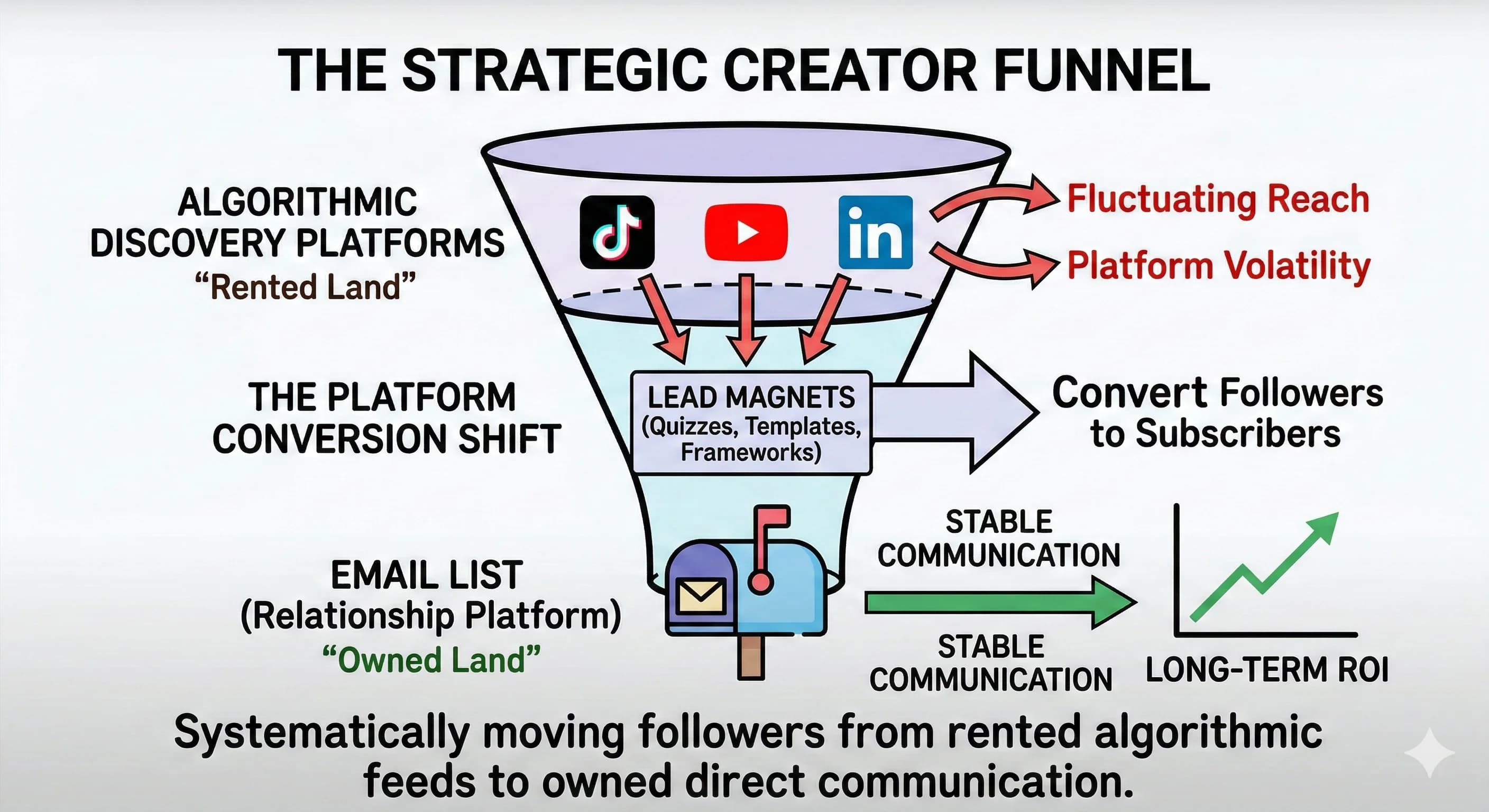
 For content creators navigating the evolving landscape of influencer marketing, understanding the fundamental difference between discovery platforms and relationship platforms is crucial for sustainable growth. Discovery platforms like TikTok, LinkedIn, and YouTube serve content algorithmically, meaning you can't guarantee your authentic content will reach your audience consistently. This uncertainty makes building a reliable, lasting connection with your audience nearly impossible.
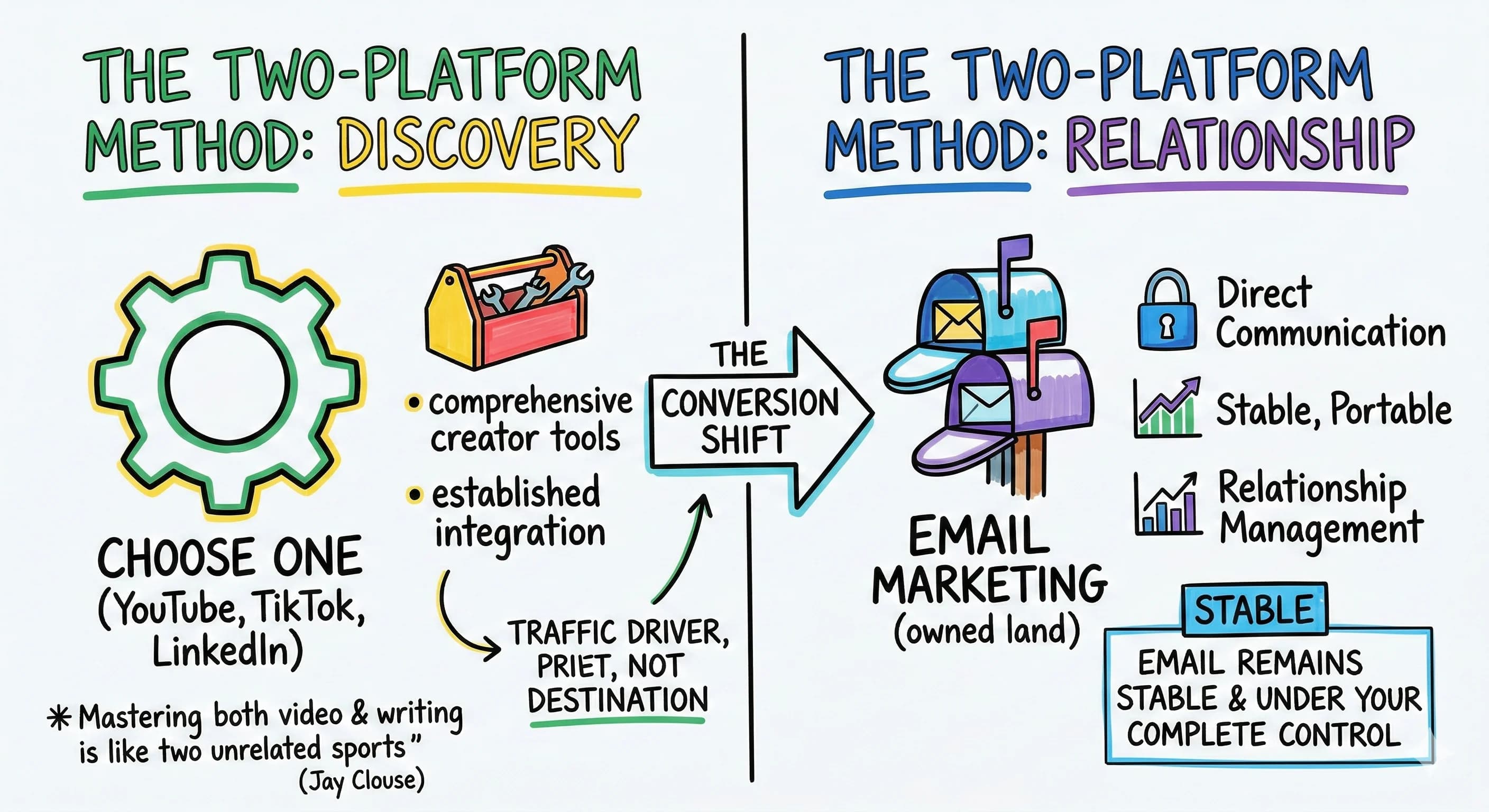
Matt Downey explicitly frames this problem perfectly: social platforms are "rented land" while email is "owned land." You're building your house on someone else's property when you rely solely on algorithmic platforms. Algorithm changes can destroy your reach overnight, while email remains stable, portable, and under your complete control.
Remember back in 2010 when Facebook changed the algorithm and people were running around desperate to change their business practices to get more likes, because that's what the algorithm wanted? Remember the good old days when organic reach was over 10%? Those days are gone, and every marketer who lived through those shifts learned the same hard lesson: audiences that live entirely on social media platforms are borrowed audiences, not yours.
What Is an Owned Audience?
So, what does "owning your audience" really mean? An owned audience is a group of people you can reach directly, without a third-party platform deciding whether your message gets through. Your email list is the clearest example. Your podcast subscribers, your SMS list, your blog readers who come back through bookmarks or RSS: these are all part of your owned audience too.
Contrast that with social media followers. Those followers are technically an audience you've built, but a third-party controls the reach. The platform decides how many of them see any given post. That's a borrowed audience, not a truly owned one.
Owned media is any channel you control outright: your website, your newsletter, your blog. Earned media is coverage or sharing you didn't pay for, like press mentions or word-of-mouth referrals. Paid media is what you spend on paid advertising and paid channels like sponsored posts or display ads. Understanding all three types of media matters because a healthy strategy uses all of them, but your owned media is your home base, the foundation everything else feeds into.
The Strategic Value of Platform Conversion
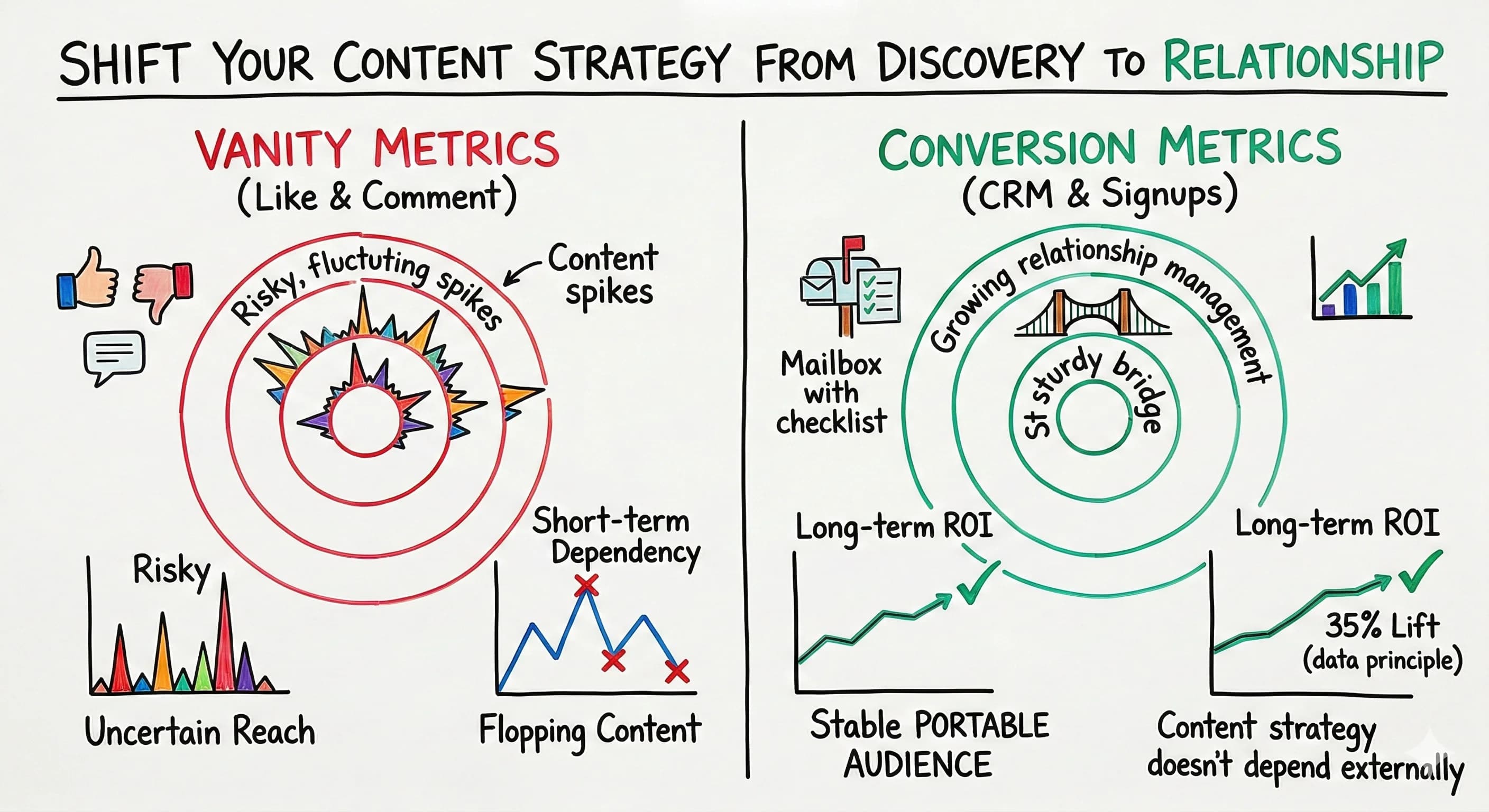
The key metric successful content creators track isn't just follower count or engagement rate, it's conversion rates from discovery platforms to owned relationship platforms. This approach transforms how you think about growth by focusing on long-term sustainability rather than vanity metrics.
You've probably experienced this frustration: creating content that performs well one week, then watching similar content flop the next because the algorithm shifted. Discovery platforms excel at helping you build initial awareness, but their algorithmic nature means your reach fluctuates unpredictably. Want to develop an effective owned media strategy? Start by treating every social platform as a top-of-funnel traffic driver, not a destination.
Jay Clouse, who's built Creator Science into a leading creator education platform, emphasizes that trying to master both writing and video is "like trying to become world-class at playing two unrelated sports." The focus should be on choosing one discovery medium and using it primarily to grow your email list, not as your end destination.
With all that being said, don't you think your advertising budget would be better spent elsewhere if you're trying to grow an owned audience? Paid media can accelerate your reach, but if it's all flowing into a social feed you don't control, you're filling a bucket with a hole in it.
Best Practices to Build an Owned Audience
Want to leverage your owned media and actually build an owned audience that lasts? Here are the best practices worth following.
Start with one discovery platform and one relationship platform. Choose your discovery platform based on where your target audiences naturally congregate. YouTube offers comprehensive creator tools and strong SEO benefits since it's also a search engine. TikTok provides rapid growth potential for creators whose content resonates with younger demographics.
For relationship platforms, email marketing remains the gold standard. Unlike social listening tools or purely algorithmic discovery methods, email gives you a direct line to your audience that you control completely. This approach ensures your content strategy doesn't depend entirely on external algorithms.
The most successful creators treat discovery platforms as traffic drivers, not destinations. They create compelling lead magnets that align with their brand and provide genuine value. Whether you're building a newsletter, podcast, or email list, make sure your offering addresses specific pain points your audience faces.
Optimize Your Discovery Platform Presence
Use your chosen discovery platform primarily as a traffic driver to your email signup. Create authentic content that naturally leads people to want more from you. Use analytics to understand what makes content resonate with your audience, but remember: the goal isn't viral content, it's relevant content that converts website visitors and followers into subscribers.
Here's what this looks like in practice: Instead of just posting tips on LinkedIn, end each post with "Get my complete framework for this in my weekly newsletter." Instead of just sharing YouTube tutorials, offer bonus templates or behind-the-scenes breakdowns exclusively to email subscribers. Don't forget to consider attribution: for example, you've seen a spike in website visitors, but did they get there by clicking on your Facebook post or find you another way? Tracking this helps you put budget and effort where it actually converts.
Make Your Message Travel Further
Make your discovery content feel like the beginning of a conversation, not a complete thought. Promise ongoing dialogue through your email list. Use phrases like "I'll dive deeper into this in Thursday's newsletter" or "Email subscribers get the step-by-step templates I can't share here." Every piece of content should carry a message that points back to your owned channel.
Consider using interactive lead magnets rather than static PDFs. Quizzes, product finders, and guided tools typically see higher opt-in rates because they provide immediate value while collecting customer data you can use to personalize your email campaigns. That personalization matters: email campaigns that speak to a subscriber's specific interests consistently outperform generic blasts on open rates and CTR alike.
Segmentation and Automation: Managing Your Owned Audience Well
Once you start building a list, managing your owned audience well is what separates creators who grow from those who plateau. Here's where segmentation and automation come in.
When you segment your audience based on how they found you, what content they engaged with, or what products or services they've shown interest in, your emails feel personal rather than broadcast. Segmentation lets you nurture each group with content that actually fits where they are. Use automation to send the right sequence to new subscribers, re-engage people whose open rates have dipped, and make sure no one who's opted in just falls through the cracks.
And yes, make it easy to unsubscribe. It sounds counterintuitive, but a clean list of people who genuinely want your content is far more valuable than a bloated one full of people who resent getting your emails.
Grow Your Owned Audience: Five Principles
Ready to grow your owned audience systematically? Here are five principles that hold up across formats and niches:
- Prioritize owned distribution channels - Email should be your primary relationship platform, full stop
- Use discovery platforms for awareness, not dependency - Social feeds your email list; it isn't your business
- Track conversion metrics, not just engagement rates - Measure newsletter signups per post, not just likes
- Diversify your owned media - Webinars, podcasts, and a well-optimized blog all build an audience that's yours
- Develop relationship management systems - Tag subscribers based on which content brought them to you, and nurture those relationships accordingly
Earned Media and Paid Media: Where They Fit In
Earned media, things like press coverage, guest features, and word-of-mouth referrals, is a powerful way to reach new target audiences who haven't found you yet. The goal is always to pull those people into your owned ecosystem once they do find you. Earned media gets you in front of people; owned media is how you keep them.
Paid media and paid advertising serve a similar top-of-funnel role. They can be cost-effective when they're designed to drive people into your owned channels rather than just racking up impressions. If paid channels are sending people to a landing page where they give you their email, that's a smart use of budget. If they're just boosting a social post with no path to ownership, you're renting attention with nothing to show for it afterward.
So, what's the reason for the newsletter resurgence? Because creators who went through algorithm scares, platform pivots, and sudden reach drops realized that email is the one channel that still lets you engage your audience on your own terms. It lets you build trust over time, consistently, without asking permission from a platform every single time.
Build an Owned Audience for Long-term Success
The most successful content creators treat discovery platforms as the top of their funnel, not their entire strategy. By systematically converting followers into email subscribers, you build an owned audience you truly control. This approach provides sustainable growth that withstands algorithm changes and platform volatility.
Are email campaigns not hitting home? Look at your segmentation first. Are you building your owned audience with the same intention you bring to your content? If not, that's where to start.
Start implementing this strategy today: Choose your discovery platform, set up your relationship platform, and begin converting your audience into lasting partnerships. Remember, you're not trying to go viral. You're trying to build a sustainable business where you control the distribution and the conversation.
The creators who thrive won't be those with the most followers on social media. They'll be the ones who've successfully moved their audience from algorithmic platforms into direct communication channels they own and control.
Read more about Audience Building & Growth for Content Creators
📚 Complete Guides
- How to Build an Audience as a Content Creator
- How to Find Your Target Audience (Start With One Person)
⚡ Tactics & Strategies
- 30 Daily Outbound Pitches for UGC Deal Generation
- 50% Retention Rate Optimization for YouTube Algorithm Success
- Age Bracket as Superpower Strategy for Older UGC Creators
- Audience Consistency Strategy to Avoid Algorithm Penalties
- Audience Psychology Over Algorithm Optimization, Focusing on Human Pain Points and Goals Instead of Platform Tactics
📄 Related Articles
- How to Become a Successful Instagram Content Creator: Complete Growth Guide
- How to Become a YouTuber: A Comprehensive Guide for YouTube Creators
- UGC Portfolio: Examples, Templates & How to Create One
- Buyer Persona Examples (and How to Create One With AI)
- Brand Pitch Email Template: The 30-Pitch Strategy That Hit $10K
- How to Grow on Twitter (X) as a Content Creator
- How to Grow Email List with Instagram: The Commenter Spotlight Strategy
- Views to Subscriber Ratio YouTube: How to Find Undervalued Creators Using Stock Market Strategies
Free: The Audience Ownership Blueprint
Get the interactive tool, downloadable PDF, and Notion template - all free.
No spam. Unsubscribe anytime.

Alex Kirillov
Details
One link. Every channel, rate, and piece of work brands need to evaluate you. Built for how creators actually get hired.
Claim your profile
Live creator, content, and marketing roles from real companies, with the pay, market, and context the raw job page never gives you.
Browse jobs