WordPress
WordPress is a free, open source publishing platform and CMS that lets content creators build websites, blogs, and apps with flexible design tools and an extensive plugin library.
What is WordPress? A Content Creator's Guide
WordPress is the open source publishing platform and content management system that powers 40% of all websites on the internet, making it the most widely adopted blogging and content creation tool ever built. Born in 2003 as a fork of the b2 blogging software, it has grown from a simple personal publishing platform into a full-featured website builder used by everyone from first-time bloggers to major media outlets like Rolling Stone, Time Magazine, and TechCrunch. For content creators, it solves the fundamental problem of needing a professional, fully customizable online home without being locked into a proprietary platform or paying ongoing subscription fees. The block-based editor at its core gives writers, podcasters, and video creators a visual, drag-and-drop content creation workflow that requires no coding knowledge. An extensive library of plugins means creators can add a store, newsletter, analytics, social media integration, and virtually any other functionality directly to their site. With WordPress 6.9 and the upcoming 7.0 release actively in development, the platform continues to evolve with collaboration tools, new block types, and performance improvements built specifically to make content creation faster and smoother.
WordPress Features That Matter for Content Creators
-
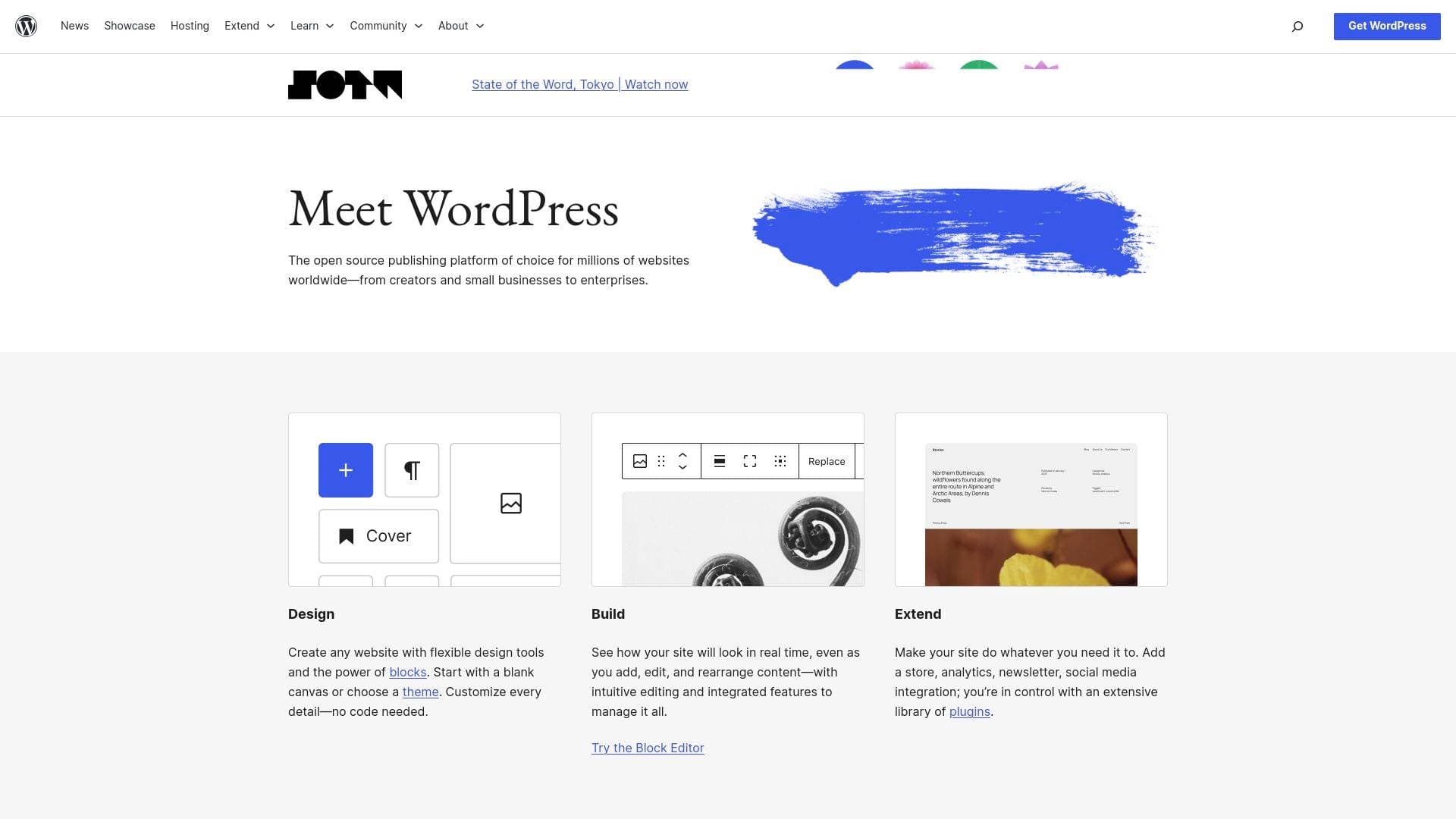
Block Editor (Gutenberg): The block-based editing system lets creators build pages and posts by adding, arranging, and customizing individual content blocks, from text and images to embeds and custom layouts. No code is needed, and the editor expands to fit content as creators write, keeping the focus on the work itself.
-
Flexible Design Tools and Themes: Creators can start with a blank canvas or choose from a library of themes, then customize every detail of their site's appearance. The Site Editor provides real-time previews so creators can see exactly how their site looks as they make changes, and block themes can be previewed before activating.
-
Extensive Plugin Library: WordPress supports an enormous library of plugins that extend site functionality in virtually any direction. Creators can add WooCommerce for selling digital products, newsletter tools for building subscriber lists, analytics integrations, social media connections, and much more, all without touching a line of code.
-
Full Site Editor with Page Management: WordPress 6.3 introduced the ability to create, browse, and edit pages directly from within the Site Editor with the template in view, letting creators publish one or many pages without ever leaving the editor. Switching between content and template editing is seamless.
-
Command Palette: Introduced in WordPress 6.3 and expanded in 6.9, the Command Palette gives creators a fast way to search the editor and access common commands from anywhere, including the admin panel. It keeps creators in a flow state by eliminating the need to navigate menus for routine tasks.
-
Patterns and Synced Patterns: The patterns system lets creators build reusable design elements that can be placed across multiple pages. Synced patterns are especially powerful: one change to a synced pattern automatically updates every instance across the entire site, saving significant time for creators managing large content libraries.
-
Performance: WordPress 6.3 delivered a 24% speed improvement over the previous version in Largest Contentful Paint times, with over 170 performance updates including Scripts API support and fetchpriority support for images. Faster load times directly benefit creators by improving visitor experience and search visibility.
-
Collaboration Tools in WordPress 6.9: The 6.9 release introduced the ability to leave notes directly on blocks, making it easier for creator teams or creators working with editors to communicate feedback without leaving the platform. Drag-and-drop improvements and an expanded command palette further reduce friction in the content creation workflow.
-
New Content Blocks: WordPress continuously ships new block types that expand what creators can do natively. The 6.9 release added Accordion, MathML, and Time to Read blocks, while earlier versions introduced the Details block for hiding extended content, the Footnotes block for annotating long-form writing, and aspect ratio controls for images.
-
Style Revisions: Creators can track and revert visual style changes, providing a safety net when experimenting with the look and feel of a site. This makes it practical to try new design directions without the risk of permanently breaking an established aesthetic.
Which Content Creators Should Use WordPress?
WordPress is genuinely built for creators at every level, from someone launching their first blog to a professional media team managing thousands of posts. Its open source nature means there are no ongoing platform fees for the software itself, and the combination of themes, plugins, and the block editor gives solo creators and small teams alike the tools to build a professional content hub. Here are the creator types and use cases where WordPress delivers the most value:
- Bloggers and writers who want full ownership of their content and a publishing platform that scales from a personal journal to a high-traffic editorial site.
- Podcasters looking to build a dedicated podcast website with episode archives, show notes, and subscription options via plugins.
- YouTubers and video creators who need a home base to embed videos, publish written companion content, and build an audience beyond a single platform.
- Newsletter writers who want to combine a public blog with an email list, using plugins to capture subscribers and send broadcasts.
- Creators selling digital products such as ebooks, courses, or presets, using WooCommerce or similar plugins to add a fully functional storefront.
- Photographers and visual artists who need a portfolio site with full control over image presentation, aspect ratios, and gallery layouts.
- Content teams and collaborative creators who benefit from the 6.9 block-level commenting and multi-user editing capabilities.
- Creators building niche communities who want to extend their site with membership plugins, forums, or custom user dashboards.
Experience level: WordPress is accessible to beginners through its no-code block editor and theme system, while also offering deep customization and developer tools for advanced creators who want to dig into the code.
Team size: Works equally well for solo creators and small teams, with collaboration features that support multiple contributors working on the same site.
Getting Started with WordPress
- Download or host WordPress: Creators can download WordPress from WordPress.org and install it on their own hosting, or test it directly in the browser using the WordPress Playground tool available on the official site.
- Choose a theme: Browse the theme library and select a starting point that fits the content type, whether that is a minimal blog layout, a portfolio grid, or a magazine-style design. Themes can be previewed before activating.
- Customize with the Site Editor: Use the real-time Site Editor to adjust colors, typography, layout, and global styles without writing any code. The block-based design system makes it straightforward to build a unique look.
- Add plugins for creator-specific features: Install plugins to add the functionality that matters most, such as an email newsletter tool, an SEO plugin, a social media integration, or a store for selling digital products.
- Start publishing: Use the block editor to create posts and pages, taking advantage of blocks like Accordion, Footnotes, Details, and media embeds to build rich, engaging content for any audience.
WordPress FAQ for Content Creators
Is WordPress free to use? WordPress itself is free, open source software. Creators can download and use it at no cost. Expenses typically come from web hosting and any premium themes or plugins a creator chooses to add.
Do I need to know how to code to use WordPress? No coding knowledge is required to build and manage a WordPress site. The block editor and Site Editor handle design and layout visually, and the no-code customization tools cover the needs of most content creators.
Can I test WordPress before committing to a full site? Yes, WordPress offers a browser-based Playground tool that lets creators try the platform without downloading or installing anything, making it easy to explore the editor and features before setting up a live site.
What kinds of content can I publish with WordPress? WordPress supports written posts and pages, images, video embeds, audio, galleries, and rich media. Dedicated blocks for footnotes, accordions, mathematical notation, and more make it suitable for everything from casual blogging to long-form editorial content.
Can I sell products or memberships through WordPress? Yes, through plugins like WooCommerce, creators can add a fully functional online store to their WordPress site. This supports selling digital downloads, physical products, subscriptions, and more directly from the creator's own website.
How active is WordPress development? Very active. WordPress 6.9 is the current release, WordPress 7.0 is in beta, and the platform has a long history of regular major releases. Over 650 contributors worked on the 6.3 release alone, and the project has an active global community of developers, designers, and contributors.
What is the difference between WordPress.org and WordPress.com? WordPress.org is the home of the free, open source software that creators self-host. WordPress.com, launched in 2005, is a hosted service built on the same software. The content on this review focuses on WordPress.org, the self-hosted platform.
The Verdict: Is WordPress Worth It for Content Creators?
For content creators who want full ownership and control over their online presence, WordPress remains the most proven and widely supported option available. The combination of a no-code block editor, a massive plugin ecosystem, and an active global community means creators at any skill level can build a professional site that grows with their needs. The platform's track record speaks for itself: powering 40% of the web, including major media brands and independent creators alike, it has demonstrated staying power that proprietary platforms simply cannot match.
The main consideration for new creators is that self-hosting requires choosing and managing a hosting provider, which adds a small layer of setup compared to fully managed alternatives. However, the WordPress Playground makes it easy to explore the platform risk-free, and the extensive documentation and learning resources at learn.wordpress.org lower the barrier significantly.
For bloggers, newsletter writers, podcasters, video creators, and anyone building a long-term content business, WordPress delivers a content creation workflow and publishing platform that is hard to outgrow. It is particularly well-suited to creators who want to combine multiple content formats, sell products or services, and build an audience on their own terms rather than within the constraints of a third-party platform.
Details
One link. Every channel, rate, and piece of work brands need to evaluate you. Built for how creators actually get hired.
Claim your profile
Live creator, content, and marketing roles from real companies, with the pay, market, and context the raw job page never gives you.
Browse jobs
 Post Bridge