

Shopify
Shopify is an all-in-one commerce platform that lets content creators launch and scale online stores, sell physical and digital products, and reach customers globally.
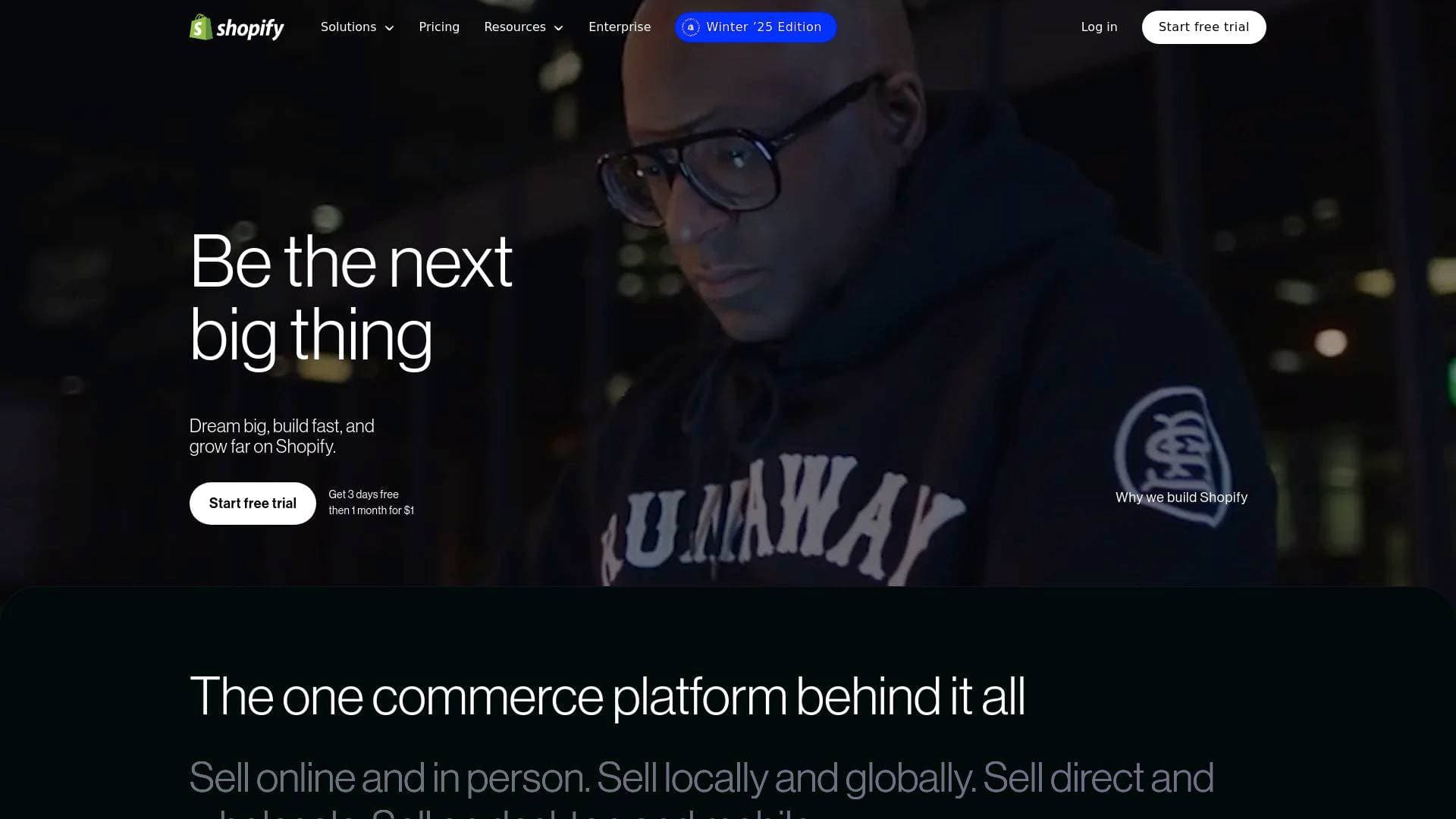
Brief Overview of Shopify for Content Creators
For content creators looking to turn their audience into a revenue stream, Shopify is an all-in-one commerce platform built to handle everything from launching a first product to scaling a global brand. The core problem it solves is simple: creators need a reliable, fast, and flexible way to sell merchandise, digital products, or branded goods without stitching together a dozen separate tools. Shopify handles online and in-person selling, payments, shipping, marketing, and analytics all from a single centralized admin. The platform supports selling across multiple channels simultaneously, meaning a creator's products can show up wherever their audience scrolls, searches, and shops. With AI-powered store design tools, stylish themes, and fully custom build options, getting a storefront live requires no coding knowledge. Millions of merchants have collectively generated over $1 trillion in sales on Shopify, making it one of the most proven commerce infrastructures available to independent creators. Whether a creator is selling handmade candles at a local market or shipping branded apparel to fans worldwide, Shopify scales to match the ambition.
Shopify Key Features for Content Creators
-
AI-Powered Store Design (Shopify Magic): Shopify Magic taps into AI to help creators build and manage their store faster, from generating product descriptions to suggesting optimization strategies. This is particularly useful for solo creators who don't have a dedicated copywriter or designer on their team.
-
Multichannel Integration: Creators can publish products across every channel where their audience already exists, including social platforms and search engines, through Shopify's built-in multichannel tools. This means a single product listing can reach fans wherever they spend time online without manually duplicating work.
-
Shopify Checkout: Shopify Checkout converts 15% higher on average than other commerce platforms and gives creators access to a network of over 150 million buy-ready shoppers. It's fully customizable and optimized to close more sales, which directly impacts a creator's bottom line.
-
In-Person Point of Sale (Shopify POS): For creators who sell at events, conventions, pop-ups, or markets, Shopify POS keeps offline and online sales perfectly in sync. There's no need to manage separate inventory systems for in-person and digital sales.
-
Shopify Shipping: International and domestic shipping is built directly into the platform, helping creators deliver products faster and more affordably. Shopify Markets extends this by localizing the shopping experience for international customers, handling currency and regional preferences.
-
Shopify App Store: With over 13,000 commerce apps available, creators can extend their store's functionality far beyond the out-of-the-box essentials. Whether a creator needs subscription billing, loyalty programs, or advanced email marketing, there's likely an app for it.
-
Shopify Capital: Creators who need funding to stock up on inventory, invest in marketing, or grow their team can access business loans through Shopify Capital. The program has loaned out $5 billion to merchants so far, with loans available up to $2 million and zero equity taken.
-
Shopify Mobile App: The full-featured Shopify mobile app lets creators manage their entire store from their phone, which is essential for creators who are constantly on the go, filming, or traveling for content.
-
Shopify Audiences: This tool helps creators cut customer acquisition costs by as much as 50% by targeting the right buyers more efficiently. Combined with integrated marketing tools and analytics, it gives creators a data-driven approach to growing their customer base.
-
Nonstop Platform Updates: Every six months, Shopify ships 150+ new features and upgrades, all showcased in Shopify Editions. Creators benefit from a platform that continuously evolves without requiring any manual updates or migrations.
Shopify Target Users & Use Cases for Content Creators
Shopify is built for creators at every stage, from a solo maker selling their first product to a creator-turned-brand generating millions in annual revenue. The platform explicitly supports entrepreneurs, growing brands, and enterprise-level operations, meaning a creator never has to migrate away as their business scales. Its combination of simplicity for beginners and deep customization for advanced users makes it one of the most versatile commerce tools in the creator economy.
-
Primary creator types: YouTubers and TikTokers launching merchandise lines, bloggers selling physical or digital products, podcasters offering branded goods, streamers running limited-edition drops, and newsletter writers monetizing their audience through product sales.
-
Experience level: Suitable for complete beginners with no technical background, thanks to AI design tools and guided setup, while also offering deep developer APIs and headless commerce options for technically advanced creators.
-
Team size: Works equally well for solo creators managing everything themselves via the mobile app, and for growing creator teams that need centralized admin controls and third-party app integrations.
-
Specific use cases:
- A YouTuber launching a merch line and selling directly through their online store
- A fitness creator selling branded apparel both online and at in-person events using Shopify POS
- A food blogger selling recipe books or specialty products to an international audience via Shopify Markets
- A podcaster using Shopify Capital to fund a large inventory purchase ahead of a product launch
- A streamer running limited-edition product drops that need to handle high-traffic spikes without going down
- A lifestyle creator expanding into wholesale, offering bulk pricing to retail buyers through B2B features
- A creator using Shopify Audiences to reduce ad spend while growing their customer base
- A solo creator managing orders, shipping, and customer messages from their phone between shoots
-
Content types and platforms: Physical merchandise, digital products, subscription boxes, wholesale orders, and in-person sales at events or pop-ups.
How to Get Started with Shopify
-
Start for free: Shopify offers a free trial to get started, with no upfront commitment required. Eligible creators in the US and Canada can also access special promotional pricing through programs like the 1MBB initiative.
-
Add your first product: Upload product images, write descriptions (or use Shopify Magic's AI to generate them), set pricing, and configure inventory. This is the foundation of the store.
-
Customize your store: Choose from stylish pre-built themes, use the AI design tools to build fast, or go fully custom for complete creative control over the storefront's look and feel.
-
Set up payments and shipping: Configure payment methods and connect Shopify Shipping to handle fulfillment. For creators selling internationally, Shopify Markets handles localization automatically.
-
Connect your channels: Link the store to social platforms and other sales channels so products appear wherever the creator's audience already spends time.
Frequently Asked Questions About Shopify
Can content creators sell both online and in person through Shopify? Yes, Shopify supports both online storefronts and in-person selling through Shopify POS. Both channels stay in sync, so inventory and sales data are always accurate regardless of where a transaction happens.
How does Shopify help creators reach international customers? Shopify Markets handles the complexity of international selling by localizing the shopping experience for different regions. Shopify Shipping also helps creators deliver products faster and more affordably across borders.
What is Shopify Magic? Shopify Magic is Shopify's built-in AI tool that helps creators save time on tasks like generating product content and finding ways to get more out of the platform. It's designed specifically for commerce use cases.
Does Shopify offer funding for creators who need capital to grow? Yes, through Shopify Capital, creators can access loans up to $2 million with zero equity taken. The program has already loaned out $5 billion to merchants and offers terms tailored to individual business needs.
How many apps are available in the Shopify App Store? The Shopify App Store contains over 13,000 commerce apps, covering everything from marketing automation to inventory management to specialized integrations that extend the platform's core functionality.
How often does Shopify release new features? Shopify ships 150+ new features and upgrades every six months, all documented in Shopify Editions. This means creators always have access to the latest commerce technology without needing to switch platforms.
Can a creator build a completely custom storefront on Shopify? Yes, Shopify supports fully custom storefronts through its developer tools, including Hydrogen, its headless commerce framework. Creators with development resources can build completely bespoke experiences while still running on Shopify's infrastructure.
Bottom Line: Should Content Creators Choose Shopify?
Shopify is a strong fit for content creators who are serious about building a product-based revenue stream alongside their content. The combination of AI-powered design tools, multichannel selling, a high-converting checkout, and built-in shipping and marketing tools makes it one of the most complete commerce platforms available to independent creators. The ability to start small and scale to enterprise level without ever migrating to a new platform is a genuine advantage for creators with long-term ambitions. Access to Shopify Capital also sets it apart for creators who need funding to grow without giving up equity. The 13,000+ app ecosystem means almost any specialized need can be addressed without leaving the platform. Creators who are just starting out benefit from the guided setup and AI tools, while more established creator brands can take advantage of custom storefronts, B2B wholesale features, and advanced analytics. The main consideration is that Shopify is a paid platform, though trial options and promotional pricing exist for eligible creators. For any content creator looking to monetize their audience through physical or digital products, Shopify is one of the most capable and scalable options available.
Details
One link. Every channel, rate, and piece of work brands need to evaluate you. Built for how creators actually get hired.
Claim your profile
Live creator, content, and marketing roles from real companies, with the pay, market, and context the raw job page never gives you.
Browse jobs

 Post Bridge